North Sumatra offers a unique blend of raw natural beauty and deeply rooted cultural heritage. From the tranquil rivers of Gunung Leuser National Park to the volcanic majesty of Lake Toba, the region delivers an immersive experience for those seeking connection with both nature and ancestral origins. This isn’t just a travel destination; it’s a journey into a landscape shaped by conservation efforts, ancient traditions, and the resilience of its people.
Embracing the Wild Heart of Gunung Leuser
The journey begins in Medan, gateway to North Sumatra’s wilderness. The province, part of the larger Sumatran island, is a haven for biodiversity. A three-hour bus ride leads to Binjai, from where local transport (angkot and ojek) navigate toward Tangkahan, a rural town bordering Gunung Leuser National Park.
This UNESCO World Heritage Site is a critical habitat for endangered species like Sumatran orangutans, tigers, and elephants. The park’s ecosystem thrives on its megadiverse rainforest environment, shared with Kerinci Seblat and Bukit Barisan Selatan parks in neighboring provinces. Conservation here isn’t just environmentalism; it’s a direct response to historical conflict between humans and wildlife.
Tangkahan, still largely undeveloped, offers simple accommodations run by the local community. Lodging costs around $9–$30 per night, offering a rustic immersion into the natural soundscape of the rainforest. The area’s transformation from illegal logging hub to conservation zone is remarkable, driven by the establishment of the Conservation Response Unit (CRU). The CRU employs former loggers as guides, now tasked with patrolling the park and protecting its borders.
From Poachers to Protectors: The Story of Tangkahan’s Elephants
The story of Tangkahan exemplifies a profound shift in human-wildlife relations. Years ago, elephants raiding crops led to retaliatory killings by villagers. This cycle broke when local communities partnered with NGOs to create the CRU, turning former poachers into protectors.
Pak Aman, a 40-year-old mahout, embodies this change. He shifted from illegal logging to conservation, understanding that peaceful coexistence is key. “By understanding our relationship with the elephants… our lives are more peaceful and sufficient,” he explains. The park’s ecosystem depends on the balance between human activity and wildlife preservation. The shift isn’t just about saving elephants; it’s about creating sustainable livelihoods for the local community.
The Majesty of Lake Toba: A Volcanic Legacy
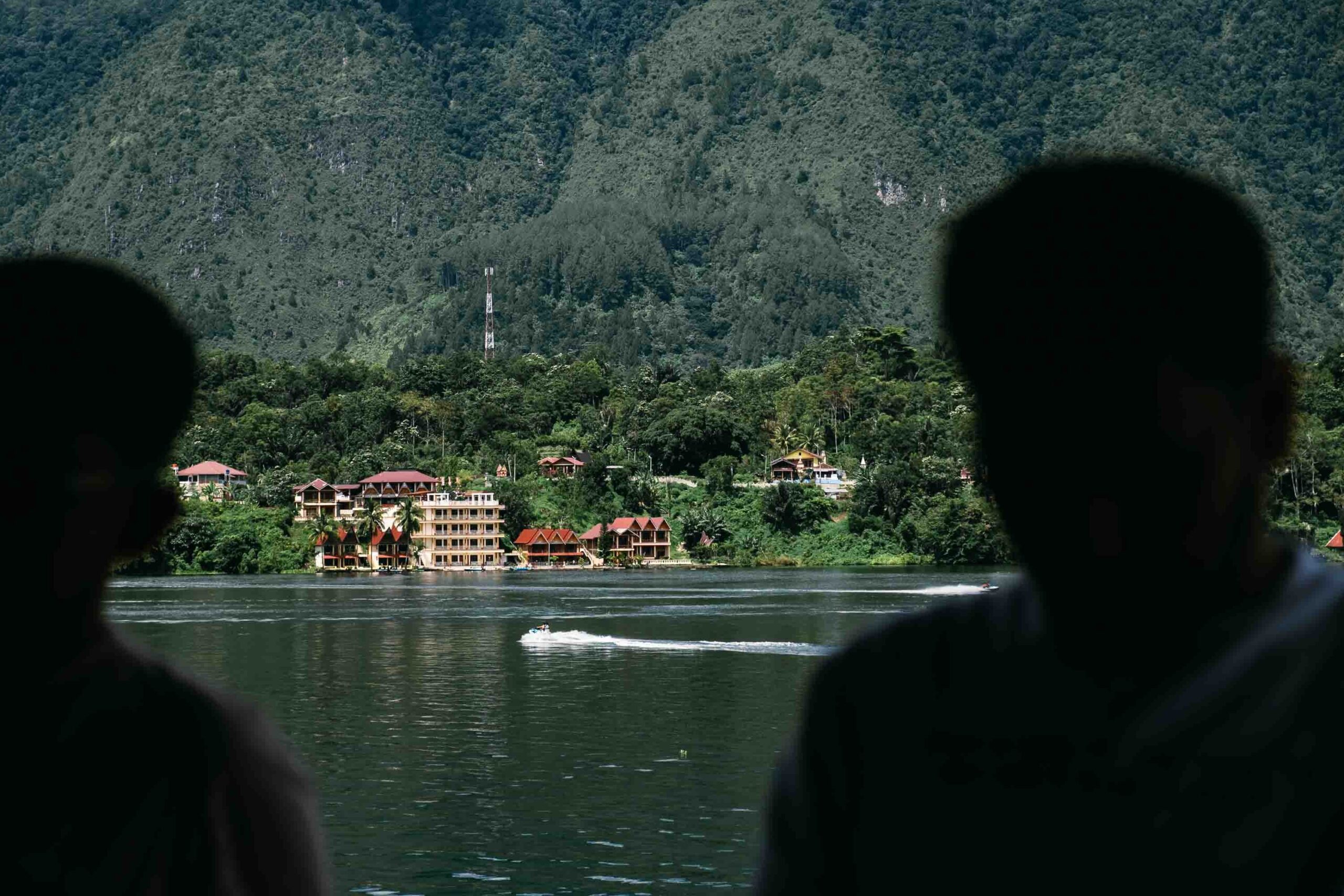
After the rainforest, the journey leads to Danau Toba, the world’s largest volcanic crater lake. The drive from Tangkahan takes four hours, revealing a landscape of pine forests and steep cliffs. At an elevation of 3,280–5,250 feet, the fertile volcanic soil supports thriving coffee plantations, deeply intertwined with Batak culture.
The lake’s formation is steeped in local legend: a farmer’s betrayal led to an eruption that birthed Toba. The island of Samosir, rising from the lake’s center, holds the story of the farmer’s son, a symbol of resilience and cultural identity.
Immersing in Batak Traditions on Samosir Island
Samosir Island is the heart of Batak culture. Traditional villages like Tomok showcase ornate houses adorned with gorga carvings, representing harmony between humans, nature, and the spirit world. The hospitality of locals, like Ibu Tere, offers an authentic experience beyond luxury resorts.
Sharing meals like Mi Gomak (Batak noodles) and sipping Siborongborong Coffee, a single-origin Arabica grown at 4,920 feet, connects visitors to the daily life of the community. The sound of the hasapi, a traditional lute, fills the evenings, completing the immersive cultural experience.
The journey through North Sumatra isn’t just a trip; it’s a reconnection with ancestral roots, a lesson in sustainable living, and a testament to the power of community-driven conservation. It’s a reminder that true travel lies not just in seeing new places, but in understanding the stories they hold.