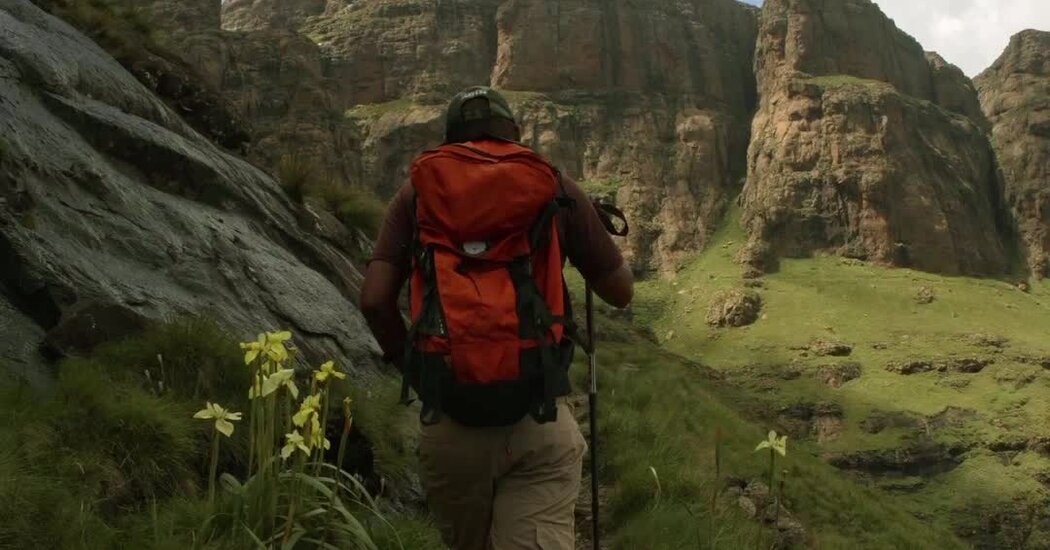
The Drakensberg mountain range in South Africa offers a dramatic escape from urban life, combining challenging hikes with stunning natural beauty. Located roughly 200 miles south of Johannesburg, this region is part of the Great Escarpment, a vast geological feature stretching over 3,000 miles across southern Africa.
Geological Significance and Landscape
The Drakensberg rises to over 11,400 feet in places, showcasing basalt ridges and sandstone valleys. Its most iconic feature is “the Amphitheater,” a massive cirque of cliffs that towers nearly 4,000 feet above the surrounding plains. The name Drakensberg itself, meaning “Dragon Mountains” in Dutch, reflects the region’s imposing presence.
Local Zulu communities refer to this area as uKhahlamba, meaning “barrier of spears,” a testament to its formidable natural defenses. The Drakensberg is not just a scenic wonder but a crucial part of the wider Great Escarpment, which defines the continental edge of southern Africa.
Hiking and Exploration
The Drakensberg is renowned among hikers for its extensive network of single-track trails. These paths lead past waterfalls, through wildflower meadows, and to ancient rock art sites. Despite its rugged terrain, the area is accessible, with lodges and accommodations scattered throughout the landscape.
Visitors can enjoy various activities beyond hiking, including fishing, biking, and horseback riding. Wildlife encounters are common, with baboons and eland (large antelope with distinctive corkscrew horns) frequently sighted in the area.
The Drakensberg offers a unique blend of challenging adventure and natural splendor, making it a prime destination for outdoor enthusiasts seeking an authentic African experience.