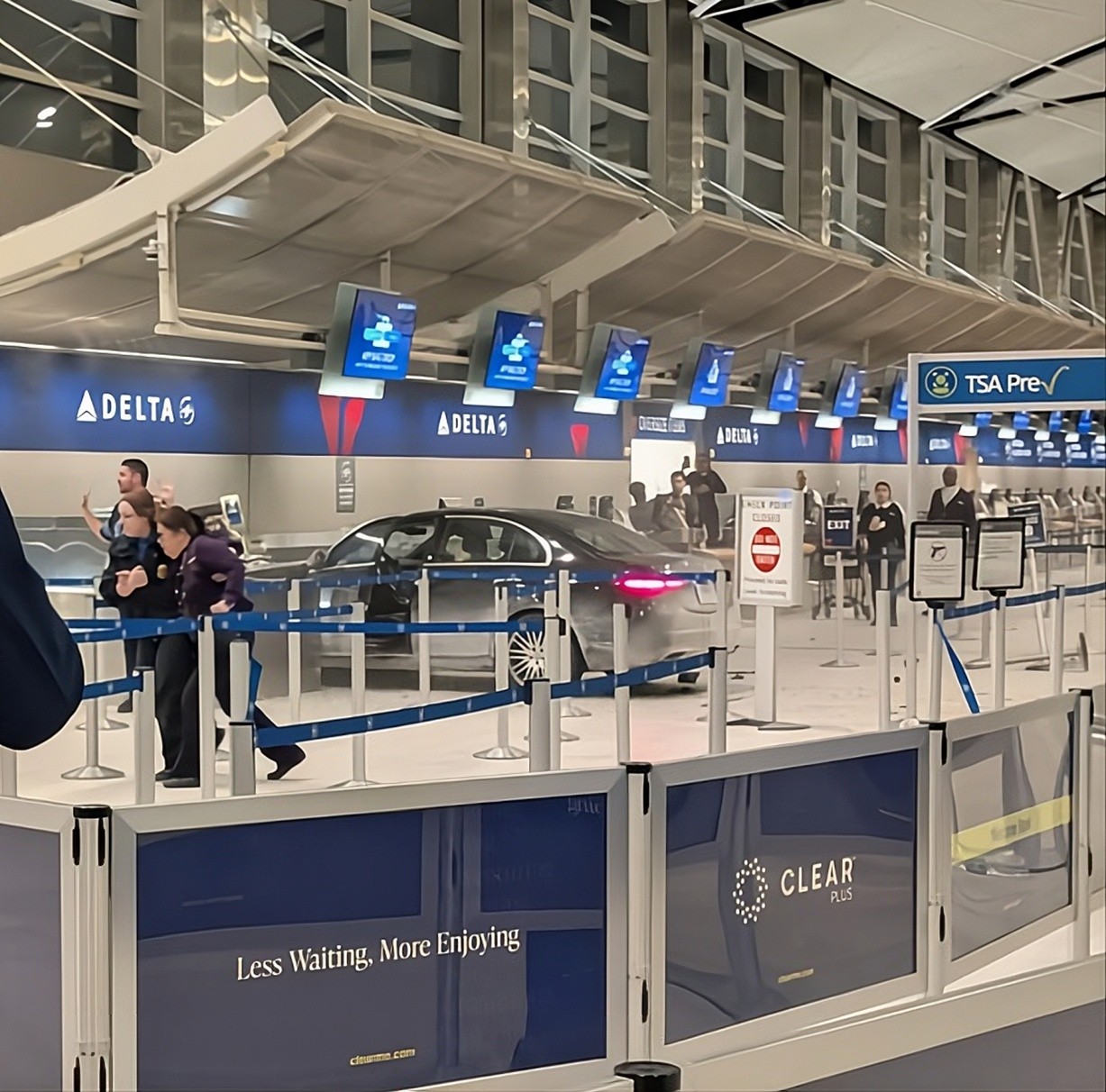
A Mercedes S-Class sedan smashed through the glass doors of the Detroit Metropolitan Airport’s Delta departures lobby Friday evening, coming to rest inside the ticket counter area. The incident occurred around 7:30 p.m., sending glass and debris scattering throughout the terminal.
Driver in Custody, No Serious Injuries
Law enforcement immediately detained the driver. While no passengers or staff sustained severe injuries, airport fire crews treated six people at the scene for minor cuts and shock. A K9 unit searched the vehicle but found no explosives or weapons, leading officials to suspect a mental health crisis may have been the cause.
Recurring Airport Breaches
The fact that barricades meant to prevent such incidents ended up inside with the car is troubling. However, this is not an isolated event. In recent years, airports have seen an alarming increase in vehicle breaches:
- A driver plowed through baggage claim and into an Alamo rental car facility.
- Another stole an SUV and crashed into the airport, claiming to be fleeing a zombie apocalypse.
- One incident involved a man chased by invisible trucks onto the Portland airport tarmac.
- In another bizarre case, a man stripped naked and drove a stolen truck into a Southwest Airlines 737.
- Just months ago, a historic people mover at Washington Dulles crashed into the terminal.
The Growing Risk of Airport Security Gaps
These events reveal a disturbing trend: airports remain vulnerable to determined individuals who bypass security measures. While mental health emergencies clearly play a role, the repeated success of these breaches raises serious questions about perimeter protection. Airports must re-evaluate physical barriers, response protocols, and psychological screening to prevent future incidents.
The increasing frequency of such cases underscores that current security measures are often insufficient to deter individuals intent on breaching airport boundaries. The Detroit incident serves as a stark reminder that even high-security facilities are not immune to such threats.