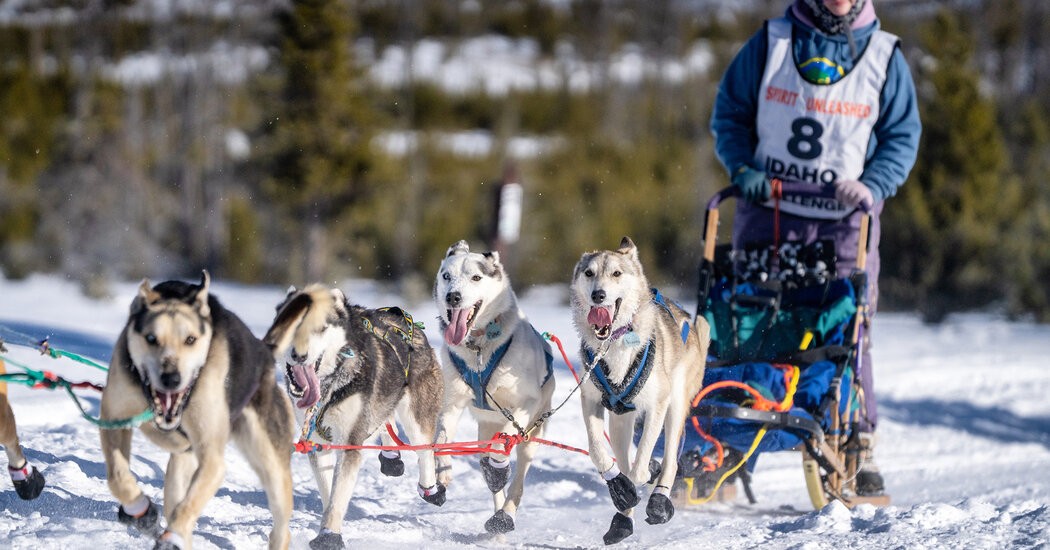
A historic snow drought plaguing the Western United States has forced the permanent closure of the Idaho Sled Dog Challenge, a key qualifying race for the prestigious Iditarod. The decision, announced Monday, marks the final blow after three consecutive years of cancellations due to insufficient snow and hazardous trail conditions.
The Cascade of Cancellations
The Idaho race is not alone. The Rocky Mountain Triple Crown – including competitions in Oregon and Montana – was entirely wiped out this winter. Organizers of the Montana race, Race to the Sky, cited “bare ground, icy and rock-hard sections… and no measurable snow” as the reason for cancellation. This domino effect highlights a troubling trend: extreme weather instability is making winter sports increasingly unreliable.
Why This Matters
The collapse of these events isn’t just about sports. It underscores a deeper issue: the West’s snowpack is disappearing, threatening not only recreation but also water supplies for millions. Snow acts as a natural reservoir, slowly releasing water during warmer months. Without it, communities face shortages, agriculture suffers, and ecosystems are disrupted. The fact that established races like the Iditarod itself are struggling to adapt – shortening routes and making detours due to snow scarcity – shows the severity of the problem.
The End of an Era
The Idaho Sled Dog Challenge hosted both a grueling 300-mile race and a 100-mile event, but both were canceled this year. Veteran race marshal Rick Katucki, who has been involved in the sport for three decades, admitted the end was inevitable. The unpredictability of weather, worsened by climate change, made sponsorship difficult to secure.
Weather Whiplash and Climate Change
Research confirms that the West is experiencing increased “weather whiplash” – rapid swings between extreme precipitation and severe drought. This instability isn’t random; it’s a hallmark of a changing climate. The lack of predictable snowfall is not just an inconvenience; it’s a systemic shift that threatens the viability of winter-dependent activities.
The demise of the Idaho Sled Dog Challenge serves as a stark warning. The West’s snow-dependent traditions are at risk, and the implications extend far beyond the mushing community. The disappearance of reliable snowpack is a symptom of a larger crisis, demanding urgent attention to mitigate further losses.