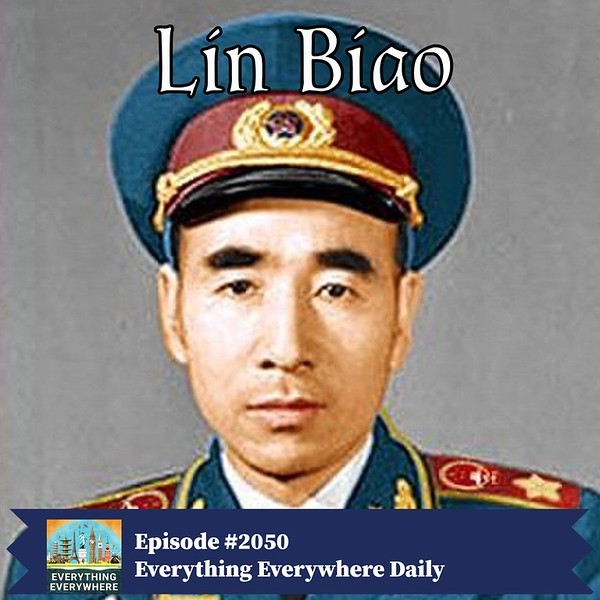
The Chinese Communist Party (CCP) often projects an image of monolithic unity, yet its history is riddled with ruthless power struggles. Few figures embody this reality as starkly as Lin Biao, whose ascent and catastrophic fall demonstrate the brutal calculus of survival at the apex of Chinese politics. His story is not merely a biography, but a cautionary tale about absolute loyalty, unchecked ambition, and the perils of being too close to unchecked power.
From Revolutionary to Rising Star
Born in 1907 during a period of immense social and political turmoil in China, Lin Biao’s path to prominence began with military training at the Whampoa Military Academy in the 1920s. This academy, a training ground for both Nationalists and Communists, cultivated his tactical brilliance and discipline. Lin’s early involvement in the May Fourth Movement, a period of student-led protests, fueled his radical political beliefs.
The critical turning point came with the 1927 Shanghai Massacre, orchestrated by Chiang Kai-shek’s Nationalists in collaboration with criminal gangs. The slaughter of thousands of communists forced Lin to definitively choose a side, aligning himself with the CCP. This decision would prove pivotal, leading to a close alliance with Mao Zedong that would shape the course of Chinese history.
The Long March and Mao’s Trust
Lin Biao’s reputation solidified during the Long March (1934–1936), a grueling 6,000-mile retreat that saw the Communist forces nearly decimated. Commanding the 1st Army Corps, he displayed courage and tactical skill, earning Mao Zedong’s unwavering trust. This loyalty would become his greatest asset…and eventually, his undoing.
The Long March wasn’t just a military retreat; it was a brutal test of endurance that left only 8,000 survivors from the original 86,000 marchers. Lin’s survival and effectiveness during this ordeal cemented his position as a key figure in the CCP.
The Cultural Revolution and the Cult of Personality
By the time of the Cultural Revolution (1966–1976), Lin Biao had ascended to become Mao Zedong’s most trusted lieutenant. Recognizing Mao’s fears of losing control, Lin oversaw the creation of a cult of personality around the leader. This involved the widespread dissemination of propaganda, including the ubiquitous Little Red Book —a collection of Mao’s sayings designed to reinforce communist ideology.
The goal was clear: to consolidate Mao’s authority and silence dissent. Lin’s role in this campaign was rewarded with unprecedented political power, culminating in his formal designation as Mao’s successor in the 1969 Constitution. This move was extraordinary, explicitly naming a successor in a constitutional document—a level of clarity rarely seen in authoritarian regimes.
The Fall from Grace and a Doomed Escape
The very power that elevated Lin Biao ultimately sealed his fate. As Mao grew increasingly paranoid, he began to suspect Lin of plotting a coup. By 1971, Mao publicly discredited Lin, effectively issuing a death sentence within the CCP.
Facing imminent purge, Lin’s son, Lin Liguou, devised “Project 571”—a failed assassination attempt against Mao. When the plot was discovered, Lin and his family fled in a Hawker Siddeley Trident aircraft toward the Soviet Union, hoping for asylum. Instead, the plane crashed in Mongolia on September 13, 1971, killing everyone on board.
The CCP immediately denounced Lin as a traitor, erasing his legacy from official history. The incident exposed the brutal reality of power within the party, where loyalty was rewarded only until it became inconvenient.
Lessons from a Tragic End
Lin Biao’s story underscores a fundamental truth about authoritarian systems: absolute loyalty is a currency that expires the moment it ceases to be useful. His rise was built on unwavering devotion to Mao, but his fall demonstrated that even the most trusted lieutenants can be discarded when they become perceived threats. Like a tragic figure in a Shakespearean drama, Lin was ultimately undone by the very power he helped create. His fate serves as a chilling reminder that in the ruthless calculus of dictatorships, survival depends not on devotion, but on being indispensable until the moment you are not.