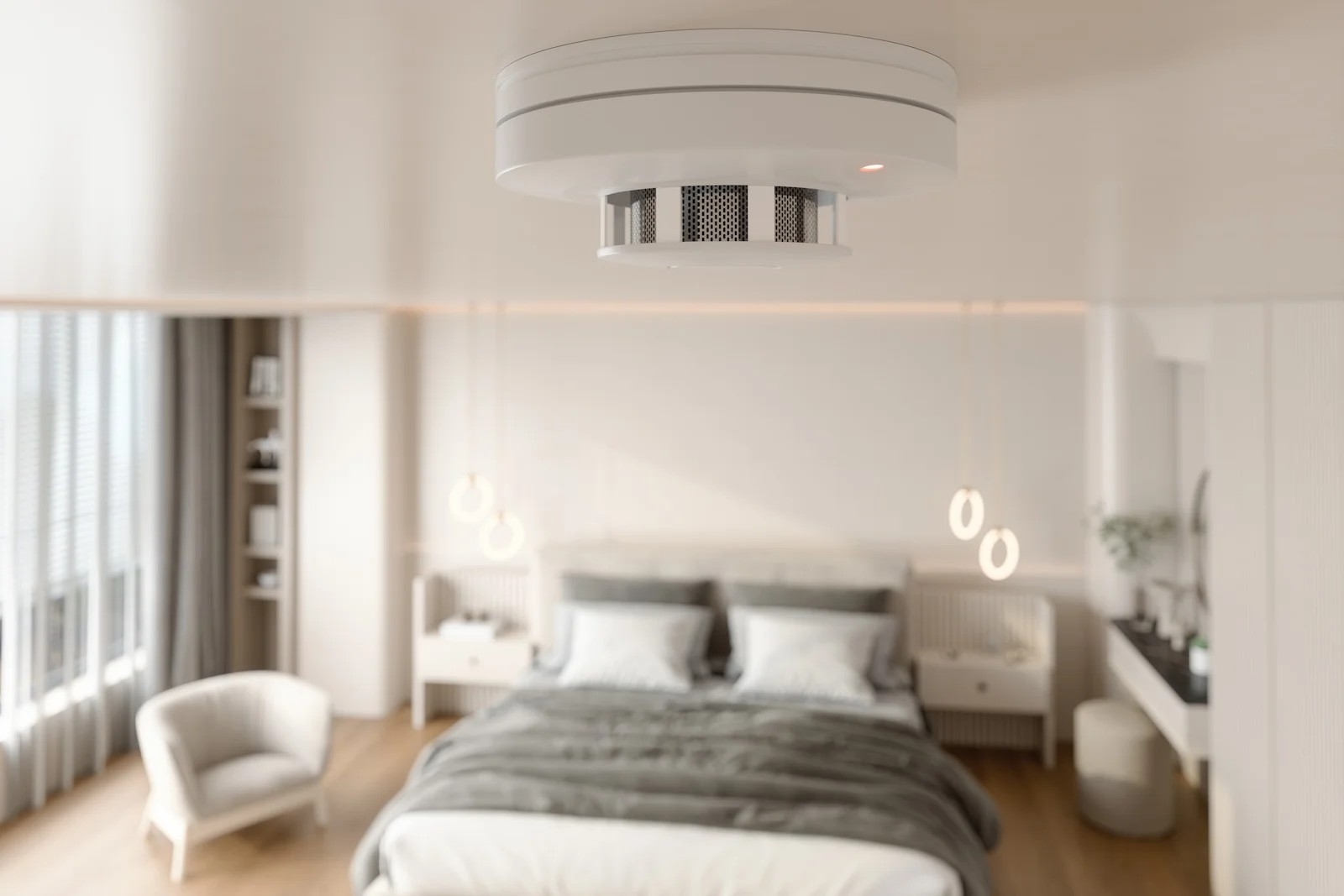
Across the hospitality industry, a growing number of hotel guests are being slapped with hefty smoking fees despite never lighting up in their rooms. The culprit? Air quality sensors—specifically, devices made by the company Rest—that are increasingly being used as the sole judge, jury, and executioner in disputes over smoking violations.
The problem isn’t isolated incidents; it’s a systemic issue where automated reports are treated as irrefutable proof, leaving nonsmokers to fight for refunds, sometimes for hundreds of dollars.
False Accusations and Unresponsive Hotels
One recent case involved Mikel Wilham and his wife, who were celebrating the end of his chemotherapy with a trip to Las Vegas. Upon checking out of The Strat, they were charged a $396 smoking fee. The hotel cited an air quality report from a hidden sensor in their room as definitive proof of smoking. Despite being lifelong nonsmokers, the hotel refused to inspect the room or reconsider the charge until external pressure was applied.
Similar experiences have been reported by other guests, including Joseph Tincher and his pregnant partner, who were hit with a $500 smoking fee at the Kimpton Palladian in Seattle. Despite the couple’s documented history of avoiding smoking due to asthma and pregnancy, the hotel insisted the sensor was never wrong. Tincher filed a complaint with the Better Business Bureau and a credit card dispute, but the hotel fought back, providing the sensor’s printout as final proof.
Why This Is Happening Now
The reliance on air quality sensors is a recent trend driven by a desire to enforce nonsmoking policies and avoid costly cleaning or damage claims. Hotels are incentivized to automatically charge guests for smoking violations, as the sensors provide a convenient (if often inaccurate) method of detection. However, the sensors themselves are not foolproof and can be triggered by other airborne particles, like cooking fumes, cleaning products, or even high humidity.
The real issue is that hotels are treating the sensors’ reports as absolute truth without verifying them through visual inspection or guest communication. This leaves customers with little recourse when falsely accused, as hotel staff are often instructed to defer to the machine’s findings.
The Fight for Refunds and What You Can Do
For couples like Justin Hasty and Patrick Brown, the battle for a refund can take months of persistence. Hasty, a member of the Church of Latter-day Saints, was accused of smoking at Home2 Suites in Philadelphia, despite his religious covenant against such behavior. Brown, whose girlfriend was busy styling her hair with aerosols in the bathroom, received a $566 smoking fee at The Strat in Las Vegas. Both were forced to seek outside help to get their charges reversed.
To protect yourself from surprise smoking fees:
- Document Everything : Take photos or videos upon entering your room to prove its initial cleanliness.
- Request Inspection : If you are accused, demand an immediate room inspection.
- Gather Evidence : Medical records, travel itineraries, or witness statements can help disprove false charges.
- File Disputes : Credit card disputes and BBB complaints can sometimes force hotels to reconsider.
The trend of false smoking fees is a growing concern for travelers. Unless hotels implement better verification methods, guests will continue to be penalized for violations they did not commit.