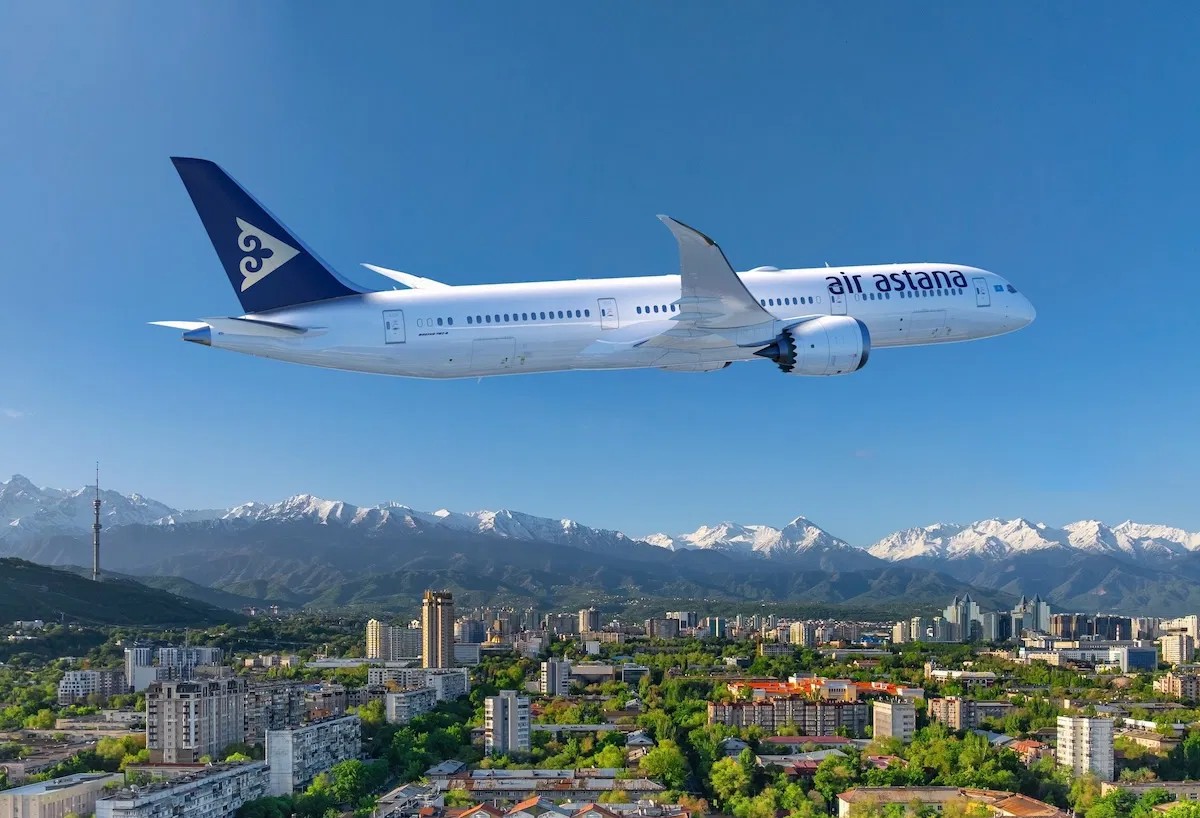
Kazakhstan’s flag carrier, Air Astana, has finalized an order for up to 18 Boeing 787-9 long-haul aircraft, signaling a major expansion in its international flight network. The deal, announced initially in November 2025 and confirmed in February 2026, includes five firm orders, five options, and five purchase rights, making the full order contingent on future decisions.
Fleet Modernization and Expansion Plans
Air Astana currently operates a fleet of around 35 aircraft, including modern Airbus A320 family planes and Boeing 767s. The addition of the 787-9 Dreamliners will allow the airline to replace older aircraft and extend its reach to destinations in Asia, Europe, and North America.
The first three 787-9s are expected to be delivered through lessors between late 2026 and 2028, with the remaining firm orders arriving between 2032 and 2035. The airline plans to configure the new aircraft with 303 seats, optimized for long-haul passenger comfort and efficiency.
Strategic Importance of the Order
This purchase aligns with Air Astana’s broader strategy to enhance service from Central Asia to global markets over the next decade. CEO Peter Foster stated that the 787-9’s fuel efficiency, range, and passenger-friendly cabin design will be key to the airline’s growth. The move reflects a wider trend of expansion in Central Asian aviation, with neighboring carriers like Somon Air and Uzbekistan Airways also announcing new aircraft orders.
Regional Aviation Growth and Air Astana’s Position
Central Asia is emerging as a significant region for aviation development, and Air Astana stands out as one of the most well-managed carriers in the area. The airline’s modern fleet, operational reliability, and financial stability position it for continued success.
The airline’s current absence from major global alliances raises questions about potential partnerships and loyalty program integrations, which could further enhance its competitiveness.
In conclusion, Air Astana’s investment in the Boeing 787-9 fleet represents a calculated step toward long-haul expansion and positions the airline as a key player in Central Asia’s growing aviation market. The long delivery timeline indicates a strategic, phased approach to modernization and growth.