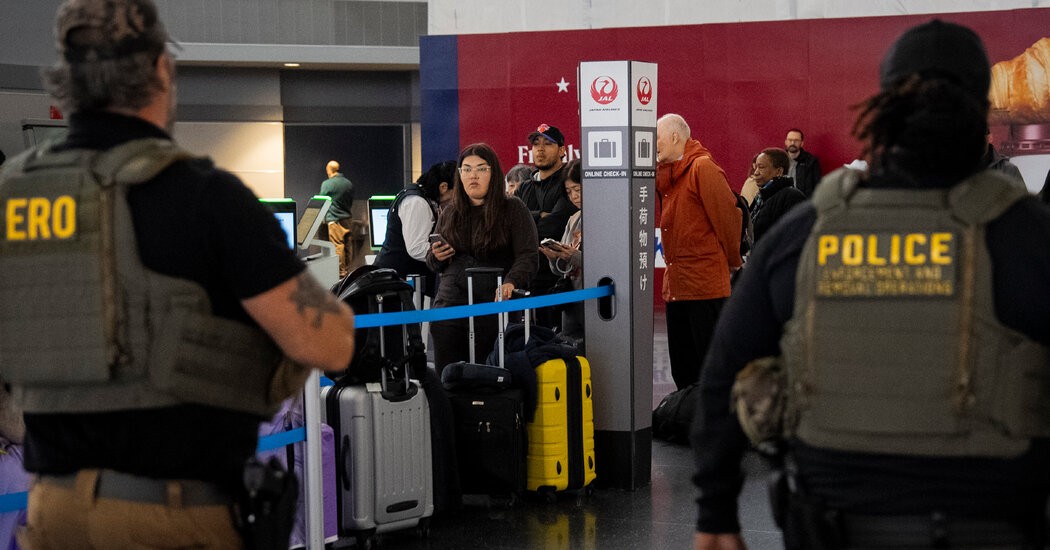
Immigration and Customs Enforcement (ICE) agents were dispatched to multiple major U.S. airports on Monday to assist with understaffed Transportation Security Administration (TSA) checkpoints. The deployment—involving an estimated 100 to 150 officers—occurred as travelers faced significant delays and missed flights due to staffing issues.
Deployment Details and Traveler Concerns
Agents were observed at Newark Liberty International (New Jersey), Hartsfield-Jackson Atlanta International, O’Hare International (Chicago), and George Bush Intercontinental (Houston). While some patrolled terminals, others were stationed at security lines, largely as observers rather than active support. Some TSA agents reported believing the ICE presence was primarily for crowd control, with limited direct assistance provided.
Contradictory Statements
The official purpose of the deployment remains unclear, and has been subject to conflicting statements. While officials said arrests were not expected, this appeared to contradict President Trump’s earlier comments on the matter. The contradiction highlights a broader issue of unclear federal directives in crisis response.
Minimal Impact on Flight Disruptions
Despite the ICE deployment and a major airport closure in New York due to an accident, major flight delays remained minimal. However, long wait times at TSA checkpoints caused many travelers to miss connections. Some airports—including those in Minneapolis and Chicago—managed to avoid significant disruptions, but hubs in Atlanta and the New York City area stopped updating wait-time trackers, leaving passengers stranded and uncertain.
Context and Implications
The ICE deployment underscores the growing strain on U.S. travel infrastructure. TSA staffing shortages have been a persistent problem, exacerbated by budget cuts and attrition. The use of ICE agents—primarily an enforcement agency—to address logistical shortfalls raises questions about the appropriate response to infrastructure failures. This situation illustrates a broader trend: federal agencies being stretched beyond their intended roles in response to systemic issues.
The incident highlights how quickly transportation bottlenecks can affect millions of travelers, and why investment in stable staffing is critical to ensuring smooth operations. The confusion surrounding the ICE deployment also points to a need for clear, consistent messaging from federal authorities during times of crisis.