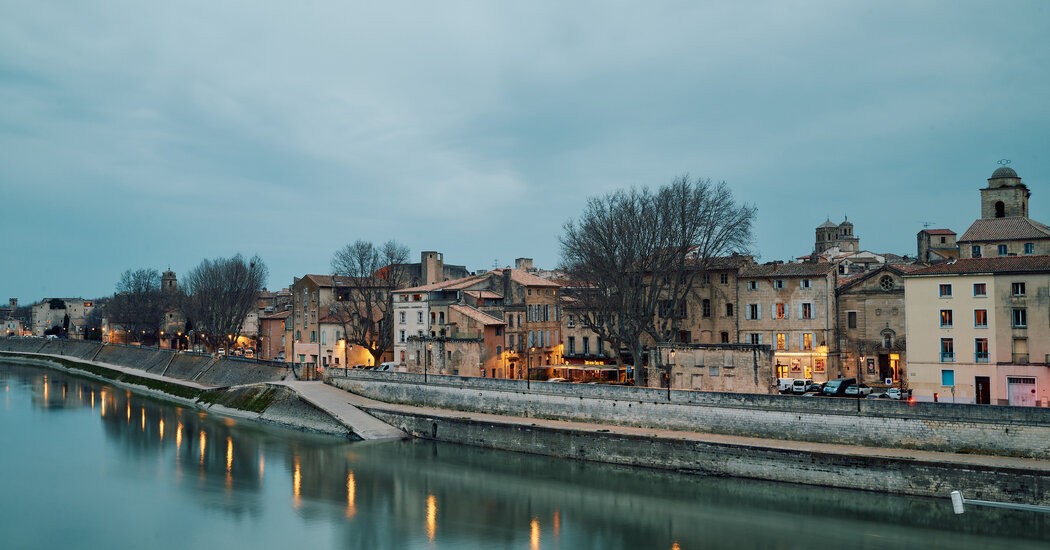
The city of Arles, in southern France, is a place where layers of history are visible in plain sight. Founded as a trading post as early as 600 B.C., it was transformed into a major Roman colony by Julius Caesar in 46 B.C. Today, visitors can explore remarkably preserved ruins: a vast amphitheater, ancient thermal baths, and the remains of an underground forum that once bustled with imperial life.
A Dive Into the Past : In recent decades, archaeological discoveries have further deepened Arles’ historical significance. In the early 2000s, divers recovered a remarkably well-preserved bust of Caesar from the Rhône River, now displayed at the Arles Museum of Antiquity – affectionately called the “Blue Museum” by locals for its distinctive azure glass walls. This artifact underscores the city’s deep ties to Roman power and culture.
Van Gogh’s Influence : While Arles is steeped in ancient history, it also holds a prominent place in the history of modern art. Vincent van Gogh spent 15 months here starting in 1888, drawn to the Provençal light and landscapes that would define some of his most iconic works. Though other artists like Paul Gauguin followed, the city’s identity remained rooted in its past for many years.
A New Cultural Hub : That began to shift with the completion of Luma Arles in 2021. This 27-acre cultural center, founded by Swiss art patron Maja Hoffmann, revitalized a former railway complex into a vibrant space for contemporary art, design, and artist residencies. The site includes converted 19th-century factories, a striking glass-and-steel tower designed by Frank Gehry, and a public park.
Arles is not simply a preserved relic of the past; it’s a dynamic intersection of ancient history, artistic legacy, and modern creativity. The city proves how a place can honor its roots while also embracing a future that builds on, rather than replaces, its foundations.