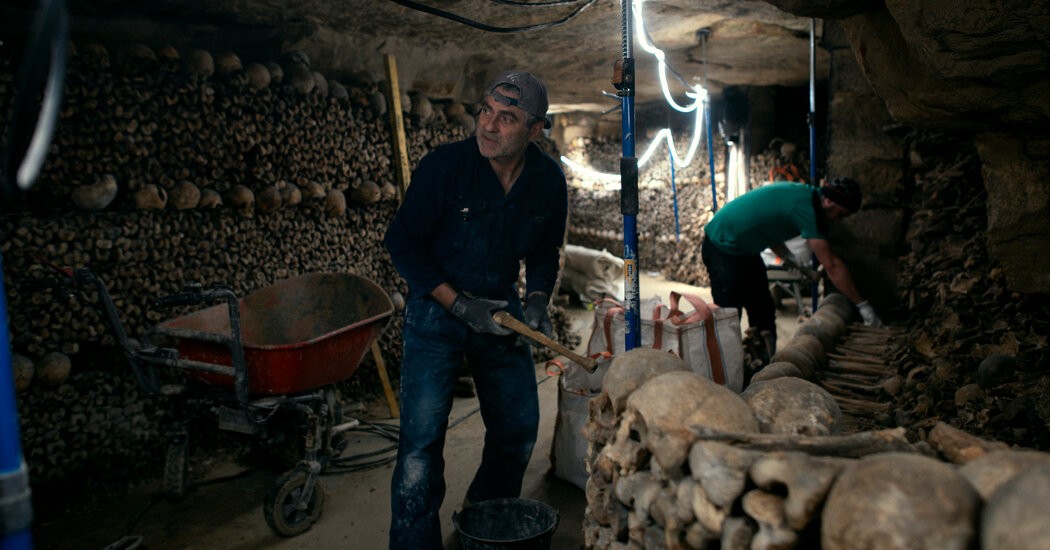
For over two centuries, the Paris Catacombs have served as a silent, subterranean monument to the city’s history. Beneath the bustling streets lies a vast, macabre labyrinth housing the remains of an estimated six million Parisians. Now, after a period of intensive renovation, this historic ossuary is preparing to welcome its 600,000 annual visitors back into its dimly lit depths.
A Modern Upgrade for an Ancient Tomb
Over the last five months, a specialized team of architects, designers, masons, and technicians has been working to modernize the visitor experience without compromising the site’s somber atmosphere. The renovation focused on several critical infrastructure and aesthetic improvements:
- Enhanced Safety and Comfort: The installation of new ventilation and lighting systems to improve air quality and visibility.
- Structural Preservation: Careful restoration of the iconic bone walls that line the tunnels.
- Improved Accessibility: The rollout of new audio guides to provide deeper historical context.
- Expanded Sightlines: Previously unlit sections of the labyrinth will now be visible to the public, offering a more comprehensive view of the site.
Despite these upgrades, officials are careful to maintain the site’s solemnity. “The goal isn’t to turn it into Disneyland,” noted Isabelle Knafou, the administrator of the catacombs, emphasizing that the focus remains on preservation rather than spectacle.
From Overflowing Cemeteries to an Underground Ossuary
To understand the significance of the catacombs, one must look back to the 18th century. The tunnels themselves are not purpose-built tombs; they are ancient quarry networks originally excavated during the Roman era.
By the late 1700s, Paris faced a dire public health crisis. The city’s cemeteries had become dangerously overcrowded, leading to significant sanitation issues and the spread of disease. To solve this, authorities began a massive undertaking in 1785 to relocate the remains of citizens—those who lived between the 10th and 18th centuries—into the abandoned underground quarries. This transformed a logistical necessity into one of the most unique historical landmarks in the world.
The Scale of the Subterranean Network
While the public only accesses a specific, mile-long section of the tunnels, the true scale of the network is staggering. The labyrinth extends for hundreds of miles beneath the city, a hidden layer of Parisian history that continues to fascinate and unsettle.
The renovated visitor galleries are scheduled to reopen this Wednesday, offering a more polished yet equally haunting glimpse into the city’s past.
The restoration represents a delicate balance between modernizing a high-traffic tourist site and preserving the dignity of a massive, historical resting place.
The reopening of the renovated catacombs marks a significant effort to preserve Paris’s complex relationship with its dead, ensuring that this unique historical site remains both safe and accessible for future generations.