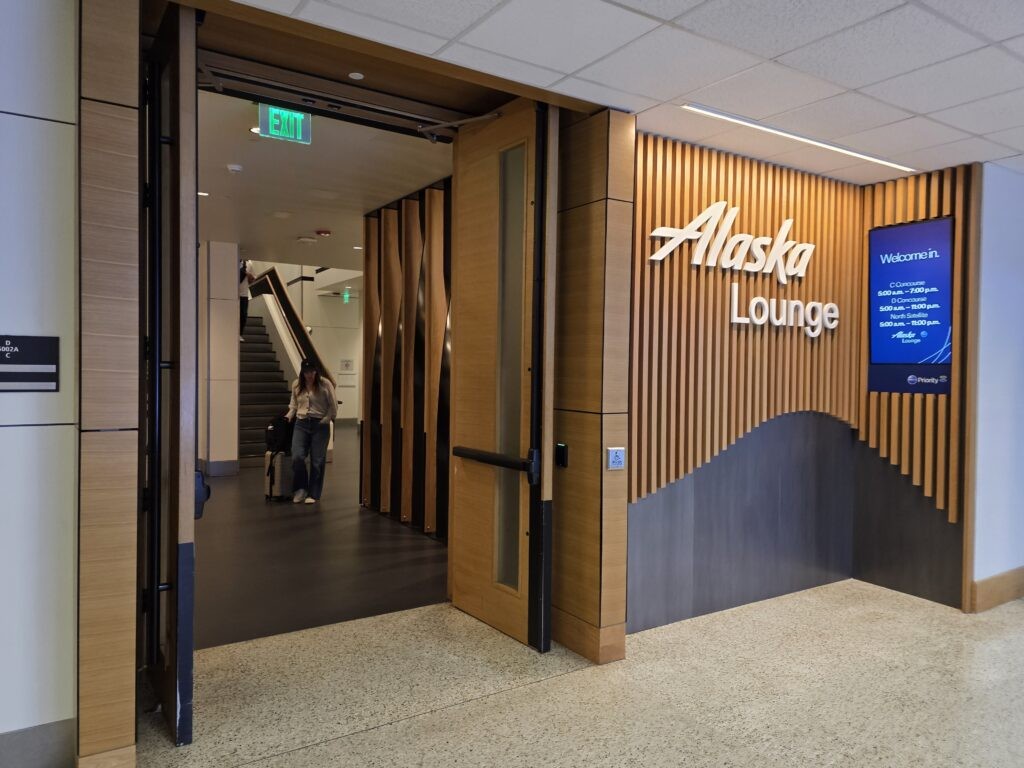
The Alaska Airlines Lounge at San Francisco International Airport (SFO) has officially rejoined the Priority Pass network. However, travelers should prepare for a new cost structure: access is no longer entirely “free” under the membership. Instead, cardholders must now pay a $15 per person co-pay directly to the lounge upon entry.
The Growing Trend of “Paid Access”
The introduction of this fee marks a shift in how premium lounges manage high-demand periods. This is not an isolated incident; it reflects a broader trend where lounge operators use mandatory surcharges to offset costs or manage capacity.
For example:
– The Alaska Lounge (SFO): Requires a $15 co-pay per person (including guests).
– The Club Lounge (SFO, Terminal 1): Offers paid reservations to bypass queues.
– Virgin Atlantic Clubhouse (LAX): Requires a mandatory $35 per person fee on top of the Priority Pass membership.
For travelers, this means that while the membership provides the right to enter, it no longer covers the full cost of the visit.
A Shrinking Presence in San Francisco
The decision to monetize Priority Pass access may be a symptom of a larger strategic shift for Alaska Airlines. Once a major player in the San Francisco market following its acquisition of Virgin America, Alaska’s footprint at SFO has significantly diminished.
The data reveals a stark contrast between the post-merger era and the current state of operations:
| Metric | Post-Virgin America Acquisition | Current Status |
|---|---|---|
| Daily Departures | ~83 | ~42 |
| Destinations | 35 | 24 |
The airline has systematically dismantled the expansive network it once boasted. Major routes—including Philadelphia, New Orleans, Nashville, and Indianapolis—have been cut. Even more concerning for long-term planning is the schedule of upcoming terminations:
* Boston & Austin: Service ending early 2026.
* Burbank, Phoenix, & Salt Lake City: Service ending March 2026.
* Orlando & Newark: Service ending mid-2026.
The Battle for SFO: Alaska vs. United
This retreat has allowed United Airlines to solidify its dominance at SFO. While Alaska’s market share has slipped from 13% in 2018 to roughly 9.5%, United has steadily grown its presence, increasing its seat share from 45% to nearly 49% in the same period.
The decline is attributed to a combination of factors: Alaska’s decision to redeploy aircraft to other regions and a slower post-pandemic recovery for its specific San Francisco routes compared to United’s robust operations.
Furthermore, the strategic value of the Virgin America acquisition appears to be waning. Alaska has largely retreated from the high-value, slot-constrained markets that the merger was intended to capture, such as Dallas Love Field, New York LaGuardia, and Washington National.
The reintroduction of the Alaska Lounge to Priority Pass with a mandatory fee signals a pivot toward monetization in a market where the airline is increasingly losing ground to dominant competitors like United.
In short, Alaska Airlines is scaling back its San Francisco operations and adjusting its lounge access models, marking a significant retreat from the ambitious expansion promised by the Virgin America merger.