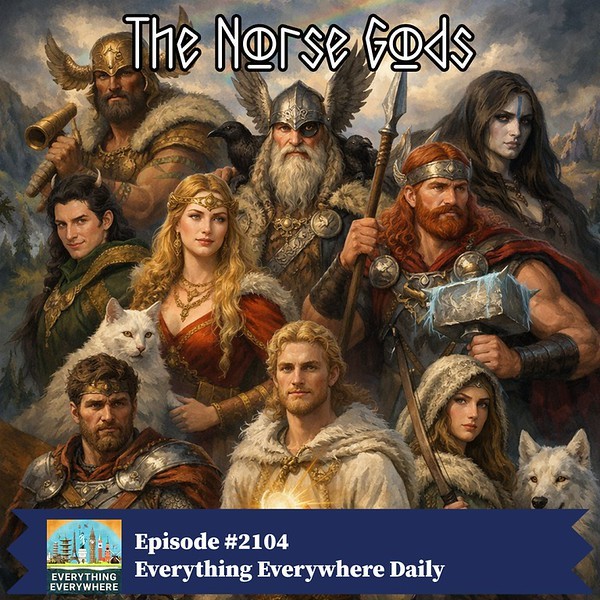
While modern pop culture often portrays the Norse gods as invincible superheroes, the original legends tell a much more profound and tragic story. Unlike the eternal deities of many other ancient religions, the Norse gods were deeply flawed, mortal in spirit, and—most importantly—aware of their own inevitable destruction.
To understand the Viking worldview, one must look beyond the battles and explore the intricate web of realms, divine tribes, and the looming shadow of prophecy that defined their existence.
The Architecture of Existence: The Nine Realms
The Norse universe is not a single plane of existence but a complex structure centered around Yggdrasil, the sacred World Tree. This cosmic ash tree connects nine distinct realms, each representing a different facet of reality.
The universe began from the collision of two primordial forces: Niflheim (the realm of ice) and Muspelheim (the realm of fire). Their meeting in the great abyss known as Ginnungagap gave rise to the first living beings. From the body of the primordial frost giant, Ymir, the gods Odin, Vili, and Ve fashioned the world as we know it.
The Nine Realms include:
- Asgard: The celestial home of the Aesir gods, characterized by law, order, and luxury. It is connected to the human world via the Bifrost, a shimmering rainbow bridge.
- Midgard: The realm of humanity, positioned between the gods and the giants, making it a constant target for cosmic conflict.
- Jotunheim: The harsh, rocky domain of the giants, who serve as the eternal enemies of the Aesir.
- Vanaheim: The natural, untamed home of the Vanir gods, who govern fertility and prosperity.
- Alfheim: A sanctuary of pure light inhabited by the light elves.
- Nidavellir & Svartalfheim: Underground realms housing the master-crafting dwarves and the mysterious dark elves.
- Hel: The somber underworld ruled by the goddess Hel, where most souls reside after death.
A Divided Divinity: Aesir vs. Vanir
Norse mythology features two distinct tribes of gods, a division that likely reflects historical mergers between different ancient cultures—perhaps a warrior-based society merging with an agricultural one.
The Aesir (The Gods of Power)
The Aesir are associated with war, governance, and the heavens. Key figures include:
* Odin: The All-Father; a seeker of wisdom and a god of war and death.
* Thor: The protector of Midgard, famous for his hammer, Mjölnir.
* Frigg: The Queen of the Gods, associated with marriage and foresight.
* Loki: A complex figure and blood brother to Odin. Though a giant by birth, he lives among the Aesir, acting as both a catalyst for their triumphs and the architect of their downfall.
* Heimdall: The vigilant watcher who guards the Bifrost.
The Vanir (The Gods of Nature)
The Vanir are more closely tied to the rhythms of the earth and magic. Following a long, inconclusive war with the Aesir, the two tribes reached a stalemate and merged through a system of hostages.
* Freya: A powerful goddess of love, beauty, and fate.
* Njörðr: The god of the sea.
* Freyr: The god of harvest and peace.
Ragnarök: The Prophesied End
The defining characteristic of Norse mythology is Ragnarök —the twilight of the gods. Unlike many mythologies that focus on the preservation of order, the Norse legends focus on the inevitability of chaos.
The prophecy describes a catastrophic sequence of events:
1. The Great Winter: A period of famine and anarchy that shatters human society.
2. Cosmic Chaos: The sun and moon are devoured by wolves, stars vanish, and the World Tree begins to shake.
3. The Final Battle: The giant wolf Fenrir breaks free, the Midgard Serpent Jörmungand rises from the ocean to poison the world, and the traitor Loki leads the army of giants against Asgard.
The gods engage in this final struggle knowing they are destined to lose. The battle concludes with the world sinking into the abyss, leaving creation undone.
“The Norse gods weren’t just divine beings; they were reflections of humans who told their stories.”
Conclusion
The enduring power of Norse mythology lies in its tragic realism. By depicting gods who struggle against a predetermined end, the Vikings created a worldview that embraced the hardship and unpredictability of life, finding meaning not in eternal victory, but in the courage to fight despite certain defeat.