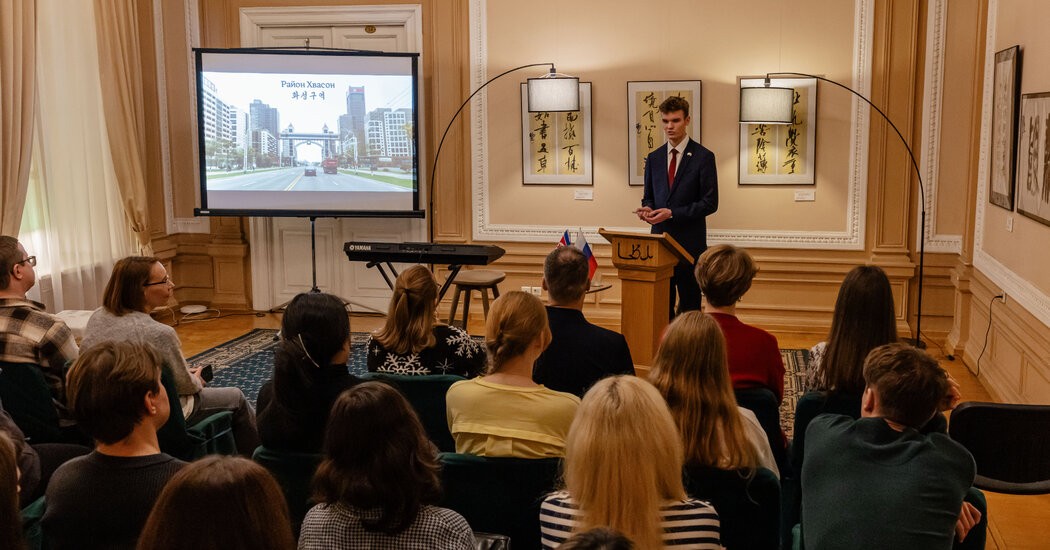
The geopolitical landscape of East Asia is undergoing a profound shift, and its effects are being felt by the younger generation in Russia. For years, the cultural pull of South Korea—driven by the global phenomenon of K-pop and television dramas—shaped the interests of many young Russians. However, as Russia’s relationship with the West has fractured, a new, more pragmatic, and highly political direction is emerging: the pivot toward North Korea.
A Changing Career Path
The personal ambitions of Russian students are beginning to mirror the state’s foreign policy. Anastasia Rusanova, a 21-year-old university student in Moscow, exemplifies this transition. Having studied Korean since she was 13 due to an interest in South Korean culture, she now sees her professional future moving in the opposite direction.
Following a recent exchange program to North Korea, Rusanova noted that as Russia strengthens its ties with Pyongyang, the career prospects within her own country are shifting. What was once a pursuit of “soft power” through South Korean culture is being replaced by a focus on a nation that is becoming a vital strategic partner for the Kremlin.
The Logic of an Unlikely Alliance
On paper, the partnership between Moscow and Pyongyang seems mismatched. North Korea is a totalitarian state with an economy roughly one-fiftieth the size of South Korea’s, often characterized internationally by human rights concerns and economic instability. However, the alliance is driven by hard power and mutual necessity rather than economic prosperity.
The strengthening of these ties is a direct consequence of Russia’s increasing isolation from Western markets and political institutions following the invasion of Ukraine in 2022. This isolation has forced the Kremlin to seek out “like-minded” partners—authoritarian regimes that share a desire to challenge the U.S.-led international order.
Military and Strategic Synergy
The relationship has moved beyond mere diplomacy into active military cooperation. This partnership provides critical advantages to both sides:
- For North Korea: The alliance offers a lifeline of aid, trade, and potentially advanced military technology, helping to alleviate the pressures of international sanctions.
- For Russia: Pyongyang has provided essential military support, including the deployment of thousands of soldiers to assist in the conflict, most notably during the Ukrainian incursions into Russia’s Kursk region in 2024 and 2025.
This “marriage of convenience” between two pariah states creates a powerful bloc that complicates Western efforts to manage regional security and the conflict in Ukraine.
Why This Matters
This shift represents more than just a change in diplomatic rhetoric; it is a fundamental realignment of Russian domestic and foreign priorities. By encouraging its citizens to view North Korea as a “promising” destination, the Russian government is attempting to normalize relations with a state that was once viewed with skepticism or even hostility.
This pivot suggests that for Russia, the strategic necessity of wartime alliances is now outweighing the cultural and economic allure of the democratic East Asian model.
Conclusion
As Russia continues to distance itself from the West, it is actively reshaping its social and professional landscape to align with its new authoritarian allies. The growing bond with North Korea is a clear signal that Moscow is prioritizing military and political survival over global economic integration.