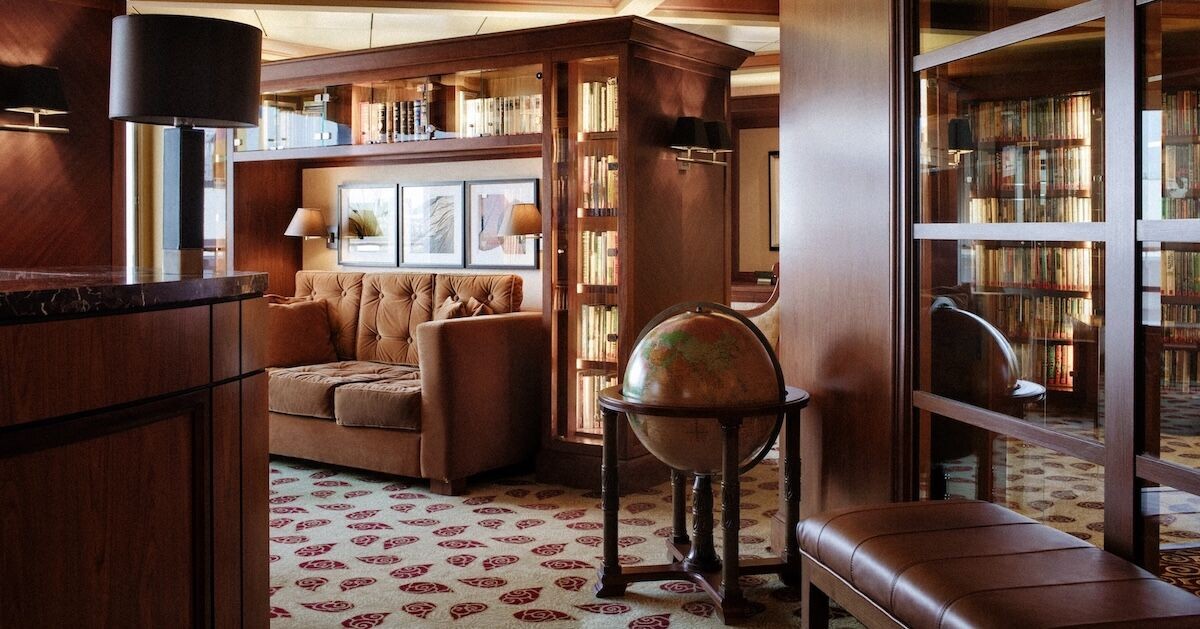
For many travelers, a cruise is a journey of discovery. While much of the focus in the maritime industry is often placed on gourmet dining or high-tech entertainment, a quieter, more sophisticated trend is emerging: the rise of the curated onboard library.
Far from being mere collections of dusty paperbacks, these libraries have become essential amenities designed to enrich the passenger experience, offering intellectual depth that matches the grandeur of the voyages themselves.
Viking: The Gold Standard of Curation
Viking has set a high bar for literary excellence by treating its onboard libraries as bespoke collections rather than mere amenities. With a fleet of approximately 100 ships, Viking ensures that every vessel—from its expansive ocean liners to its intimate river cruises—features a dedicated reading space.
The secret to their success lies in a long-standing partnership with Heywood Hill, a prestigious London bookstore established in 1936. Based in Mayfair, Heywood Hill brings a level of expertise usually reserved for private estates and corporate headquarters to the high seas.
A Bespoke Approach to Reading
The curation process is rigorous and highly intentional:
– Expert Sourcing: Books are not just bought in bulk; they are individually selected by specialists.
– Destination-Driven Content: Collections are tailored to the ship’s itinerary. For example, when building a polar exploration section, Viking consultants consulted with experts from the British Antarctic Survey to ensure historical and scientific accuracy.
– Meticulous Presentation: Every book undergoes a quality check, receives a custom Viking bookplate, and is arranged on “mock-up” shelves in London to ensure the aesthetic tone of the collection is perfect before it ever reaches a ship.
A Diverse Landscape of Maritime Libraries
While Viking relies on external experts, other major cruise lines employ different strategies to cater to their specific demographics, proving that a library is a vital tool for passenger engagement.
Holland America Line: Focus on Longevity
For Holland America, libraries are a necessity for passenger well-being, particularly on their ultra-long voyages that can exceed 120 days.
– In-House Management: Their entertainment and enrichment teams manage the collections.
– Data-Driven Selection: They balance bestsellers and popular fiction with titles that reflect the ship’s current destination and the specific age profile of the guests.
– Constant Evolution: The line is committed to freshness, planning to add 7,000 books across its fleet in 2026 alone.
Cunard: The Grand Tradition
As a brand with nearly two centuries of history, Cunard leans into the prestige of the written word. Their flagship, the Queen Mary 2, boasts the largest library at sea, housing over 8,500 volumes.
– Niche Expertise: The collections often feature heavy emphasis on maritime history.
– Social Responsibility: In a thoughtful nod to sustainability, Cunard partners with Better World Books to ensure that older or damaged volumes are repurposed to fund global literacy programs.
Specialized Collections for Niche Travelers
Other lines tailor their libraries to the specific “vibe” of their clientele:
– Star Clippers: Offers an atmosphere reminiscent of an old-fashioned gentleman’s club, featuring dark wood and Chesterfield sofas.
– National Geographic Lindblad Expeditions: Focuses on “visual storytelling.” Their libraries are heavy on non-fiction and high-quality photography, designed to complement the adventurous spirit of their passengers.
– Crystal Cruises: Provides a classic luxury experience with plush seating and a mix of timeless classics and contemporary mysteries.
Why This Matters
The investment in high-quality libraries reflects a broader shift in luxury travel. Modern travelers are increasingly seeking “slow travel” —experiences that allow for reflection, education, and mental stimulation. By providing curated, high-quality literature, cruise lines are doing more than just filling shelves; they are providing a sanctuary for the mind, allowing guests to engage deeply with the worlds they are sailing through.
Conclusion
From the massive 8,500-volume collection on Cunard’s Queen Mary 2 to the specialized polar texts on Viking ships, onboard libraries have evolved into sophisticated cultural hubs. They serve as a vital bridge between the physical journey of the voyage and the intellectual journey of the traveler.