The voice of Sir David Attenborough is more than a sound; it is a cultural anchor. For many, particularly those who grew up in the era of limited television choices, his narration defined the rhythm of Sunday evenings. While the landscape of British broadcasting has fragmented into hundreds of streaming options, Attenborough’s distinctive, soothing tone remains a universal constant—a bridge connecting past and present generations to the natural world.
The Power of Shared Experience
In the 1980s and 1990s, British viewers had only four channels. This scarcity created a shared cultural experience. Everyone watched the same shows, heard the same jingles, and listened to the same commentators. Against this backdrop, Attenborough’s documentaries stood out. His ability to whisper observations about rare plants or obscure creatures with a mix of authority and wonder transformed living rooms into portals to the distant corners of the Earth.
For a child in an east London suburb, these programs were not just entertainment; they were education. Series like The Living Planet and Life in the Freezer transported viewers to the Himalayas, the Sahara, and Antarctica. These broadcasts did more than inform; they instilled a sense of belonging to a larger ecosystem. They taught a simple but profound lesson: the natural world is not “over there”—it is everywhere, and we are part of it.
From Screen to Reality: The Galápagos Experience
While many of us have never set foot in Antarctica, the concepts learned from Attenborough’s films can be tested in reality. A recent journey to the Galápagos Islands, located 600 miles off the coast of Ecuador, offered a tangible connection to the theories and warnings Attenborough has championed for decades.
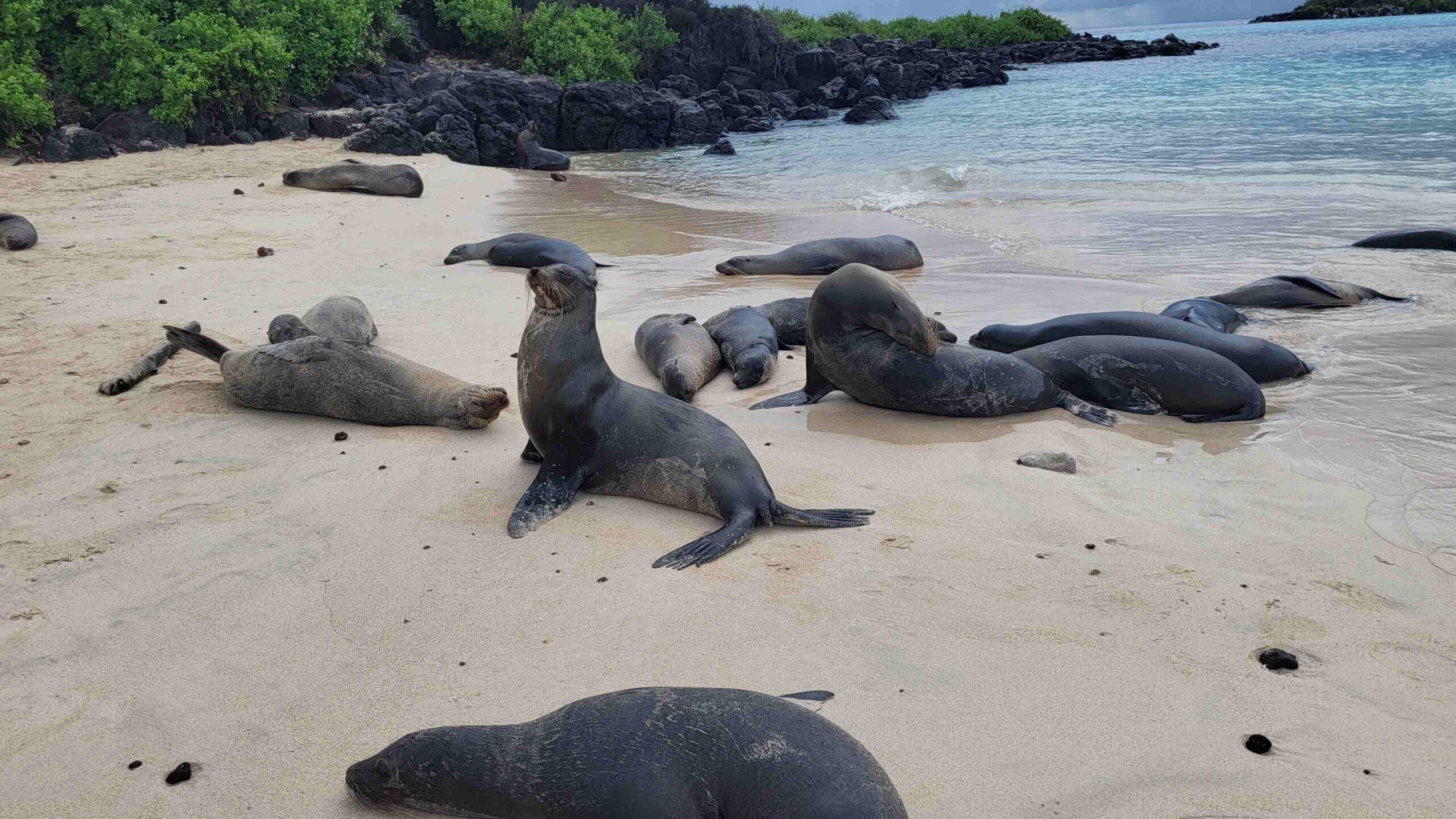
The Galápagos are a living laboratory for evolution. These volcanic islands, seemingly inhospitable, host species that have adapted in extraordinary ways. Seeing land iguanas, sea lions, and giant tortoises in their natural habitat brings Charles Darwin’s theories into sharp focus. It is a testament to nature’s resilience when left undisturbed.
However, the islands also serve as a stark warning. The visit occurred during an unusually hot and humid April, driven by rising sea temperatures. This climate shift threatens marine species that rely on cold, nutrient-rich waters, disrupting the entire food chain. The islands’ scarcity of freshwater—only San Cristóbal has a permanent lake—further highlights the fragility of these ecosystems.
Coexistence and the Role of Tourism
The Galápagos demonstrate both the risks and rewards of human interaction with nature. On inhabited islands like San Cristóbal, wildlife and humans coexist with remarkable ease. Sea lions lounge on benches and in the middle of roads, while blue-footed boobies perform their courtship dances with apparent indifference to observers. This comfort is a result of strict conservation management.
Tourism is often viewed as a double-edged sword, bringing pollution and foot traffic. Yet, Attenborough himself has argued that tourism is a “necessary evil” in conservation. Without the economic incentive provided by visitors, local communities might not have the means or motivation to protect these fragile environments. As he noted, conservation fails if the local population does not see value in preserving their land.
A Legacy of Connection
Attenborough’s career spans over eight decades, supported by a vast community of cinematographers, researchers, and producers. His recent work, such as Secret Garden, continues to inspire new audiences by exploring the wildlife in everyday backyards. This accessibility is key to his message: you cannot protect what you do not care about, and you cannot care about what you have never experienced.
His influence extends beyond entertainment. It encourages a mindset of stewardship. Whether through supporting conservation charities, respecting local communities, or simply taking time to observe nature, individuals can become custodians of the Earth. Attenborough’s voice reminds us that despite the challenges of climate change and pollution, there is still wonder to be found and protected.
“No-one will protect what they don’t care about, and no-one will care about what they have never experienced.”
Conclusion
David Attenborough’s legacy is not just in the documentaries he has narrated, but in the consciousness he has raised. He has taught generations to see the natural world not as a backdrop, but as a vital, interconnected system. His work continues to inspire curiosity and compassion, proving that even in times of environmental despair, learning and exploration remain powerful tools for change.