The Weight of Memory
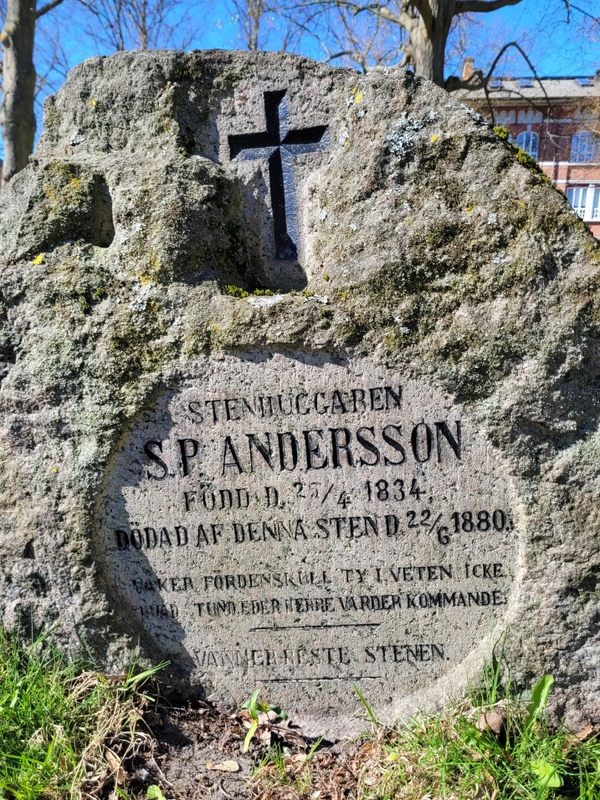
Knee-high rock.
Rounded. Unassuming.
You might step right over it without noticing, except for the Swedish text carved into the granite at S:t Pauli norra kyrkogård.
It tells a grim joke from the past.
“Killed by this stone.”
22 June 1808.
Friends raised it.
Simple.
Brutally so.
The Accident
Sven Peter Andersson was forty-six.
He had a wife, four kids, a life behind him, and a job that day involved heavy lifting at the Malmö harbor.
The chain on a crane snapped.
Just like that.
The block swung back, dropped, and took his life in a heartbeat.
It didn’t wait for grief.
It happened instantly.
His coworkers did something radical with their guilt or perhaps just their reverence.
They didn’t buy a generic slab.
They dragged that same murder weapon—no, marker—from the water to his plot.
The rock that ended his breath now sits above it.
Doesn’t get more direct than that.
Most old cemeteries hide their stories under flowery epitaphs or vague mentions of “accidental death.”
Andersson’s grave screams.
This stone isn’t a symbol.
It’s evidence.
Finding the Grave
If you want to see it:
Section 5.
Near the northwest corner of S:t Pauli Northern Cemetery.
It’s in central Malmö, accessible enough to stumble upon while killing time between coffee and shopping.
You’re looking at ten minutes walking from the main high streets.
Maybe twenty-five if you’re coming from Malmö Central Station and the legs aren’t cooperating.
Hop off the bus at Malmö Disponentgatan if you’d rather not walk.
Doors are open daily.
Seven-thirty in the morning till nine at night.
Go stand there for a second.
Look at the inscription.
Look at the rock.
Think about the chain.