It pulls 14 million tons.
That’s how much CO2 the remaining freshwater marshes and mangroves of the Everglades snatch from the atmosphere each year. A 2026 PNAS study puts it right there—equivalent to roughly 10% of all emissions from Florida’s cars and trucks. It works like a lock. Sawgrass roots. Mangrove networks. They trap carbon in peat soil. The ground stays saturated. Decomposition slows to a crawl. Keep the water there and the carbon stays put. Drain it though, and the deal flips. Oxygen hits dry peat. Microbes wake up hungry. Decades of stored carbon blast back into the sky in weeks.
“For most people it’s in one ear and out the other,” Tim Schwartzman says.
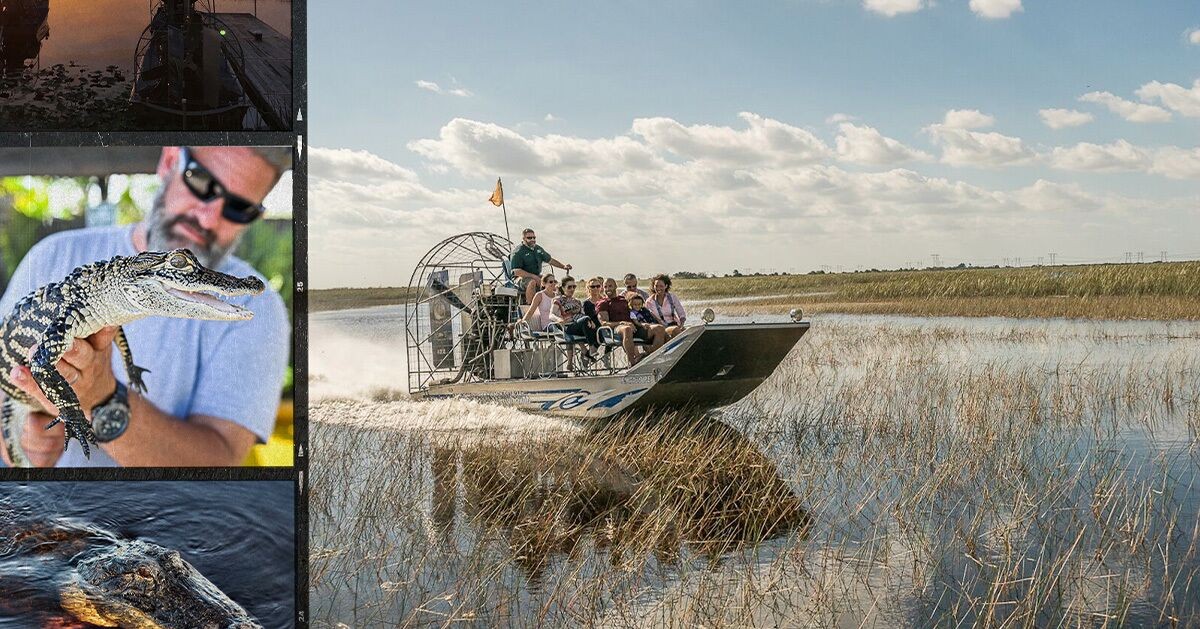
He’s known as Gator Tim. He’s spent half his life at Sawgrass Recreation Park since his future father-in-law bought the land shortly after 9/1. He doesn’t like data dumps. He won’t drown you in stats. Facts feel abstract on a bouncing airboat. He wants a different result. A twinge of curiosity. Maybe a question forms. Maybe you want to dig deeper later. Not just about this patch of South Florida either, but whatever wet spot you go home to.
The Shrinkage
Look at the map.
Once upon a time, this sheet of water stretched 60 miles wide. It flowed south from Lake Okeechobée at the pace of a slow walker. Filtering. Settling. Moving through wet prairie until it hit the salt of Florida Bay. It covered close to three million acres back then. That’s the historic size. Now? Less than half remains. Canals sliced through it. Levees cut it off. Pumping stations drained it dry for sugar fields, then citrus orchards, and later suburban sprawl. Sawgrass sits in the leftover bits. The nearby Water Conservation Areas act as fragments. They hold water and let it go slowly. Down to the National Park downstream. It’s a patchwork quilt of what was once one giant piece.
Gators Don’t Hate You
Carbon is easy to measure. Reputation isn’t.
Alligators carry bad PR. So do snakes. They get the “nuisance” label before they even blink. Schwartzman thinks changing minds is half the job. Old-timers in South Florida get it. If you’ve lived here long enough, a gator in a canal up the street isn’t scary, it’s normal. The new residents and the tourists? They still flinch. Ecotourism like this tries to chip away at the fear.
He keeps it simple with the gators. He strips the morality out of it. They aren’t villains. They aren’t heroes. They are just surviving. Every decision they make ignores politics or bias. It’s purely about being alive. This neutrality matters. It stands out against the invasive chaos closing in on native species. Iguanas bask on lawns now. Burmese pythons eat everything. These outsiders didn’t evolve here, yet they compete for food and space. When people understand that native wildlife is just trying to exist in a shrinking home, maybe they’ll stop viewing it as a pest to be eradicated.
“It’s very diverse and multi-faceted. Not just grass and water.”
Schwartzman hates the surface-level trip. He hates the 40-minute check box. Leave the boat, he says. Actually step into it. Wade through knee-deep water. Look for frogs in the cypress knees. Walk the mangroves. Feel the difference between the fresh marsh and the salt water. One mile shift changes the whole ecosystem. The pandemic forced more people outside. They stayed outside. He saw the shift in engagement. People finally looked up from screens.
Do Your Part
It’s not enough to look. You have to leave a mark, financially.
Sawgrass doesn’t just talk about restoration. They support SAFER (Supporters of Angilers and Everglades Restoration). They fund phosphorus tracking. Water quality data goes back to 1993, so they know the baseline. When you spend money at places like this, it supports that mission. Individual voices sound quiet alone. Group together and they add up. Organizations like Captains for Clean Water keep calling reps in Tallahassee. Letters go out. Phones ring. Tourism money is lobbying capital if you use it right.
It won’t save the world. Probably won’t even restore the full three million acres. But when you’re done eating your seafood and lying on the sand, you can know something. You spent your vacation helping keep the landscape intact. Not perfectly fixed, just held together for another year. Including ourselves