A recent incident involving American Airlines highlights a growing tension between the carrier’s push for premium revenue and its ability to deliver consistent service. A passenger who purchased the airline’s most expensive business class fare, Flagship Business Plus, was denied access to exclusive dining perks at Dallas/Fort Worth International Airport (DFW). When the customer sought recourse through the Department of Transportation (DOT), the airline responded with factually incorrect information regarding its own policies.
This case illustrates a critical issue in modern travel: the gap between marketing promises and operational reality. As airlines introduce tiered premium fares to maximize yield, customers face increased complexity in understanding what they are actually buying. When disputes arise, the lack of transparency and accurate internal knowledge can leave passengers feeling powerless.
The Purchase and The Denial
The incident began when a traveler, referred to here as Alan, booked a ticket for his mother from Dallas (DFW) to Santiago, Chile (SCL). Instead of the standard Flagship Business fare, he opted for Flagship Business Plus, paying an additional $325 for enhanced amenities.
According to American Airlines’ public marketing materials at the time of booking, this premium fare includes:
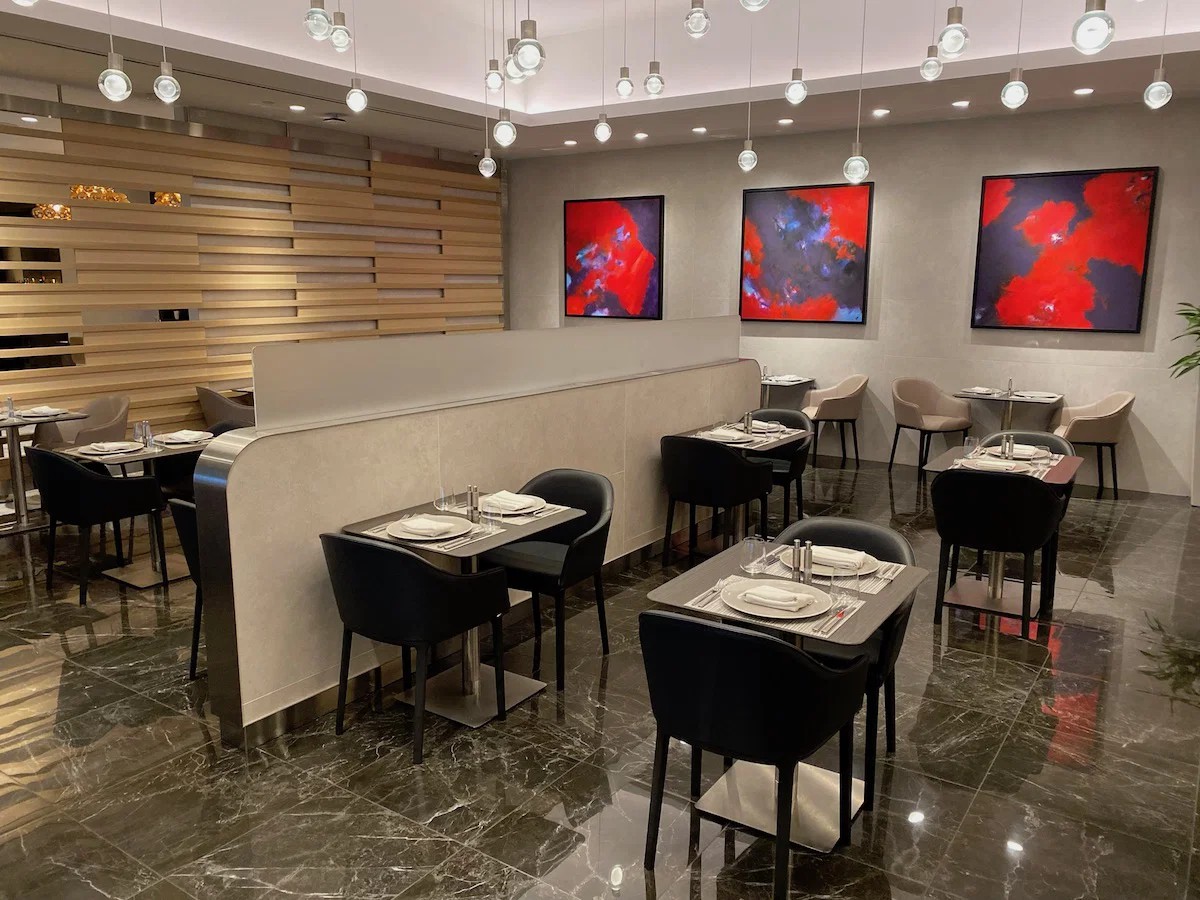
* Access to Flagship First Dining (an à la carte dining experience within the lounge).
* Flagship First Check-In.
* Additional checked baggage allowance.
* Priority boarding.
The primary motivation for the upgrade was the Flagship First Dining access. However, upon arrival at the DFW lounge, staff denied the passenger entry to the dining facility, claiming the fare was not eligible for that specific benefit.
Initial Acknowledgment of Error
Alan contacted American Airlines Customer Relations to report the discrepancy. The initial response was notably professional and appeared to validate the customer’s complaint. The agent stated:
“Based on your correspondence, it’s clear that your mother was denied access to Flagship First dining despite the additional $325 paid for Flagship Business Plus, and that conflicting and inaccurate information was provided by lounge staff regarding eligibility.”
The agent acknowledged that the benefit was not received and indicated that the case was being reviewed for a potential refund of the fare difference. This initial admission suggested that the airline recognized a failure in service delivery or staff training.
The Reversal and DOT Complaint
Despite the promising initial response, the resolution stalled. After nearly four weeks of silence, Alan received a contradictory email stating that because the ticket had been “used,” no refund could be issued. He was directed to submit a claim through a general customer relations portal, effectively kicking the can down the road.
Frustrated by the lack of progress and the conflicting information, Alan filed a complaint with the U.S. Department of Transportation (DOT). This regulatory body handles consumer complaints against airlines, often prompting a higher level of corporate scrutiny.
Misinformation in the Final Response
Following the DOT complaint, American Airlines issued a final response that contained significant factual errors. The agent claimed that Flagship Business Plus benefits, including dining access, were only available on specific aircraft types (Boeing 777-200, 787-8, or 787-9) and on routes to Europe (Amsterdam, Paris, Dublin, Rome, Frankfurt, or Madrid) or when departing from New York (JFK).
The agent asserted that because the flight originated in DFW and destined for Santiago, it did not meet “market eligibility requirements.”
This explanation is factually incorrect.
1. Public Documentation: Screenshots from American Airlines’ website at the time of booking clearly listed DFW to SCL as an eligible route for Flagship Business Plus perks.
2. Policy Contradiction: The agent also falsely claimed that Flagship Lounge access is limited to select markets for these fares. In reality, Flagship Lounge access is generally included with all Flagship Business class tickets, regardless of the specific “Plus” designation or route, provided the lounge is available.
By providing incorrect policy details in response to a government-regulated complaint, the airline not only denied the customer the service they paid for but also failed to provide a transparent explanation for the denial.
Why This Matters for Travelers
This incident raises several important questions about the state of premium travel:
- Complexity of Fare Structures: Airlines are increasingly selling “add-on” perks that are difficult for customers to verify at the point of sale. If a passenger must dig through obscure policy documents to confirm what they paid for, the value proposition is weakened.
- Internal Consistency: The disparity between the first agent (who acknowledged the error) and the final agent (who cited false restrictions) suggests a lack of centralized knowledge or training within the airline’s customer service team.
- Consumer Rights: When airlines deny paid services, customers often face a bureaucratic wall. The use of the DOT complaint process is one of the few effective levers consumers have, yet even this did not yield an accurate explanation from the carrier.
Conclusion
American Airlines’ attempt to monetize premium experiences through tiered fares like Flagship Business Plus is undermined by operational failures and inconsistent customer service. In this case, a passenger paid extra for a specific dining experience, was denied access, and was then met with misinformation when seeking redress.
Key Takeaway: When purchasing premium add-ons, travelers should document their booking details and be prepared to escalate issues through regulatory channels like the DOT if standard customer service fails to provide accurate, policy-compliant resolutions.