The archipelago of Haida Gwaii, located off the northern coast of British Columbia, is undergoing a profound transformation. For centuries, this territory—known to the Haida Nation as Xaayda Gwaay.yaay (“Islands of the People”)—was managed primarily as a resource zone for logging and commercial fishing. Today, it is becoming a model for indigenous-led tourism, where cultural preservation, environmental stewardship, and economic sovereignty are inextricably linked.
This shift is not merely a marketing strategy; it is the result of a historic legal and cultural reckoning. In 2024, the Canadian government recognized the Haida Nation’s sovereignty over their ancestral lands through the Haida Nation Recognition Act. This legislative milestone marks the first time in Canada that such full recognition has been granted, setting the stage for a new era where tourism is no longer an external industry imposed upon the land, but a tool for community revitalization.
From Extraction to Stewardship
To understand the current landscape, one must look at the deep historical wounds that shaped it. For over 170 years, colonial governance prioritized resource extraction over conservation. Traditional Haida practices were outlawed, leading to a severe decline in population and language loss. The land itself bore the scars of this era, with ancient old-growth forests threatened by industrial logging.
A pivotal moment in this history occurred in 1985 with the Lyell Blockade. Haida elders and activists protested to stop the logging of ancient cedar and Sitka spruce trees. This resistance not only saved specific forests but also led to the creation of Gwaii Haanas National Park Reserve and Haida Heritage Site.
Today, the contrast between the past and present is stark. Visitors can stand before 42-foot red cedar totem poles carved to commemorate that 1985 protest, housed in longhouses that once sheltered the demonstrators. These structures are not just historical artifacts; they are active symbols of a community reclaiming its narrative.
“We, Haida people, used to move across the land and waters throughout the year, following the food sources and seasonal cycles,” says Ivy Bell, Economic Development Manager at Hiellen Village Longhouses. “Hiellen is a cultural landscape: a place which holds embedded knowledge and stories, generational memory and ongoing cultural responsibility.”
The Watchman Program: Guardians of the Coast
Central to the Haida approach to tourism is the Haida Watchman Program. In the remote coastal wilderness of Gwaii Haanas, selected Haida men and women serve as caretakers from spring to fall. They are stationed at historic village sites, such as Hlk’yah G̱awG̱a (Windy Bay), ensuring that visitors respect the land and that cultural sites are preserved.
This program offers a unique window into Haida life. Visitors often meet watchmen like 85-year-old Gordie Russ, who shares personal stories that bridge the gap between the colonial past and the indigenous present. Russ, a former commercial fisherman and logger, reflects on the complexity of his history: “I guess you could call me a killer,” he admits, acknowledging his role in industries that depleted the very resources he now helps protect.
These interactions are designed to be educational and immersive. Visitors do not just see the scenery; they engage with the Haida concept of Yahguudang —respect for all living things. This principle dictates that there is no separation between the visitor, the environment, and the culture.
Balancing Access and Preservation
Despite the progress, significant challenges remain in balancing visitor demand with conservation. Gwaii Haanas operates under a strict quota system, allowing 33,000 day visits per year. These are divided among self-guided visitors, Haida-owned operators, and other commercial entities.
Currently, only two companies are fully utilizing the Haida allocation of 11,000 visits. This presents a paradox: while the region is famous for its pristine wilderness, many high-end recreational fishing lodges on the islands are not Haida-owned. As noted by local artisan and community member Gidins, “A lot of the tourists who come here don’t come for the culture—they come for the fishing and the hunting.”
This dynamic raises critical questions about economic sovereignty. If tourism revenue flows to off-island corporations, the local community gains little benefit. Conversely, Haida-owned ventures like Hiellen Village Longhouses ensure that revenue supports local jobs, infrastructure, and community resources.
The Future: Infrastructure and Youth Engagement
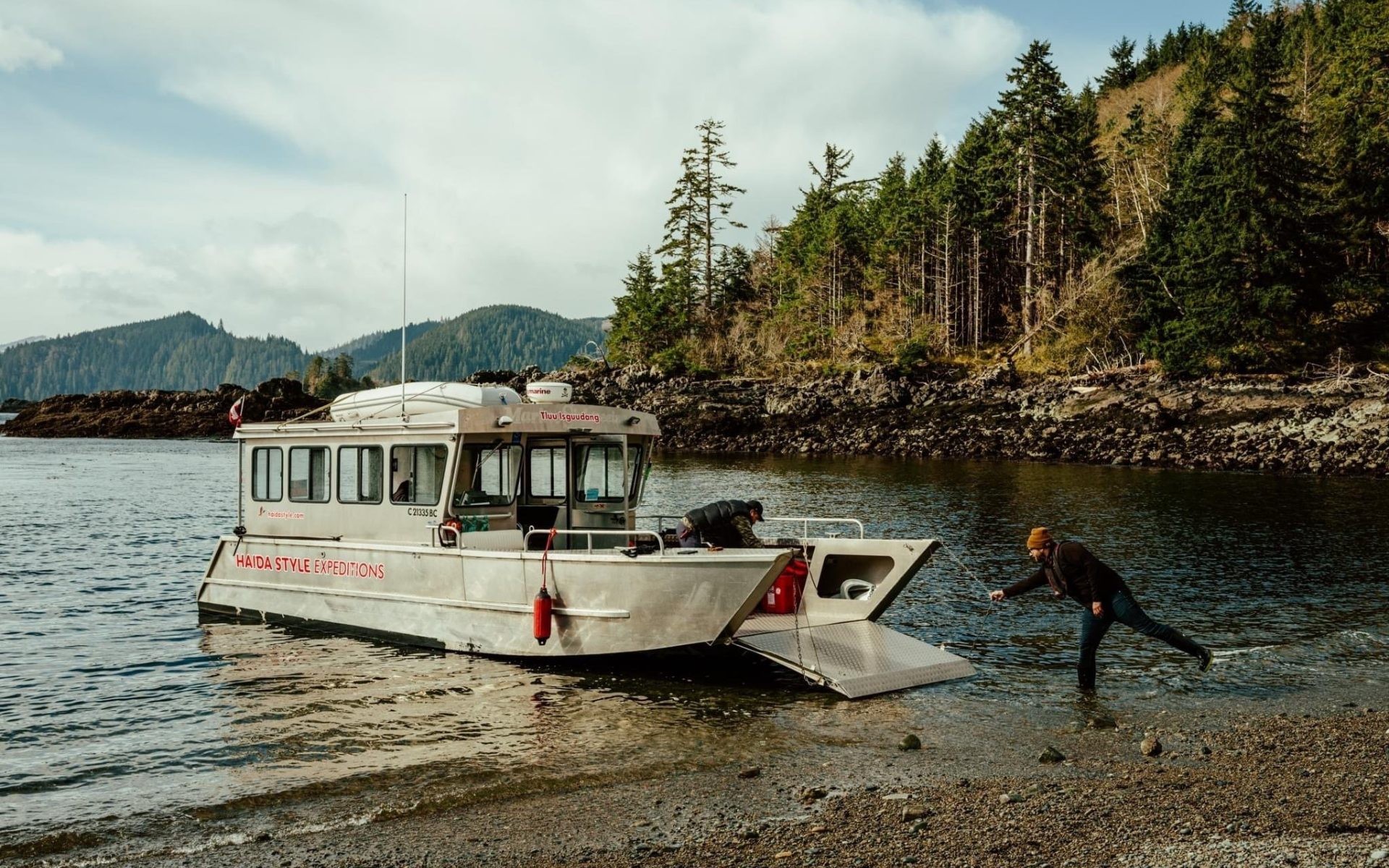
Leaders like Ivy Bell and David Cowpar (of Haida Style) are advocating for a more robust, locally controlled tourism infrastructure. The goal is to move beyond simple day trips to create deep, culturally grounded experiences.
Key initiatives include:
* Developing Overnight Infrastructure: Building longhouses and facilities to allow for multi-day immersive stays, reducing the pressure on single-day sites.
* Youth Mentorship: Engaging young Haida people in land-based activities, such as weaving, guided food harvesting, and art. Bell emphasizes the importance of disconnecting from technology to “connect with Mother Earth.”
* Transportation Solutions: Creating a local destination management board to negotiate affordable and sustainable transportation to the islands, which are currently difficult and expensive to reach.
Cowpar argues that the current system is “over-regulated” in a way that limits local benefit. “Now it’s time to actively open it up so there’s more use and you lessen the impact on the current sites,” he says. By inviting elders and storytellers into the process, the aim is to make the land accessible to locals while offering visitors a richer, more authentic experience.
A Living Cultural Landscape
The transformation of tourism in Haida Gwaii is more than an economic shift; it is a restoration of relationship. Visitors are asked to sign the Haida Gwaii Pledge, committing to respect Haida ways of being. This sets the tone for an experience that requires patience, listening, and humility.
As one observer noted, the landscape here is “both quiet and loud at the same time. Like a living culture, like a heartbeat.” The wind, the tides, and the ancient cedars are not just backdrop; they are active participants in the story.
Conclusion
Haida Gwaii demonstrates that tourism can be a force for cultural resilience and environmental protection when led by indigenous values. By prioritizing Yahguudang (respect) and sovereignty, the Haida Nation is reshaping the archipelago from a resource frontier into a living classroom. The challenge now lies in scaling these models to ensure that economic benefits remain within the community while preserving the delicate balance of this unique ecosystem for future generations.