
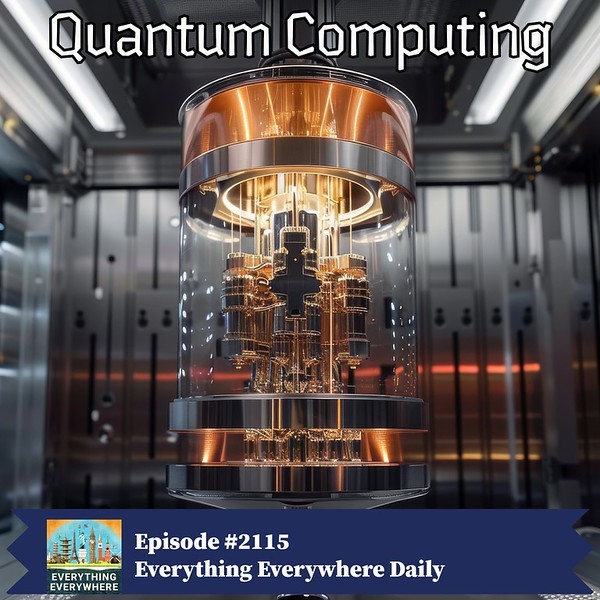
While the term “quantum computing” is frequently tossed around in tech headlines as if it were a magic wand for all human problems, the reality is far more complex. We are currently witnessing a period of intense scientific pursuit, but we are also seeing a significant gap between theoretical potential and engineering reality.
To understand where we are, we must first distinguish between the machines we use today and the machines being built in laboratories.
The Fundamental Shift: Bits vs. Qubits
Traditional digital computers—from the smartphone in your pocket to the world’s most powerful supercomputers—operate on binary logic. They process information using “bits,” which are essentially tiny switches that are either on (1) or off (0). Every piece of data, from a text message to a high-definition video, is just a massive string of these ones and zeros.
Quantum computing abandons this linear approach in favor of qubits (quantum bits), which leverage two strange phenomena of subatomic physics:
- Superposition: Unlike a bit, a qubit can exist as a 1, a 0, or a complex mathematical combination of both simultaneously. Think of a spinning coin: while it is spinning, it isn’t strictly “heads” or “tails”; it possesses the properties of both.
- Entanglement: This is a phenomenon where two particles become linked so that the state of one instantly influences the state of the other, regardless of the distance between them.
Why this matters: Because a quantum computer can exist in multiple states at once, it doesn’t have to solve problems sequentially (one after another). It can explore a vast landscape of possibilities simultaneously. If a classical computer is like a person trying to find the exit of a maze by hitting every dead end one by one, a quantum computer is like a mist that enters the maze and touches every path at the same time to find the exit instantly.
The Engineering Nightmare: Fragility at Scale
If quantum computers are so powerful, why don’t we use them yet? The answer lies in the extreme difficulty of controlling matter at the atomic level.
Building a quantum computer is perhaps the greatest engineering challenge in modern history because these machines are extraordinarily fragile. To maintain the “quantum state” required for calculation, engineers must battle several critical hurdles:
- Environmental Noise: The slightest vibration, heat, or electromagnetic wave can cause “decoherence”—essentially causing the qubits to lose their quantum properties and crash the calculation.
- Extreme Cooling: To combat heat, many quantum processors must be kept in dilution refrigerators at temperatures colder than outer space.
- The Error Correction Paradox: Because qubits are so prone to error, we cannot rely on a single qubit for a calculation. We need “logical qubits,” which are groups of hundreds or even thousands of physical qubits working together to correct each other’s mistakes.
- Scaling: It is one thing to control five qubits in a lab; it is an entirely different feat to coordinate millions of them without the control hardware becoming larger and more complex than the computer itself.
The Current Landscape: A Race of Technologies
We are currently in the “vacuum tube era” of quantum computing—roughly equivalent to the 1940s in classical computing history. There is no single “winner” yet, as several different hardware approaches are competing for dominance:
- Superconducting Circuits: Used by Google and IBM, these use ultra-cold electrical circuits. They are relatively mature but face significant scaling and noise issues.
- Trapped Ions: Pursued by companies like IonQ, this method uses lasers to control charged atoms. It offers high accuracy but operates at slower speeds.
- Neutral Atoms: Companies like QuEra use arrays of laser-trapped atoms, which may offer a better path to large-scale systems.
- Photonic & Silicon Spin: Other methods use light (photons) or the spin of electrons in silicon, aiming for easier integration with existing chip manufacturing.
The High Stakes: Cryptography and Beyond
The most discussed—and feared—application of quantum computing is its ability to break modern encryption. Current public-key cryptography relies on the fact that classical computers are incredibly slow at factoring large numbers. A large-scale, fault-tolerant quantum computer could do this almost instantly.
However, we are nowhere near that threshold. To break modern security, a machine would likely need millions of physical qubits to create the necessary stable “logical qubits.”
Beyond security, the real value lies in specialized workloads :
* Chemical Simulation: Modeling molecules to create new medicines or materials.
* Optimization: Solving incredibly complex logistics or financial problems.
* Material Science: Discovering new superconductors or battery technologies.
The Bottom Line: Quantum computing is not a replacement for your laptop or your phone; you will never have a “Quantum Windows” OS. Instead, it is a specialized tool that, if the massive engineering hurdles can be cleared, will act as a powerful engine for scientific and mathematical breakthroughs that are currently impossible.