
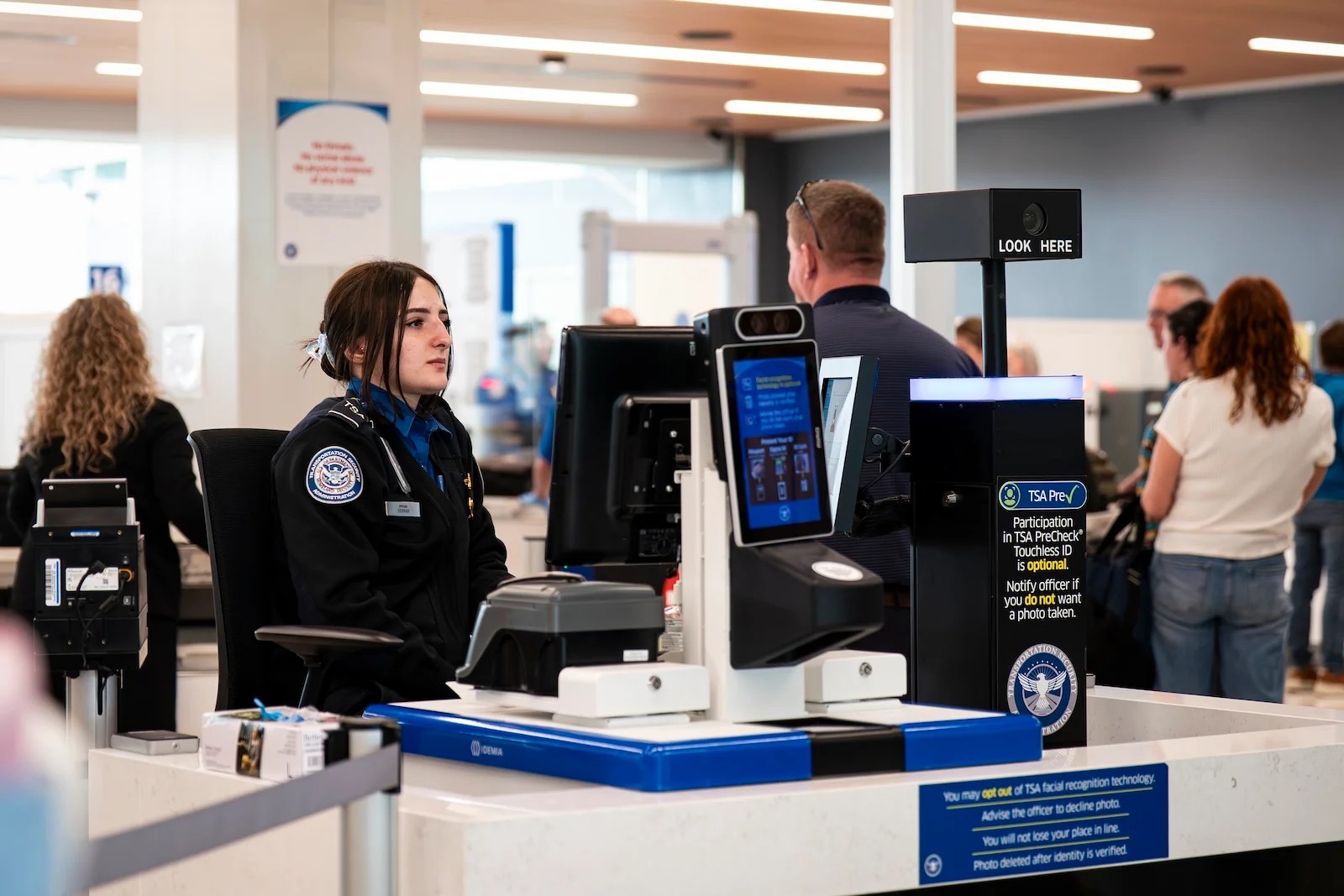
The landscape of U.S. airport security is undergoing a significant technological shift. Despite recent logistical challenges caused by government shutdowns and checkpoint congestion, the Transportation Security Administration (TSA) has successfully completed a major rollout of its TSA PreCheck Touchless ID program.
The service is now operational at more than 60 airports nationwide, marking a substantial expansion from its initial limited availability.
What is TSA PreCheck Touchless ID?
The Touchless ID program introduces “hands-free” security lanes designed to accelerate the screening process. Instead of the traditional method of manually presenting a physical boarding pass and government ID to an officer, this system uses biometric facial recognition to verify identity.
Key features of the service include:
– Seamless Verification: Passengers are identified via a quick photo, eliminating the need to fumble for documents.
– Cost-Effective: The service is available at no additional cost to existing TSA PreCheck members or Global Entry holders.
– Efficiency: The experience mimics the expedited flow of premium services like CLEAR, but leverages existing PreCheck credentials.
Note: This is an opt-in service. Travelers must enroll through their specific airline’s profile to utilize these lanes.
A Rapid Nationwide Rollout
The expansion represents a significant logistical achievement for the TSA. Earlier this year, projections suggested the agency would add roughly 50 airports to the program by spring. Despite the friction caused by a partial government shutdown, the TSA met its target.
The program has moved beyond just the largest international hubs. It is now integrated into a diverse network of airports, ranging from the world’s busiest transit points to mid-sized regional hubs such as Jacksonville, Boise, and Albuquerque.
Participating Airlines and Availability
The program currently supports travelers flying with six major carriers:
– American Airlines
– Delta Air Lines
– United Airlines
– Southwest Airlines
– Alaska Airlines
– Hawaiian Airlines
Critical Travel Advice: Don’t Rely Solely on Technology
While the rollout is impressive, travelers should maintain a level of caution to avoid delays. The TSA emphasizes two vital points:
- Terminal Limitations: Just because an airport supports Touchless ID does not mean every terminal within that airport has the equipment installed.
- Backup Documentation: Technology can fail. Travelers must always carry a valid Real ID or other approved identification. If the biometric system is offline or unavailable at your specific gate, your physical ID remains your only way through security.
The Bottom Line: The expansion of Touchless ID offers a significant “speed hack” for frequent flyers to bypass traditional lines, provided they have opted in and carry physical identification as a fallback.