There’s a house on the corner.
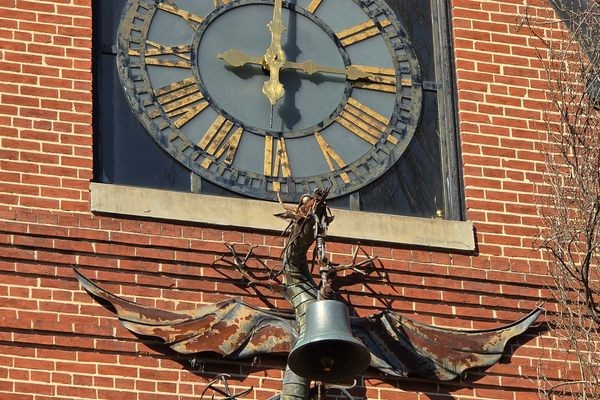
21st and St. Paul, to be specific. It looks like any other Victorian rowhome, gray brick stoop and all. But the facade hides a mechanical heart. Three large clocks dominate the front, tick-tick-ticking away the day. They don’t run on electricity, not really. They need a human hand to wind them every day. Durward Center does that job.
He’s the resident. And the restorer.
The whole place feels less like a home and more like a museum for moving parts. Antiques stack up everywhere—old fans, music boxes, organs that wheeze like dying lungs. It’s a curated chaos. Center knows these machines. He fixes what is broken.
One restoration stands out.
The organ at Oakley Court in England? He saved that one. You probably recognize the building if you’ve ever laughed at a bat flying across the screen in Dracula, or danced through the lobby during Rocky Horror Picture Show. Center breathed new air into those pipes.
Back in Baltimore, however, he added something else to his rowhome. Something that defies logic.
Below one of those large mechanical clocks sits a dragon. Wrought-iron, copper-plated, menacing but ornamental. When the clock hits the hour, the dragon moves. Its tail swings out. Whack.
It strikes a bell hanging from its own mouth.
Think about that physics for a second. The dragon chimes itself. It’s absurd. It’s brilliant. Why not have the timekeeper make its own announcement? Center likes things that move on their own terms. Or perhaps he just likes the noise.
The dragon keeps swinging. The clock keeps winding. Someone is still holding the key.