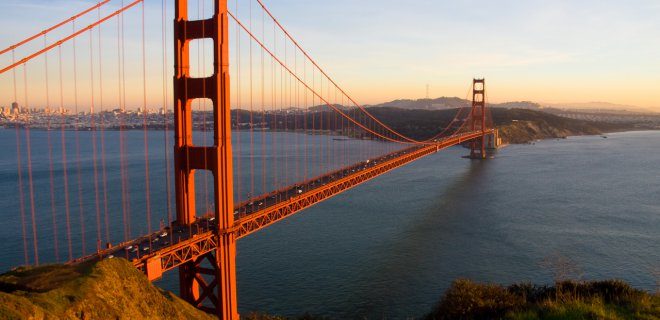
It is impossible to visit San Francisco without looking up. The bridge dominates the skyline, a massive orange ribbon stretching across the foggy water. But seeing it from the highway is one thing. Experiencing it is another.
The Golden Gate Bridge is not just a piece of infrastructure. It is the most recognizable symbol of the Bay Area. Built between 1933 and 1937, this suspension bridge spans 2,737 meters. Its towers rise 227 meters into the air. That height is intimidating. It forces you to look up.
Who built this beast? The design credits go to three men: Joseph Strauss, Irving Morrow, and Charles Ellis. Strauss led the effort. Morrow handled the art deco details. Ellis did the heavy mathematical lifting, though history nearly erased him. Together, they created a structure that defied the strong currents and frequent fog of the strait.
Since its completion, the bridge has been more than a crossing. It is San Francisco’s icon. Tourism in the city surged because people wanted to see it in person. They wanted to walk its length. They wanted to feel the wind.
The Scale of the Structure
Why does the size matter? Because it changes how you approach the visit.
The main span is 1,280 meters long. The total length is 2,737 meters. For context, that is about 1.7 miles. Walking across takes 30 to 45 minutes. You are not just crossing water. You are entering a different atmosphere.
The towers are painted International Orange. This color was not just an aesthetic choice. It complemented the surrounding hills. It also provided visibility in the fog. The paint job alone requires constant maintenance. The salt air is cruel to steel.
Who Should Visit and When
You are likely planning a trip. Timing is everything.
- Best Time of Day: Early morning. The fog is thicker, but the light is soft. The crowds are thinner.
- Best Season: Late summer (August/September). “June Gloom” gives way to warmer, clearer days.
- Avoid: Summer weekdays if you hate lines. The pedestrian walkway gets packed.
Practical Tips for the Visitor
- Walk, Don’t Just Drive. The view from the car is fleeting. The pedestrian path offers a sense of scale you cannot get from a window.
- Dress for Wind. It is always windy. Even in July. Layers are non-negotiable.
- Check the Webcam. Before you go, check the official bridge webcam. If the bridge is closed due to high winds (which happens), you can’t walk. You’ll waste a trip.
- Parking is a Nightmare. Street parking is scarce. Paid lots are expensive. Use public transit or ride-share if possible.
Why It’s Worth the Hype
People dismiss it as cliché. They say, “It’s just a bridge.” They are wrong.
It is an engineering marvel. The flexibility of the towers allows it to sway in the wind. This was a radical idea in the 1930s. The bridge moves. It breathes. Standing on it, you can feel
The Rock That Refused to Fall
You don’t just visit Alcatraz. You survive it.
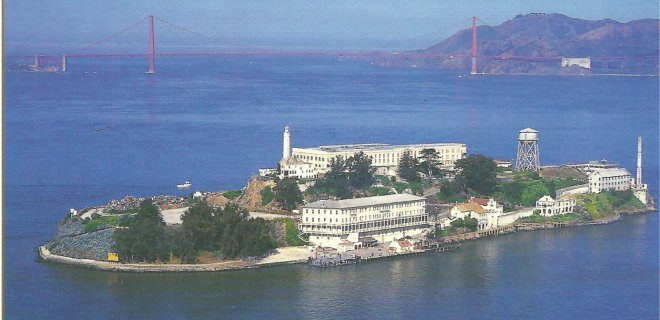
Standing 40 meters above the cold, churning waters of San Francisco Bay, the island is a jagged 9-hectare chunk of granite that has held more secrets than its walls suggest. It was once a fortress, then a military base, and finally, America’s most notorious penitentiary. Today, it’s a must-see for anyone planning a trip to the Bay Area, but the logistics are tricky.
Most people treat it like a tourist trap. They show up with a ticket in hand, expecting a quick walk-around. They miss the point. The real story isn’t in the cells; it’s in the silence between the waves and the sheer improbability of trying to escape.
“The most important thing I learned at Alcatraz is that the water is cold, the current is strong, and the odds are stacked against you.”
Getting there requires a ferry. The only operator is Alcatraz Cruises, and they don’t tolerate hesitation. Tickets for the general admission tour often sell out weeks in advance, especially during peak summer months. If you’re looking for a last-minute adventure, you’re out of luck. The cost hovers around $40 for adults—a steep price for 2.5 hours on the water—but consider it a toll for history.
Beyond the Cell Blocks
Once you’re off the boat, the island is a maze of concrete and rust. The main cellhouse dominates the landscape, its yellow paint peeling under the relentless Bay fog. But don’t just stare at the cells. Walk the perimeter.
The views are deceptive. You’re looking at the Golden Gate Bridge, which looks close enough to touch. It’s not. You’re looking at the city skyline, shimmering like a mirage. The isolation here is palpable. Even with the city less than two miles away, this place felt like the end of the world for inmates like Al Capone, who spent his final years here.
Why did they choose this rock? Because it was impossible to escape from. The currents are treacherous. The water temperature rarely climbs above 50°F (10°C) even in summer. One wrong move, and you’re gone.
Golden Gate Park: The Green Lung
If Alcatraz is the city’s hard, cold heart, Golden Gate Park is its lungs. Spanning 1,010 acres, it’s larger than Central Park and demands at least half a day to scratch the surface.
This isn’t a place for rushing. It’s a place for wandering. You can rent a bike and slice through the eucalyptus groves, or you can get lost in the Japanese Tea Garden. The latter costs $12.50, but the tranquility is worth every penny. The stone bridge, the koi ponds, the mist—it’s a different world from the urban chaos just blocks away.
For budget travelers, the park itself is free. The real costs come from the attractions. The California Academy of Sciences will set you back $40, while the de Young Museum offers free entry to its galleries (though special exhibits cost extra). The San Francisco Botanical Garden is another $15, but the redwoods are breathtaking.
Planning Your Route
Golden Gate Park: Dikdörtgen bir doğa cenneti
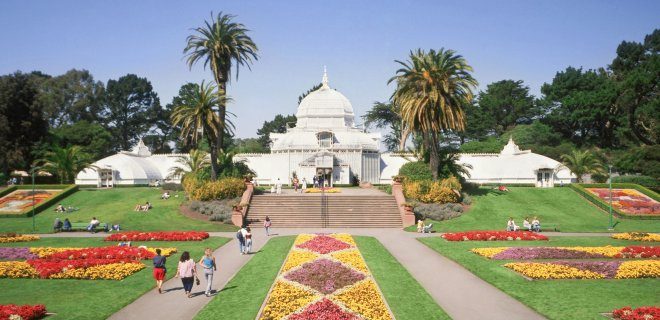
1870’te kuruldu. Şehrin en renkli, en hareketli parçası burası. Yaklaşık dört kilometrekarelik devasa bir alanı kaplıyor. Tasarımı dikdörtgen. Düzenli. Sadece güzel görünmek için değil, işlevsel olması için planlanmış bir yapı.
Kimler tasarladı bu kadar büyük bir yeşil alanı? William Hammond Hall, John McLaren ve Calvert Vaux. Üç isim. Üç farklı vizyon. Ama ortak nokta, San Franciscoluların ve şehre gelen ziyaretçilerin kalbini kazanabilmekti. Neticede, her yıl yaklaşık on üç milyon kişi buraya uğruyor.
Golden Gate Park, San Francisco gezi rehberinizde mutlaka yer almalıdır.
Bu sayılar rastgele değil. İnsanlar buraya sadece yürümek için gelmiyor. Keşfetmek için geliyor. Şehrin gürültüsünden kopmak için. Ve evet, bu parkı atlayamazsınız. Yanlış giderseniz, San Francisco’nun ruhunu tam anlamıyla yakalayamazsınız.
Union Meydanı
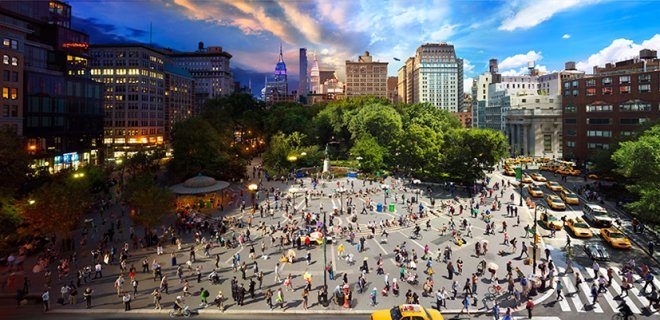
Union Square covers about a hectare. That is not much land for the sheer volume of energy it radiates. It is one of San Francisco’s most visited districts, buzzing from the moment the first trolley clatters by until the last light fades. The area is ringed by modern office towers and glass-fronted hotels. But it is the street level that matters.
Cafes spill onto the pavement. Restaurants compete for attention with open doors and the smell of roasting coffee. This is not a quiet park. It is a commercial hub where tourists and locals collide.
Why You Should Stop Here
You need to walk the perimeter. The square itself is manicured with mythic sculptures and carefully placed trees. They create a strange, almost theatrical atmosphere. It feels curated.
“It is a place to pause before diving back into the city’s vertical chaos.”
The surrounding architecture frames the space. Modern buildings tower over the plaza. Their reflections dance on the glass. It is a study in contrasts. Old-world charm meets new-world commerce.
Practical Logistics
Getting there is easy. The Powell Street cable car line drops you right at the edge. Buses from across the city funnel here too. Parking is expensive and difficult. Use public transit.
Timing matters. Morning light hits the sculptures. Afternoon crowds swell. Evening brings a shift in mood as the city lights turn on. Every hour offers a different angle.
What’s Actually Worth Seeing
Ignore the rush to buy. Take five minutes to look at the statues. They are not just decoration. They add a layer of history to the concrete. The trees provide shade. They soften the hard lines of the skyscrapers.
The cafes are worth a visit for a coffee break. Not for the food, but for the people watching. You see every type of traveler here. Backpackers. Business executives. Families with strollers.
It is a microcosm of the city.
Beyond the Square
From here, you can walk toward Nob Hill. Coit Tower looms nearby. You will want to climb it eventually. But first, take in the square. Let the noise wash over you.
The energy is infectious. You leave with more steps in your shoes and a clearer sense of where to go next.
You don’t come to San Francisco and leave without looking up.
Not just metaphorically. Physically.
Telegraph Hill demands it.
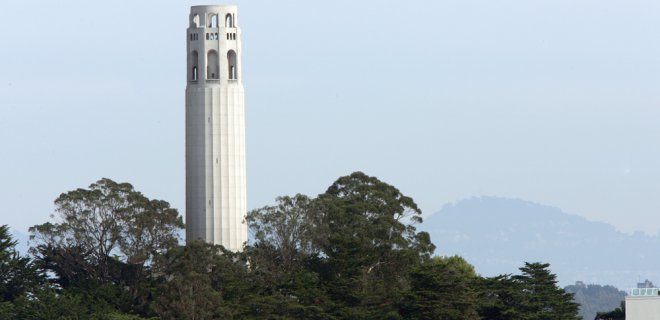
Perched at the top of a steep incline, the Coit Tower stands 211 feet tall. It’s not subtle. It’s a white concrete beacon against the Pacific sky, visible from the Ferry Building to the Golden Gate Bridge. If you’re wandering around Nob Hill or walking up from North Beach, you’ll see it looming.
It’s not just a landmark. It’s a time capsule of the Great Depression era.
Built in 1933.
Designed by architect Arthur Brown, Jr.
But here’s where the story gets weird. The money didn’t come from the city. It came from Lillie Hitchcock Coit.
She was a San Francisco eccentric. A socialite with a taste for the wild. She hung out with firefighters. She fought in the police forces during riots. She liked the rough side of town. When she died, she left her estate to the fire department with one condition: build a tower.
Her wish? A tribute to the firemen.
So Brown designed a tower. But Coit wanted more than just a tribute. She wanted art.
She collected murals.
Not just any art. Murals that celebrated the working class. The common man. The struggle.
When the tower opened in 1933, the interior was covered in WPA-funded frescoes.
These aren’t soft landscapes. They’re gritty. They depict farm workers, industrial labor, and social unrest. The style? Social Realism.
It’s jarring if you expect a tourist trap filled with gift shops.
Instead, you get a public gallery suspended 200 feet in the air.
The views from the top are the main event, obviously. You can see the bay stretching out to Alcatraz. You can see the cable cars snaking down the streets below. You can see the city’s density pressing against the coast.
But the art inside is what makes it unique.
Most historic towers in the US are memorials to generals or presidents.
This one is a memorial to the everyday worker.
Coit died in 1945. But her vision survived.
In 2008, the tower was designated a San Francisco Landmark. Then, it went into the National Register of Historic Places.
It’s protected.
Why? Because the murals are fading. And restoring them costs millions.
Visiting is free if you’re just looking at the exterior.
But to go up?
You pay for the elevator. And you pay for access to the rotunda.
The tower is small. The elevator is slow. You wait.
But when the doors open, the light hits those walls differently.
It’s quiet up there.
The wind howls outside. The city hums below. But inside, the painted figures stare back.
Farmers.
Strikers.
Mothers.
They’re frozen in 1930s black and white and earth tones.
It’s a reminder that this city was built by hands.
Not just by developers.
Not just by tourists.
By people who fought. Who built. Who survived.
Coit Tower isn’t just a photo op.
Why This Historic Japanese Garden is Worth Your Detour
The Japanese Tea Garden isn’t just a plot of green space. It’s a carefully curated escape that covers exactly two hectares of land. The grounds were first established back in 1894. That’s over a century of history underfoot. Today, it has shed its older skin. The garden is constantly refreshed and reimagined with modern design principles. The result? It’s transformed into one of the city’s most refined neighborhoods.
If you’re looking for a quiet place to walk, this is it.
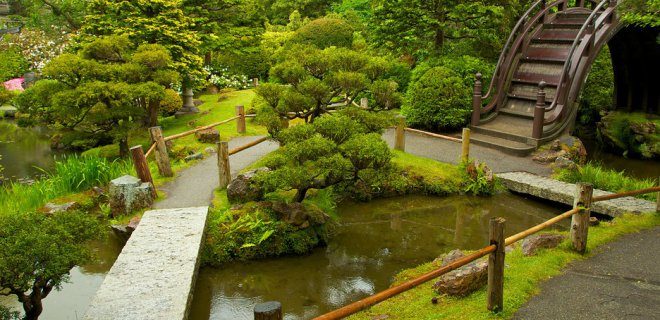
The park draws you in with its mesmerizing visuals. You’ve got winding paths. There are tranquil ponds. Mature trees and vibrant flowers frame the view. But what makes it special isn’t just the aesthetics. It’s the philosophy behind them. The layout strictly follows Shinto religious beliefs. You’ll notice the deliberate placement of water and rock elements. These aren’t random decorations. They are essential components of the design.
Is It Just Another Park?
For travelers seeking a break from standard urban parks, this destination offers a different kind of garden design. It’s not a sprawling lawn or a playground. It’s a contemplative space. The integration of natural elements—specifically water and stone—creates a specific atmosphere. You can’t replicate that vibe anywhere else in the city.
Visitors who want to understand a different aesthetic should prioritize this visit. It’s not enough to just see the plants. You need to look at how they’re arranged. The balance between the man-made paths and the wilder, naturalistic corners is intentional.
What to Expect When You Go
Walking through the garden feels like stepping into a different era. The age of the trees adds a layer of depth you don’t find in newer parks. The maintenance is visible. Every blade of grass seems to have a purpose. The ponds reflect the sky, changing with the weather.
For those planning a trip, here is the practical reality:
– Size: It’s walkable but expansive (2 hectares). Wear comfortable shoes.
– Vibe: Peaceful and structured. Not for loud parties.
– Design: Shinto-inspired. Look for the rocks and water features.
The garden has earned its reputation as a pristine area. It’s not just surviving the passage of time. It’s evolving. If you’re in the city and want to see a garden that respects its roots while embracing modernity, this is the place.