
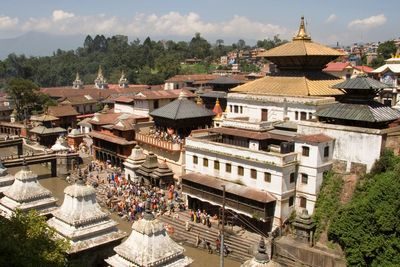
The Pashupatinath Temple sits on the eastern outskirts of Kathmandu. It is not just another stop on a tourist itinerary. It is the holiest site in Nepal. The complex rests on the banks of the Baghmati River. Here, the Hindu god Shiva is worshipped as Pashupati. This title means “Lord of Animals.”
Religious activity has occurred here since at least the 5th century BCE. The oldest recorded structure dates to 400 CE. The original buildings were wood. Termites destroyed them. The current stone and metal structures appeared in the 15th century CE. They look different now. They are built to last.
The main attraction is the two-story pagoda. It has a gilt roof. It stands in the center of the complex. But it is not the only thing here. There are more than 500 other temples and shrines. Cremation sites are nearby. You can walk along the ornately paved riverbank. The path leads to many of these smaller sites.
When to Plan Your Trip
Pashupatinath Temple is busiest during Maha Shivaratri. This festival happens annually. It usually falls in February or early March. It marks the start of spring. “The great night of Shiva” draws massive crowds. If you want to avoid the peak rush, go at other times. But be prepared for crowds year-round. Tourists and pilgrims are always present.
Many pilgrims choose this spot for their final journey. They want their lives to end here. The Baghmati River purifies them. The sacred waters play a role in their passing. Cremation happens right near the temple grounds. It is a solemn reality of the site.
Entry Rules and What You Will See
Entry to the inner sanctum is restricted. Only Hindus are allowed inside. This rule is strictly enforced. You cannot push your way in. You cannot bribe your way in. The outer areas are open to everyone.
Visitors see a lot of life. Humans are not the only inhabitants. Deer roam the grounds. Goats wander freely. Monkeys are common. They are part of the experience. You share the space with them.
Pashupatinath Temple is part of the Kathmandu Valley World Heritage site. UNESCO inscribed the area in 1979. This status protects the complex. It also highlights its global importance.
Practical Logistics for Travelers
Getting there is straightforward. The temple is on the eastern outskirts of Kathmandu. You can take a taxi or ride a local bus. The Baghmati River provides a natural landmark. Follow the water to find the entrance.
Bring cash for offerings. Small amounts are useful. You might want to buy flowers or incense. These are common offerings. They are not mandatory. But they are part of the ritual atmosphere.
Dress modestly. Cover your shoulders and legs. Remove your shoes before entering any shrine area. This is standard practice. It shows respect.
Watch your belongings. Monkeys are quick. They can snatch unguarded items. Keep phones and wallets secure. Deer and goats might also scavenge. Do not leave food lying around.
Why This Site Matters
Pashupatinath