
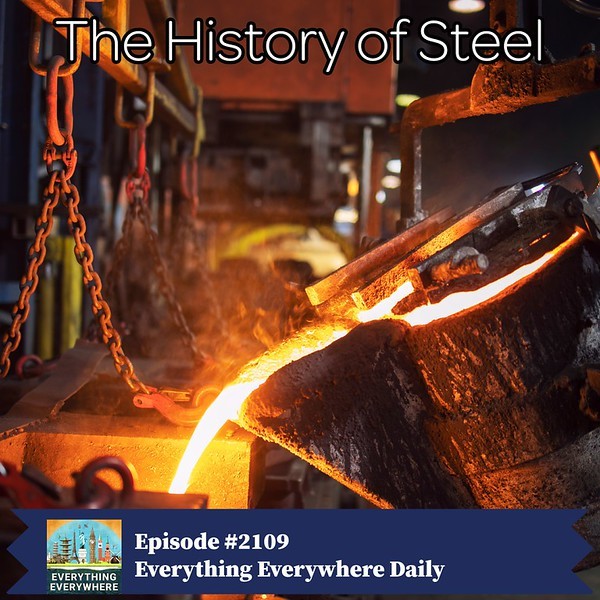
Steel is not a single invention, but rather a multi-millennial saga of human ingenuity. From accidental discoveries in ancient furnaces to the massive, AI-driven mills of the 21st century, the evolution of steel has dictated the limits of what humanity could build. It has provided the skeleton for our skyscrapers, the rails for our transport, and the blades for our tools.
From Accidental Discovery to Ancient Mastery
The history of steel begins not with a blueprint, but with a mistake. Around 1200 BC in the Mediterranean and Anatolia, early metalworkers used “bloomery” processes to smelt iron. While they primarily produced soft, pure wrought iron, occasional fluctuations in carbon levels created something harder and more durable: accidental steel.
As smiths moved from accidental discovery to intentional science, different regions developed unique, sophisticated methods:
- The Indian Subcontinent: As early as 300 BC, metallurgists pioneered crucible steel (wootz). By sealing iron and organic materials in clay crucibles, they created high-carbon steel famous for its “water-patterned” surface. This became the legendary “Damascus steel” of the Middle East.
- East Asia: Chinese smiths achieved high furnace temperatures centuries before Europe, mastering cast iron and the process of decarburization (removing carbon to refine metal).
- Japan: Japanese smiths reached a pinnacle of pre-industrial metallurgy with tamahagane steel, using complex folding and clay-coating techniques to create superior blades.
The Industrial Turning Point: Consistency and Scale
For much of history, steel remained a luxury material—expensive, inconsistent, and reserved for specialized tools or weaponry. Two major shifts changed this trajectory.
The Quest for Uniformity
In the 1740s, English clockmaker Benjamin Huntsman solved a major problem for precision engineering. By melting blister steel in sealed clay crucibles at extreme temperatures, he produced “crucible steel”—the first truly homogeneous and consistent material. This innovation turned Sheffield, England, into the global steel capital.
The Fuel Revolution
Before the 18th century, steelmaking was limited by the availability of wood for charcoal. The shift to coke (processed coal) allowed blast furnaces to grow larger and run hotter, providing the massive amounts of iron needed to fuel the coming Industrial Revolution.
The Great Leap: The Bessemer Revolution
If Huntsman made steel consistent, Henry Bessemer made it cheap. In 1856, Bessemer discovered that blowing cold air through molten pig iron caused the excess carbon to burn off rapidly.
This process turned a multi-day task into a twenty-minute operation, slashing the price of steel by nearly 90% in just three decades.
This explosion in supply fundamentally reshaped the modern world:
– Infrastructure: Cheap steel rails allowed railroads to expand across continents.
– Architecture: The ability to use structural steel enabled the birth of the skyscraper, exemplified by Chicago’s Home Insurance Building in 1885.
– Engineering: Massive projects like the Brooklyn Bridge became possible through the use of steel cables.
The Era of Specialization and Global Shifts
As the 20th century progressed, metallurgy moved from “making steel” to “engineering steel.” Scientists learned to add specific elements to create entirely new categories of metal:
- Stainless Steel: Discovered accidentally by Harry Brearley in 1913, adding chromium created metal that resisted rust.
- Alloy Steels: The addition of tungsten, nickel, and vanadium allowed for high-strength tools and turbine blades.
- The Basic Oxygen Process (BOS): Developed in the 1950s, this replaced Bessemer’s air-blowing with pure oxygen, making production faster and cleaner.
The Rise of the “Mini-Mill”
The late 20th century saw a shift in how we produce steel. The development of the electric arc furnace allowed companies like Nucor to use scrap metal and electricity rather than massive coal-fired blast furnaces. These “mini-mills” lowered the barrier to entry and revolutionized the industry’s economics.
A Geographic Shift in Power
Perhaps the most significant modern trend is the movement of the industry’s center of gravity. While the United States (centered in Pittsburgh) dominated the mid-20th century, China has since become the undisputed leader. By 2020, China produced over half of the world’s total steel, a shift that has reshaped global trade and forced traditional industrial hubs in Europe and North America to undergo massive restructuring.
Conclusion
The history of steel is a continuous chain of incremental breakthroughs. While newer materials like aluminum and composites offer competition, steel remains the indispensable foundation of modern civilization due to its unmatched adaptability and scale.