For decades, the economic identity of Anaheim has been synonymous with Disneyland. While the theme park attracts a staggering 17.3 million visitors annually—roughly twice the population of New York City—most of that foot traffic and spending remains trapped within the “Disney ecosystem.” Tourists visit the park, but they rarely venture into the city itself.
A massive $4 billion redevelopment project called OCVIBE aims to change that. By transforming the area surrounding the Honda Center into a multi-use urban hub, developers are attempting to pivot Anaheim from a single-destination tourist town into a vibrant, year-round metropolitan center.
A Multi-Use Urban Core
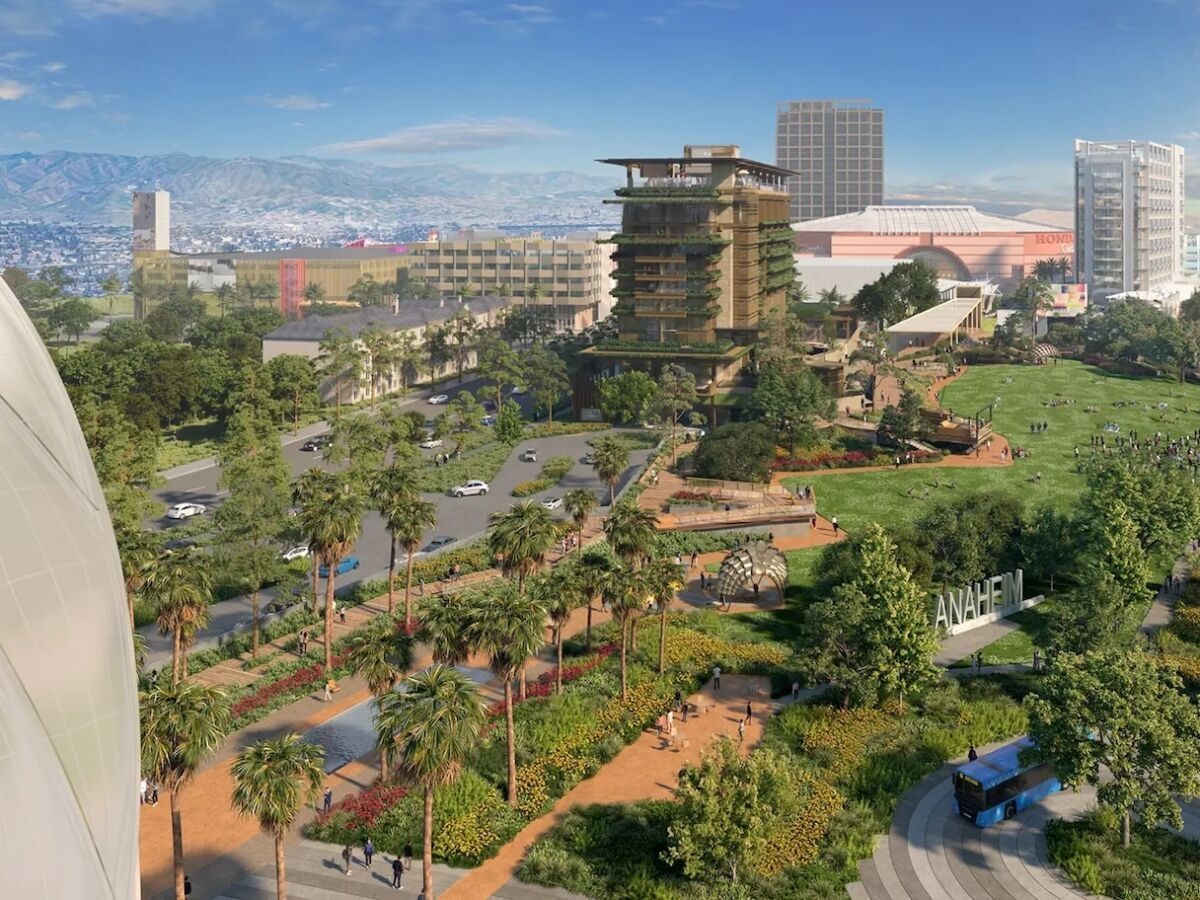
Spanning nearly 100 acres, OCVIBE is designed to be much more than a sports complex. The project seeks to create a “downtown” for Orange County by integrating entertainment, residential, and commercial spaces.
The development is structured around several key pillars:
- Enhanced Entertainment: While the Honda Center will remain a centerpiece for sports and large-scale events, a new 5,000-capacity concert venue will be built. This dedicated space is specifically designed to optimize acoustics and stage sightlines, addressing a common limitation of large multi-purpose arenas.
- Diverse Dining & Socializing: The project features over 35 dining venues, headlined by Katella Commons. This market hall, overseen by former Universal Studios culinary director Rémi Lauvand, will host 21 different chefs and several specialized bars, ranging from Japanese-Scandinavian fusion to 1970s-themed cocktail lounges.
- Residential & Work Life: Unlike many tourist-centric developments, OCVIBE is built for living. Approximately 40% of the space is dedicated to over 2,000 residences, with 15% designated as affordable housing. The plan also includes thousands of square feet of office space to attract businesses to the area.
- Public Green Spaces: To ensure the area feels like a community rather than just a commercial zone, the plan includes 20 parks and plazas and three miles of walking trails designed for easy, car-free navigation.
Connectivity and Economic Impact
A critical component of OCVIBE’s success is its integration with the Anaheim Regional Transportation Intermodal Center (ARTIC). By linking the complex to Amtrak, Metrolink, and local bus services, developers hope to draw visitors from across Los Angeles and Southern California via public transit, reducing the reliance on cars in a high-traffic region.
From a financial perspective, the project is structured to minimize the burden on local taxpayers:
– Private Financing: The bulk of the $4 billion cost is privately funded.
– Low Public Risk: While the city is issuing $400 million in bonds, these are secured by Honda Center revenue, not general taxpayer funds.
– Projected Gains: Once operational, the project is expected to generate $9.2 million in annual tax revenue for Anaheim and provide $255 million in public benefits, including infrastructure improvements.
The Road to 2028
The project is moving through several phases, with public parks and plazas potentially opening as early as 2027. The full complex is slated for completion in 2028.
The timing is strategic. With the 2028 Summer Olympics approaching—and the Honda Center scheduled to host indoor volleyball—developers are likely aiming to debut OCVIBE during this period of intense global visibility.
Conclusion
OCVIBE represents a bold attempt to diversify Anaheim’s economy, moving away from a reliance on Disney to create a self-sustaining urban destination. If successful, it will transform the city from a place people merely pass through into a place where they live, work, and play.