
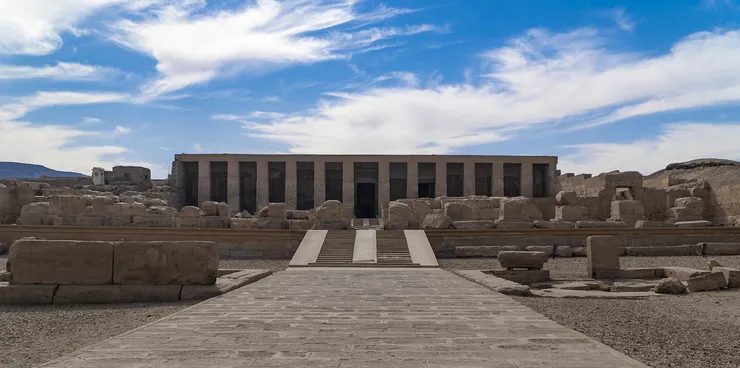
Abydos was never just a city. It was a destination. For millennia, this sacred site in upper Egypt served as the final resting place for the first two dynasties of pharaohs and later became the ultimate pilgrimage center for worshipers of Osiris. You don’t come here for a quick photo op. You come because the ground here is thick with history.
The scale of royal ambition on display is staggering. Pharaohs from Thutmose III to Ramses III poured resources into embellishing the Temple of Osiris. Some even built cenotaphs here—empty tombs meant to symbolize their eternal presence among the gods. But the real draw for modern travelers and historians alike is the Temple of Seti I.
Why Seti I’s Temple Matters
It is widely considered one of the most beautiful temples in all of Egypt. The craftsmanship is precise. The reliefs are sharp. But beyond the aesthetics, this structure holds a key that helped unlock ancient Egyptian chronology. Inside, a long gallery houses a famous relief known as the Abydos King List.
This isn’t just decoration. It’s a historical record.
The carving shows Seti I and his son, Ramses II, making offerings to the cartouches of 76 deceased predecessors. It’s a visual roll call of kings. By analyzing this list, scholars have been able to decode much of Egypt’s early history, aligning reigns and verifying the succession of rulers. For anyone standing in that gallery, the connection between past and present feels immediate.
Planning Your Visit to Abydos
Abydos is located in the Sohag Governorate, roughly 260 kilometers south of Cairo. Most travelers reach it via Luxor, which is about 130 kilometers to the east. From Luxor, you can hire a private driver or join a guided tour. The journey takes roughly two to three hours depending on your route.
The Temple of Seti I is the main attraction. It’s open to the public, but visits are often managed by local authorities who may require permits or guide escorts due to the site’s sensitivity. Check current travel advisories before booking, as access to certain areas can change based on conservation efforts.
What to See
- The Temple of Seti I : Focus on the hypostyle hall and the lower gallery where the King List is located. The carvings are among the best-preserved in Egypt.
- The Osiris Temple : Located near the Seti I complex, this is the older pilgrimage site dedicated to the god of the afterlife.
- Royal Cemeteries : While the original tombs are largely destroyed or unexcavated, the cenotaphs scattered around the site hint at the vastness of the necropolis.
When to Go
The best time to visit Abydos is during the cooler months, from October to April. Temperatures can soar past 40°C in summer, making outdoor exploration exhausting. Early morning visits offer the best light for photography and fewer crowds.
Practical Tips
- Guide : Essential. The context of the King List and the significance of the reliefs are lost without explanation.
-
Footwear : Closed-toe shoes are recommended. The site is dusty and uneven.