
Ferdinand von Zeppelin didn’t just build airships. He invented a new way to look at the sky.
Today, the name “Zeppelin” means one thing: the iconic rigid airships that dominated the skies before World War I. But the man behind the legend, Ferdinand Graf von Zeppelin, was far more than a brand name. Born in 1838 and dying in 1917, he was a German engineer whose vision turned “flying cigars” into reality.
How did a privileged nobleman become the father of aerial travel? And what remains of his legacy today?
From Noble Privilege to Technical Training
Zeppelin’s path to the sky wasn’t accidental. It was paved with family connections and early education. Born on July 8, 1838, in Konstanz on Lake Constance, he benefited from his aristocratic status.
His home tutor drilled him in hand skills. By age 15, the family moved to Stuttgart. There, he attended the Polytechnic School. This wasn’t just a finishing school. It was serious technical training.
Military Roots and Engineering Roots
At 17, Zeppelin joined the military. This decision shaped his entire career.
As a young officer, he studied at the University of Tübingen. He didn’t just learn politics. He dove into state science, mechanical engineering, and chemistry.
“He acquired the exact technical knowledge that would later prove essential for his radical ideas.”
This combination of military discipline and engineering rigor gave him the tools to challenge the status quo of lighter-than-air travel. He wasn’t just dreaming of flight. He was calculating it.
His early life set the stage for a breakthrough that would change transportation forever. But the path wasn’t smooth. The military was skeptical. The public was doubtful. And the technology was primitive.
Yet, the foundation was laid. The engineer was ready. The sky was waiting.
The Blueprint for a Rigid Airship
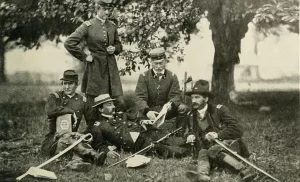
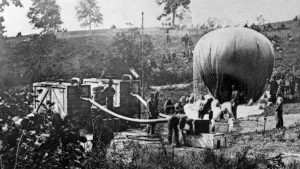
Zeppelin wasn’t just reading about flight from a desk. He was out in the mud. As a military observer in war zones, he saw the raw potential of the sky firsthand. In 1863, he watched from the Union side during the American Civil War. That was when balloons finally started popping up over battlefields. Not for fun. For intelligence.
He got his own hands dirty with the air. One of his reconnaissance trips through the vast American landscape led to his first tethered balloon ride. It was a direct hit of inspiration. The balloon stayed anchored to the ground by a long line to stop it from drifting away with the wind. It could go high enough to dodge small arms fire, sure. But it was still a prisoner of the wind.
That limitation bothered him.
Back in his quarters, the engineer officer started connecting dots. Flexible skins were a dead end. The future wasn’t in rubber and silk that shaped themselves to the breeze. The future was rigid. It needed a skeleton. It needed engines that could fight the wind, not just survive it. If you wanted utility, you needed control.
On April 25, 1874, Zeppelin wrote it down. No more ambiguity.
“I seek to create a vehicle capable of going straight to places where no other means of transport can reach, or at least not as quickly or as safely…”
Sabine Ochaba from the Zeppelin Museum notes that his list of targets was specific. Unexplored coastlines. Inland regions that maps hadn’t touched yet. Postal routes that didn’t depend on weather patterns. Military dominance.
He wasn’t dreaming of joyrides. He was building a tool for places the world had forgotten to map.
The Crash That Built the Airship Industry
It didn’t end with a bang. It ended with a resignation letter.
In Berlin, he clashed with the Prussians and the Kaiser himself. The fallout was immediate. After thirty-five years in the Württemberg Army, he was forced out at fifty-two. Just like that.
Most men retire to golf. He retired to engineering.
By 1892, the former general was obsessed with one problem: how to build a rigid airship that could actually steer. Previous balloons drifted. They were slaves to the wind. He wanted control.
His solution wasn’t subtle. It was brute force applied to aerodynamics.
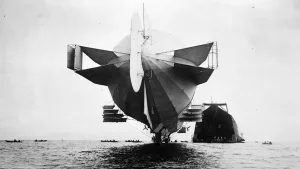
He sketched a skeleton made of aluminum. Light but strong. Inside that frame? A fabric envelope filled with hydrogen. Below it? A gondel. A command center with steering gear, propellers, and engines.
It was simple. It was revolutionary. It was the blueprint for every rigid airship that followed.
“This vehicle should float like a balloon but remain shape-stable and steerable.”
The world wasn’t ready for his vision yet. The Germans weren’t ready for his ego. But the math was sound. The aluminum held. The hydrogen lifted. The propellers pushed.
He had just reinvented flight.
You wouldn’t think failure builds a legend. But for Count Ferdinand von Zeppelin, it did.
When he first pitched the idea of a rigid airship, the public didn’t see innovation. They saw madness. Locals around Lake Constance called him the “fool of the lake.” Experts told him the engineering was impossible. He had no army behind him, no government grants. Just his own money, draining fast, and a stubborn belief that flying giants were possible.
He kept going anyway.
The 18-Minute Proof
On July 2, 1900, the LZ1 finally launched. It was Zeppelin’s 62nd birthday week.
The flight lasted 18 minutes.
Technical glitches forced an emergency landing. By modern standards, that’s not a success story. It’s a parking ticket. But for the crowd watching from the ground, it changed everything.
The machine worked. The sky wasn’t off-limits. Critics who had called him a fraud suddenly had to eat their words. The LZ1 proved the concept was viable, even if the execution was shaky.
The Tragedy That Saved Him
Here’s where the story gets strange.
Technical success didn’t mean commercial success. In fact, the early years were brutal. The airships seemed cursed.
LZ2 was torn apart by a storm in Kissingen in 1906. Then came LZ4.
On August 5, 1908, LZ4 caught fire near Echterdingen. Thousands watched it burn. It was a public spectacle of destruction. Most companies would have folded. Zeppelin’s backers would have walked away.
Instead, something unexpected happened.
The German public didn’t see a failed business. They saw a victim of bad luck and poor funding. The fire didn’t kill the dream. It fueled it.
“The horror of the fire and the prevailing technological enthusiasm transformed into an uplifting communal experience.”
Within weeks, citizens and companies across the German Empire opened their wallets. Zeppelin, who had spent years begging for support, received over six million gold marks in donations.
He went from begging for scraps to funding a new era of flight.
The LZ4 disaster turned him into a folk hero. It wasn’t about the airship anymore. It was about national pride. It was about proving that German engineering could conquer the clouds, even if it took a few crashes to get there.
The money didn’t just fix LZ4. It built the infrastructure for the future.
So, when you look at those massive, elegant blimps hovering over cities today, remember this. They didn’t start with a perfect flight. They started with a burning wreck and a population that refused to let the count fall.
The first Zeppelin wasn’t a triumph. It was a gamble. And the world bet on him.
The High-Fare Sky: How Zeppelines Conquered Early 20th Century Travel
The airships evolved constantly. The Zeppelin works, funded by donations rather than corporate profit, pushed the engineering boundaries. They made the vessels tougher. Faster. Safer.
Early flaws were smoothed out by relentless tinkering. What began as experimental machinery became a staple of civilian aviation. Count Zeppelin’s creations were no longer novelties. They were status symbols floating above Europe.
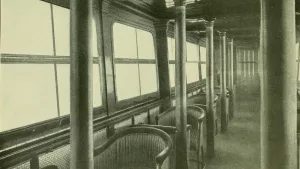
People called them “Zeppelins.” Or “flying cigars.” The name stuck because of their shape—long, sleek, unmistakable against the sky. But inside? It was intimate.
Who Actually Flew on a Zeppelin?
You could afford the ticket if your wallet was deep enough. The Deutsche Luftschiffahrts AG (DELAG), founded in 1909, operated the routes. But this wasn’t public transit. This was private luxury for the ultra-wealthy.
Capacity was tight. The gondolas attached to the hull held only about 20 to 25 passengers. That’s it. No sprawling cabins. No first-class suites. Just a handful of rich travelers sharing air and spectacle.
“The floating giants became a modern and popular means of travel in civilian aviation, despite their high cost.”
Yet, demand surged. DELAG moved roughly 34,000 passengers before the Great War started. Think about that. 34,000 people paid to ride a metal balloon across Europe. They built an extensive route network throughout Central Europe. Cities connected by air.
Why It Mattered
It wasn’t just about speed. It was about the view. The experience. And the sheer audacity of it.
Travelers paid a premium to hover above clouds, to see coastlines stretch like ribbons, to navigate by landmarks rather than maps. For many, it was the only way to see a continent from above.
The logistics were complex. Landing required large open spaces. Weather dictated schedules. Storms grounded flights for days. But when the skies were clear, the Zeppelines ran.
Where Did They Go?
The network spanned major hubs. Berlin to Frankfurt. Hamburg to Munich. Routes crossed borders. They offered a unique perspective on a continent on the brink of chaos. The war would end it all. But for a brief window, the sky belonged to the wealthy, the brave, and the curious.
The technology had proven itself. The business model worked. The dream of air travel had landed, literally, in the hands of the elite.
The Legacy of the Cloud Riders
These early flights set the stage. They proved that heavier-than-air and lighter-than-air travel could coexist. They established the protocols for passenger safety, navigation, and comfort. Even if only a few hundred people flew per day.
Today, we don’t pay exorbitant sums for a cigar-shaped craft. But the desire remains. To see the world from above. To pause the rush of the ground.
The Zeppelines are gone. The routes are dust. But the idea of effortless, elevated travel persists. It’s still out there. Waiting.
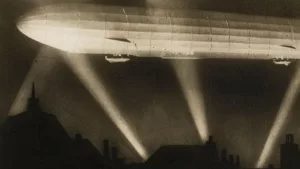
Why WWI Zeppelins Failed (And How They Came Back)
The military’s flirtation with airships lasted from 1914 to 1918. Germany wanted reconnaissance. They wanted bombing capability. What they got was a logistical headache.
Zeppelins were quiet. That was their selling point. You wouldn’t hear them coming.
But quiet doesn’t matter when you are a giant, floating target. They were too large. Too slow. Too easy for enemy pilots to shoot down. The reality on the ground—and in the sky—didn’t match the hype. Despite the massive expectations placed on these machines, they failed to deliver strategic advantage. They were clumsy. Vulnerable. Obsolete before they even aged.
Ferdinand von Zeppelin watched his creations fail. He died in 1917, seeing his dream tarnished by military inefficiency.
But the name survived. The technology adapted.
The Second Life of Airships
You might think the airship died in the trenches of WWI. It didn’t.
The 1920s and 1930s brought a renaissance. This wasn’t about war anymore. It was about travel. International passenger service became the new frontier.
Airships grew. They got faster. They got bigger. And they started competing directly with ocean liners.
Think about that. A flying machine challenging the most prestigious mode of luxury transport at the time. They didn’t just fly over cities. They reached remote corners of the globe where ships couldn’t easily go and planes weren’t yet reliable.
These weren’t just cargo haulers. They were symbols of modernity. Of speed. Of a world shrinking.
The competition with sea travel forced innovation. Designers pushed the limits of lift and propulsion. Routes expanded beyond Europe. South America? North Africa? The airships went there.
It was a brief window. A golden era of flight that never quite lasted. But for a few years, the sky was open to everyone who could afford the ticket. And the destination wasn’t just a city. It was the horizon.

The Hindenburg and the return of Zeppelins
The LZ 129 Hindenburg disaster on May 6, 1937, marked a definitive end to an era. The airship burned during landing at Lakehurst, near New York. This spectacular accident halted commercial dirigible travel for decades.
It wasn’t until around the turn of the millennium that Zeppelins returned to Germany. They are built again. These modern airships offer a different kind of experience now. They provide tourist flights over Lake Constance. This is the homeland of their inventor, Ferdinand Graf von Zeppelin.
The promised Zeppelin cruises? Still waiting.
The Hindenburg disaster ended the era of commercial dirigible travel for decades.
Where to fly today
Lake Constance remains the primary spot for airship tourism. Tourists can book short flights here. The region connects to the inventor’s legacy. It is a specific niche.
The large Zeppelin cruises have not materialized. Travelers expecting a regular cruise service are out of luck. The technology exists. The tourism is localized.
This is not a global travel network. It is a regional attraction. Plan accordingly.