You are not standing in a typical tourist trap. You are standing in a living fossil.
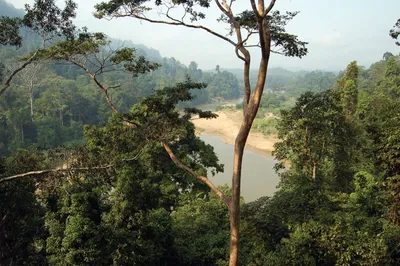
Taman Negara National Park sits deep in east-central Peninsular Malaysia, a sprawling 1,677 square miles of green that feels like another world entirely. If you are coming from Kuala Lumpur, you are looking at a long haul—about 125 miles northeast. It takes time to get there. Good. That distance is the first filter. It keeps the casual crowds away and leaves the real explorers standing ankle-deep in mud, looking up at a canopy that has been watching the earth for 130 million years.
This place is old. Older than dinosaurs. Older than the concept of a “national park.”
A Century of Conservation History
The land has been protected for longer than most modern nations have existed in their current forms. In 1925, it was set aside as a game reserve. By 1938, it was renamed King George V National Park. Later, it shed the colonial name for Taman Negara, which simply means “National Park” in Malay. The borders were expanded. The mandate was clear.
This wasn’t just about saving trees. It was about saving a ecosystem that had survived mass extinctions, continental drift, and ice ages.
The Wilderness Itself
The landscape is a mix of rugged peaks and watery valleys. Mount Tahan dominates the horizon. At 7,175 feet, it is the highest point in Peninsular Malaysia. Climbing it is not a walk in the park. It requires fitness. It requires respect. But for those who make it to the summit, the view over the endless green expanse is unmatched.
The rivers are wide and teeming with game fish. Limestone outcroppings jut out from the forest floor like broken teeth. The air is thick. Humid. Alive.
What You Will See
If you step into the understory, you are stepping into a botanical library. The trees here are titans. Look for the Koompassia excelsa, known locally as the tulang tree. It rises straight and tall, its bark rough and gray. Surround it are Shorea species, whose seeds spin like helicopters when they fall.
Keep your eyes on the lower branches. The parasitic plants are everywhere. Orchids cling to trunks. Monster flowers (Rafflesia arnoldii ) bloom in the shadows, large and fleshy, smelling of decay. It is beautiful. It is gross. It is nature.
The wildlife is dense. You will hear them before you see them. The calls of long-tailed macaques echo through the valleys. Three hundred species of birds patrol the air. Reptiles and amphibians blend into the leaf litter.
And the big ones? They are still here.
Elephants move through the corridors. Tigers stalk the edges. Leopards prowl the ridges. Bears, seladangs (a type of wild cattle), Malayan sambars, and the rare Sumatran rhinoceros all find refuge here. The Malayan tapir is another shadow you might catch in the moonlight.
Why Visit Taman Negara?
Because it is one of the oldest rainforests on Earth.