Niger isn’t the first place that pops into your head when you think of West Africa. Most travelers bounce straight to Senegal, Mali, or Morocco. But that oversight misses one of the most starkly beautiful, culturally dense, and historically significant lands on the continent.
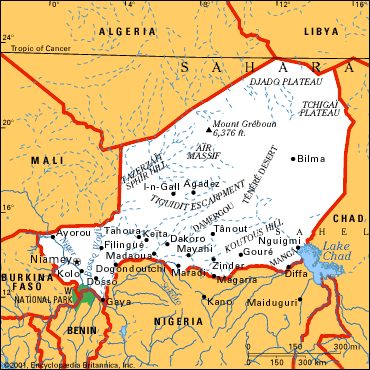
It’s a landlocked giant. The size of Western Europe, but with fewer people. Specifically, it’s about 489,191 square miles of hard-packed earth. By 2026, the population is estimated to sit around 29.3 million. Most of those folks live in the south. The north? That’s the Sahara.
If you’re planning a trip here, you need to understand the geography first. It’s not just “desert.” It’s a gradient.
The South: Green Savanna and River Life
Head southwest. That’s where the life is. The Niger River cuts a swath through the landscape, creating a green corridor in an otherwise arid country. This is the agricultural heartland.
The population here is dominated by the Hausa people. You’ll also find Songhai-Zerma and Kanuri communities. It’s a mosaic of cultures. French is the official language, but Hausa and Arabic are widely spoken. If you don’t speak French, learning basic Hausa phrases will open doors that locked doors never could.
Niamey is the capital. It’s not a massive metropolis. It’s a working city. You’ll find markets, government buildings, and a distinct rhythm to the days. The currency is the CFA franc. Keep that in mind. Your Euros or Dollars need to be exchanged here.
The Niger River dominates the southwest, providing the only significant water source for millions.
The Center: Transition and Dust
Move north from the river valley, and the green fades. The savanna gives way to scrubland. Then, eventually, to the desert. This central zone is harsh. It’s hot. It’s dry. Resources are scarce.
This is where the economy gets interesting. Niger has a developing economy. It’s not rich. But it’s mining. Uranium is the big one. You’ve likely heard of it. It’s a major global source. There’s also gold, coal, and phosphates. But for the traveler, the mining isn’t the draw. The landscape is.
The silence here is heavy. The heat is oppressive. But the light? The light is golden. It hits the dust at angles that change every hour.
The North: The Aïr Massif and the Sahara
Now, the real adventure. The north-central part of the country. The Aïr Massif.
This isn’t flat desert. It’s mountainous. A range of rugged, volcanic peaks rising out of the sand. It’s a prehistoric feeling. You’re walking on land that hasn’t changed much in millennia.
Evidence of Neolithic culture is everywhere here. Ancient rock art. Stone tools. You’re walking where humans have survived for tens of thousands of years. It’s humbling. And terrifying.
The Tuareg people rule this domain. They’re the “Blue Men of the Desert.” Their indigo robes blend with the shadows of the rocks. If you’re traveling in the Aïr, you need a