Air New Zealand запускає «Skynest»: нова ера спальних місць в економ-класі
Протягом десятиліть можливість спати в літаку в горизонтальному положенні була розкішшю, доступною лише пасажирам преміальних класів, ціна квитка в які найчастіше на тисячі доларів вища за стандартний економ. Air New Zealand має намір зруйнувати цю ієрархію, представивши Economy Skynest — спеціалізовану зону відпочинку, розроблену спеціально для мандрівників економ-класу.
Новий спосіб сну: капсули замість крісел
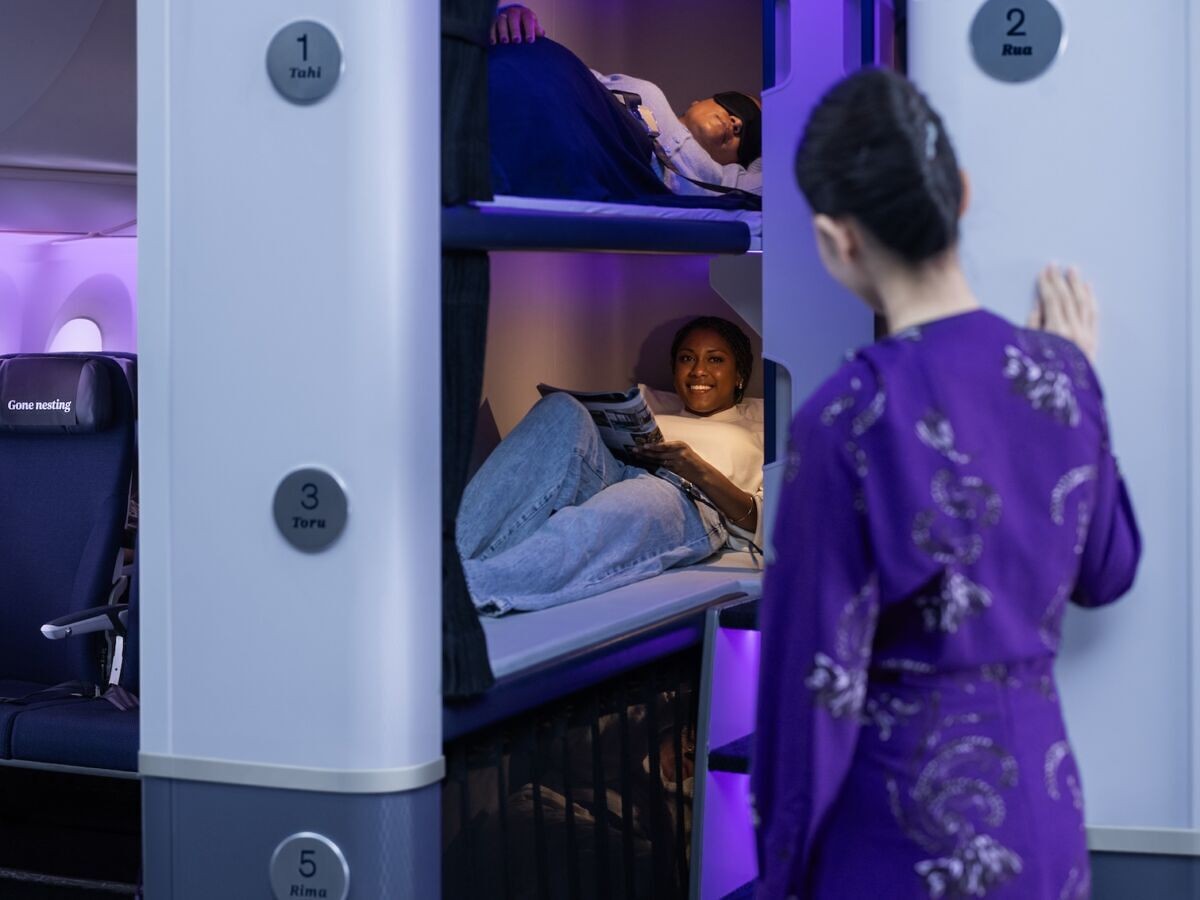
На відміну від попередньої концепції авіакомпанії «SkyCouch», яка просто перетворювала цілий ряд крісел економ-класу на м’яку поверхню, Skynest є окремим, відокремленим сектором літака. Розташовані між салонами економ-класу та преміум-економа, ці спальні капсули організовані у вигляді вертикальних двоярусних ліжок, що нагадують ті, що можна зустріти в сучасних залах очікування аеропортів.
Робота Skynest базується на моделі «сеансів», а не на бронюванні на весь політ:
– Тимчасові блоки: Пасажири бронюють чотиригодинні інтервали для використання капсули.
– Координовані ротації: Щоб забезпечити безперервний відпочинок, зміна всіх користувачів відбувається одночасно. Це виключає ситуацію, коли нові пасажири намагаються забратися до капсул, поки інші ще сплять.
– Зручності: Кожна капсула оснащена повнорозмірним матрацом, свіжою постільною білизною, м’яким освітленням, вентиляцією, портами для заряджання та шторкою для приватності.
– Досвід використання: Для підтримки тиші в капсулах немає персональних екранів із розвагами; пасажирам необхідно використати власні навушники для прослуховування аудіо.
Логістика та вартість
Skynest спроектований для тривалих перельотів. Очікується, що він дебютує на рейсах між Нью-Йорком та Оклендом — одному з найдовших комерційних маршрутів у світі, — а бронювання відкриється у травні 2026 року.
Вартість починається від 495 доларів США за сеанс. У цю суму входить набір дорожнього приладдя, що включає маску для сну, беруші, шкарпетки та засоби для догляду за собою.
Оскільки капсули розташовані в три яруси, пасажирам варто бути готовими до певної фізичної активності, наприклад, до підйому невеликими сходами або необхідності сісти, щоб потрапити у свій простір. Крім того, кількість сеансів для одного мандрівника обмежена — не більше одного за політ.
Чому це важливо: розквіт «мікро-преміальних» послуг
Впровадження Skynest знаменує собою значне зрушення в авіаційній стратегії. Авіакомпанії все частіше відходять від бінарної моделі «Економ проти Першого класу» у бік більш гнучкого підходу, пропонуючи модульні преміальні доповнення.
Цей сервіс «середнього сегмента» націлений на представників середнього класу — тих, хто не готовий переплачувати понад 5000 доларів за бізнес-клас, але готовий заплатити відчутну суму, щоб вирішити головну проблему далекомагістральних перельотів: ** крайню втому.**
Проблема таймінгу
У 18-годинному перельоті з Нью-Йорка до Окленду час має вирішальне значення. Щоб впоратися з джетлагом, мандрівникам часто потрібно поспати у другій половині польоту, щоб синхронізуватися із денним часом Нової Зеландії. Враховуючи, що на рейс є всього шість капсул, попит на ці «оптимальні» тимчасові слоти буде надзвичайно високим, що, ймовірно, вимагатиме завчасного бронювання.
Висновок
Skynest від Air New Zealand – це сміливий експеримент у дизайні салону, що перевіряє, чи погодяться пасажири обміняти повноцінне крісло на якісний, обмежений за часом відпочинок. У разі успіху ця концепція «капсул» може перевизначити, як авіакомпанії використовують простір і як економні мандрівники сприймають комфорт під час тривалих перельотів.