
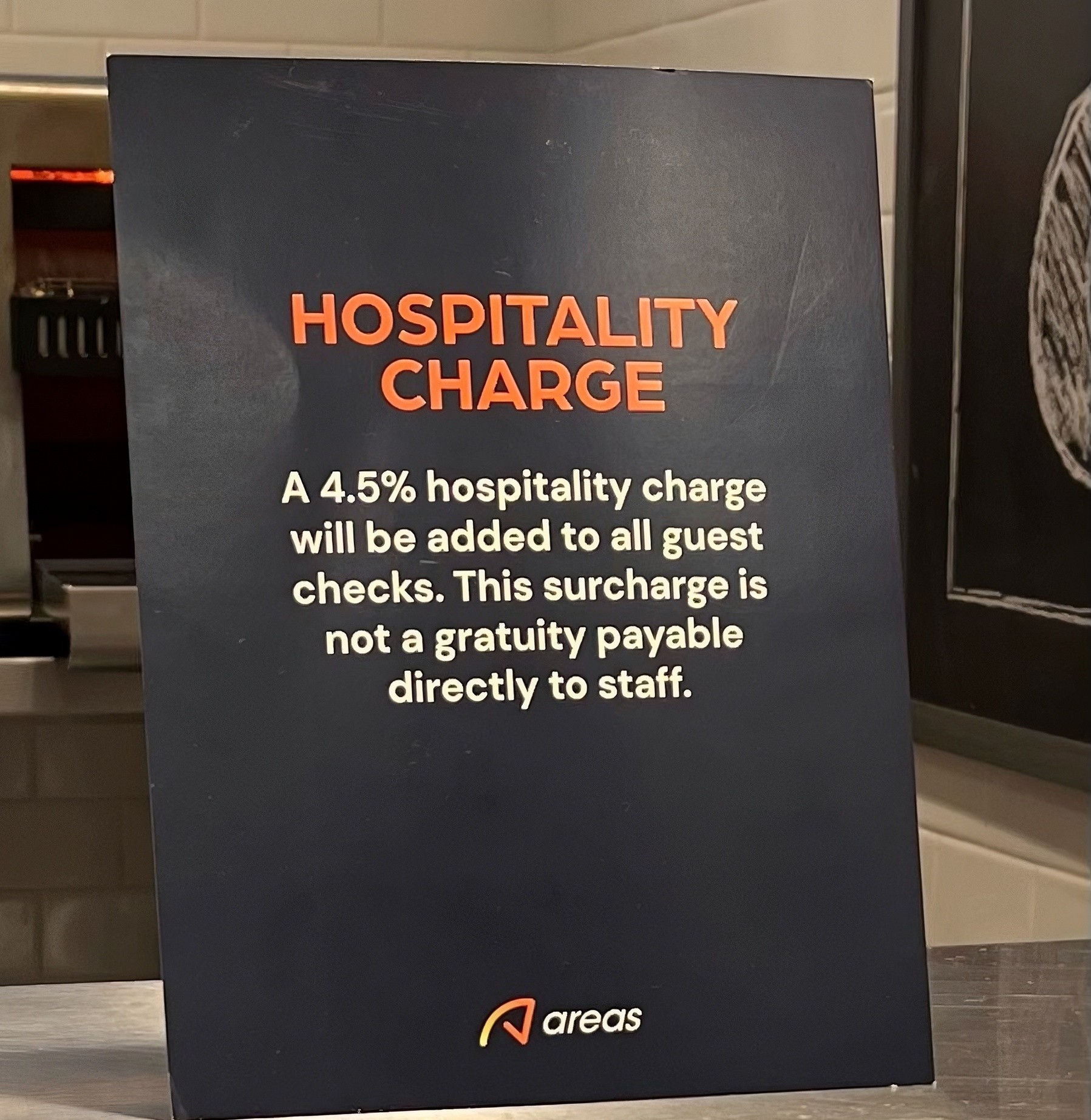
If you have recently traveled through a major airport, you may have noticed a peculiar phenomenon on your receipt: a separate line item labeled as a “surcharge” for employee benefits, wages, or retention. While these fees are often framed as a way to cover rising operational costs, they represent a complex workaround to strict airport pricing regulations.
The Loophole: Circumventing “Street Pricing” Rules
To understand why these surcharges exist, one must look at how airports regulate their vendors. Many major hubs, such as San Francisco (SFO) or New York (JFK), implement “street pricing” rules. These regulations prevent concessionaires—the restaurants and shops within the terminal—from charging significantly more for a product than they would at a standard retail location on a city street.
However, operating inside an airport is fundamentally more expensive than operating in a local neighborhood:
– High Rents: Airport real estate often commands some of the highest commercial rents in the country.
– Labor Challenges: Recruiting staff is difficult due to long commutes, security screening delays, and expensive parking.
– Mandated Costs: Local jurisdictions often require airports to pay higher minimum wages or contribute to healthcare funds for uninsured residents.
Because vendors are restricted from simply raising the menu price of a sandwich or a coffee to cover these costs, they have turned to surcharges. By adding a separate fee at the end of the transaction, businesses can maintain “low” menu prices that comply with airport rules while still passing their increased overhead onto the consumer.
Where Does the Money Actually Go?
A common misconception is that these surcharges are direct payments to employees. While some fees are explicitly labeled as “offsets for minimum wage increases,” the reality is more nuanced.
The Bottom Line: These surcharges often function as top-line revenue. Because the fee is a flat percentage or a fixed amount, it does not necessarily scale with the actual cost of an employee’s benefits. Consequently, much of this money flows directly into the employer’s profit margins rather than into the employees’ pockets.
Furthermore, the use of terms like “retention” can be a catch-all for general wage increases. While higher wages are necessary to keep staff in high-stress airport environments, the surcharge method allows companies to mask these costs from the consumer’s initial view.
The Paradox of Tipping and Consumer Behavior
The rise of surcharges has created an unexpected economic side effect: the erosion of traditional tipping.
In a standard dining scenario, customers often “round up” their total to leave a tip. However, when a surcharge is added to the bill, it changes the math for the traveler:
1. Reduced Tip Margins: Consumers often have a mental “ceiling” for what they are willing to spend on a meal. When a surcharge is added, the customer may reduce their tip to keep the total price within their budget.
2. The “Rounding” Effect: As surcharges take up more of the total transaction value, the “extra” amount a customer would have traditionally rounded up is effectively captured by the business as a fee, rather than going to the server as a tip.
This creates a strange irony: even as airports mandate higher wages to support workers, the resulting surcharges may actually decrease the supplemental income workers receive through gratuities.
Conclusion
The shift from transparent pricing to a surcharge-based model is a direct response to the tension between strict airport regulations and high operating costs. While it allows vendors to stay compliant with “street pricing” rules, it creates a lack of transparency that can confuse travelers and inadvertently impact the very service workers these fees claim to support.