We thought the 2023 rollout was the worst part. We were wrong. Air France-Klm is back with more seat assignment fees, and this time the net has been cast much wider. It covers almost everything now. Award tickets included.
The advance seat reservation fees have expanded to cover award tickets in all markets and most routes to North America for cash-paying passengers.
If you are flying business class on these carriers, you need to check your fare type before you relax. Or pretend you have.
The Fine Print Just Got Larger
Back in April 2024, the “Advance Seat Reservation” (ASR) scheme started charging business class passengers to pick their spot. We saw this trickle into economy years ago. Premium cabins? That was supposed to be a sanctuary. It is no longer.
The update hits hard.
- Fees apply to all long-haul award flights globally. No more free picks if you used miles.
- Business Light and Standard fares face these charges on nearly all long-haul routes.
- There is one weird loophole: Tickets originating in the US are currently exempt. Tickets to the US are not. Symmetry? Never heard of her.
- Flying Blue elites (Silver, Gold, Platinum) do not pay. Neither do Business Flex buyers.
The price tag? It fluctuates wildly. Expect $172 on a San Francisco-to-Paris award flight. Some suites on front-row setups cost even more.
Why are US-originating tickets safe for now? Likely Delta. The joint venture pricing structures complicate things, but do not count on that protection lasting. Delta is rolling out its own basic business class soon. The walls are closing in.
How The Math Works Against You
During booking, you see a line item for “Free standard seat selection at check in.” Tempting, right? Maybe. If you enjoy gambling.
When you try to secure a spot ahead of time, the system offers you a discounted fee. Say, $172 instead of $228 for that same SFO-Paris hop. It feels like a deal because it is cheaper than the “standard” markup, but it is still money leaving your pocket.
You can pay with miles, technically. The value is atrocious. You get roughly half a cent per mile. That is worse than most grocery store redemptions.
Redeeming miles for seat selection typically yields about $0.005 per mile. It is a bad deal, even for desperate people.
Why Would They Do This?
“I love paying extra to sit in a seat I already bought.” No one says that. Not ever.
This creates two tribes of travelers. Those who fly Flex or hold elite status might actually like this. Why? Because the average passengers who want specific seats are now filtered out by fees. Fewer people fighting over the same window seat means your chances improve at the gate.
For everyone else, it is pure irritation.
Air France and Klm are following British Airways into this revenue stream. BA has charged for business class seats for years. The logic is cold and efficient. One major competitor does it. You can too. People will still fly because your schedule is convenient. The product is nice enough. They will pay the $200 to secure the aisle because they fear the chaos of check-in.
Is it “premium”? Not really. But let’s look at the reality of the premium cabin market. Business travel is still bruised. Corporate travelers rarely shell out $10k+ the way they used to. Leisure travelers have money, yes, but they have limits too.
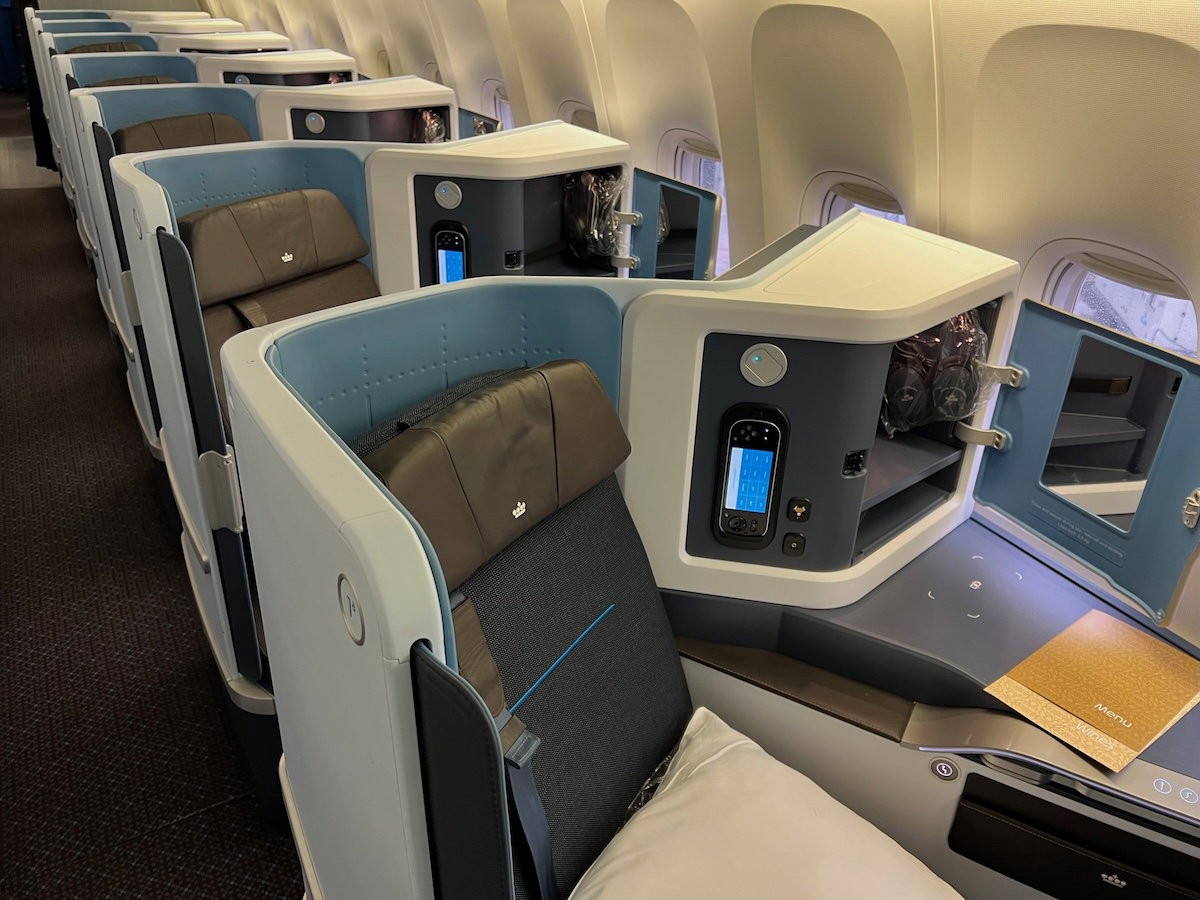
Airlines are squeezing the remaining demand. They invest heavily in new hardware — Air France’s reverse-herringbone suites are lovely — then nickel-and-dime the extras to fill the gaps. Lufthansa is doing similar tricks with Allegris.
At least Air France and Klm do not force you to pay to avoid a middle seat. Their 1-2-1 configurations are uniform. A bad seat is rarely truly bad. Unlike on BA’s A380, where a wrong click could mean a permanent armrest dispute.
So you pay the fee. You keep your $5,000 ticket value in perspective. You board. You wonder why airlines think this works.
Then you realize you have nowhere else to go in Europe that isn’t charging you for the same privilege. The industry has normalized the transaction. We are just still catching up to the bad taste it leaves behind.