
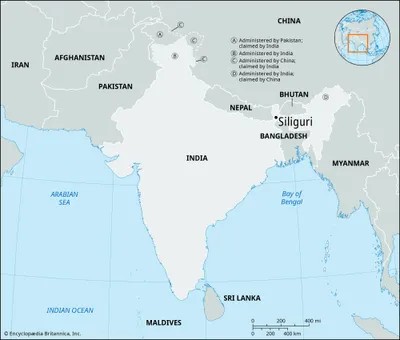
Siliguri sits in the northern part of West Bengal, just west of the Mahananda River. It is not a destination you visit for the sake of the city itself. You pass through it. But understanding why it exists is the key to navigating the eastern Himalayas.
The city is the primary transportation hub for the region. If you are heading to Kalimpong, Sikkim, Darjeeling, or Jalpaiguri, your journey likely funnels through Siliguri’s road and rail networks. It serves as the critical trade and transit center for the eastern Himalayan region. The local economy relies on sawmilling and jute milling. You will also see tea plantations in the surrounding areas.
The city’s growth is tied to history. It was declared a municipality in 1931. After the partition of India and Pakistan in 1947 and the subsequent creation of Bangladesh in 1971, Siliguri became a crowded refugee center. This influx changed the demographic landscape permanently. Today, it hosts several colleges affiliated with the University of North Bengal. The university’s main campus is located just west of the city.
Why Siliguri Matters for Travelers and Logistics
Siliguri lies within the Siliguri Corridor. This is a narrow strip of land connecting India’s North East Region with the rest of the country. The corridor is approximately 37 miles long. At its narrowest point, it is only 13.6 miles wide.
This geography has earned it a bizarre nickname. The shape on the map resembles the thin neck of a chicken. It is often called the chicken’s neck. This narrowness makes it strategically vital. Most rail, road, fuel, and military supply routes pass through here. A disruption in this passage would affect India’s connectivity with the North East Region.
The North East Region consists of eight states: Arunachal Pradesh, Assam, Manipur, Meghalaya, Mizoram, Nagaland, Sikkim, and Tripura. Siliguri is the gateway to this entire area. Its proximity to international borders of Bangladesh, Bhutan, Nepal, and the Tibet autonomous region of China adds to its strategic importance.
For a traveler, this means Siliguri is a logistical pivot point. You do not drive through it casually. You plan around it. The population has grown significantly. In 2001, it was home to 472,374 people. By 2011, that number rose to 513,264. The density reflects its role as a transit hub.
Planning Your Route Through the Corridor
When you plan a trip to Darjeeling or Sikkim, you will likely fly into Bagdogra Airport or take a train to Siliguri Junction. From there, you have options. The road networks are extensive. The rail links are frequent.
The city’s industries shape the landscape. You might see the smoke from sawmills. You will smell the jute. The tea plantations offer a different aesthetic. They are not in the city center. They are in the vicinity. Plan a stop if you have time.
The university presence adds a youthful energy to certain parts of the city. The main campus is