Search “dogs lost after car accident” and you’ll find a parade of tearful reunions. Humans scouring forests for days. Weeks of silence. Then, a bark in the dark. These stories are heart-warming, sure. But they represent the lucky ones.
Most of these animals were ejected during major wrecks or bolted into the chaos. Pretty Girl, a Georgia dog, was found by a State Trooper just one day after a wreck east of Atlanta in 2000. She was lucky. Mia, an 8-year-old rescue, wasn’t. She fled a crash in snowy, remote Colorado at night. It took over a month to find her. She was thin, scared, and dirty, but alive. Relatively unscathed for a miracle.
Then there are the dogs that don’t make it home. Or the ones who don’t survive the impact.
If you can’t cancel the road trip, you have one non-negotiable tool: a dog seat belt.
The Illusion of Safety
We take dogs everywhere. Road trips. School carpools. Family vacations. The National Pet Owners Survey puts the number of pet owners traveling with dogs at 40 percent. It’s a cultural norm. We treat them like kids. We treat them like luggage.
But they aren’t either.
In 2019, Volvo and The Harris Poll ran a study that highlights a glaring disconnect. One-third of respondents said they’d rather take their dog on a road trip than their family. Two-thirds admitted their dog wouldn’t be safe in a crash. And yet? They still let them roam free.
Dr. Georgina Ushi Phillips, a veterinarian and writer, calls it a “blind spot.” We don’t think about canine seatbelts until it’s too late.
Here is the physics. In a crash, inertia doesn’t care about your dog’s cuteness. It sends everything forward. People fly. Dogs fly. Objects fly.
A 60-pound dog becomes a 2,700-pound projectile at 35 miles per hour.
Think about that weight. That’s not a pet. That’s a cannonball.
Jordan Schaul knows this from experience. He’s a Ph.D. in conservation and comparative medicine. He spent 12 years as an animal trainer and behavioral consultant. He thought he was safe. His rescue Doberman sat in the front seat. Unrestrained.
Then the car hit something hard.
The dog hit the dashboard with brutal force. Schaul was terrified. He realized then that knowing the science doesn’t matter if you aren’t using the gear.
“I know better than to let him sit without a safety harness,” he says. Now he does. The rest of us? We’re still guessing.
Why Unrestrained Dogs Are a Distraction Hazard
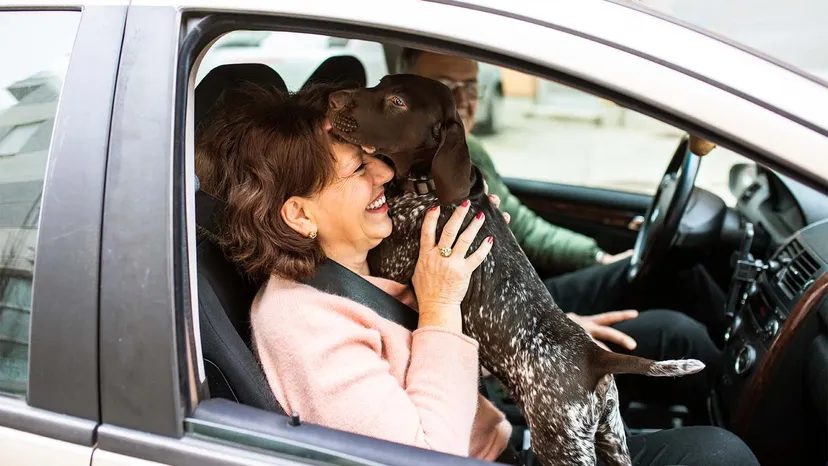
The data is stark. A Volvo study revealed that driving with an unrestrained dog doesn’t just risk the animal’s life; it endangers everyone in the car. Hazardous driving behaviors more than doubled when the dog was free to roam compared to when it was secured. The distraction is real. The risk of an accident spikes when a pet is loose.
Pet owners want safer travel options. So, is a seat belt the solution? Justin Padgett, a veterinarian at Branchville Animal Hospital in Odenville, Alabama, says yes, but with caveats.
“The purpose of a dog seat belt is restraint and safety,” Padgett explains. “Many dogs jump around in a car and may try to jump in a driver’s lap, which could lead to an auto accident.”
There is also the issue of ejection. “Dogs also need to be tethered to a safe point in the event of an accident to keep them from being ejected from a vehicle.”
Schaul takes this further. He argues that these restraints help even after the crash has occurred. “Seat belts secure dogs who may interfere with first responders,” he says. “If a dog becomes loose at the site of a collision, it can vigorously defend its owner, particularly if the owner is incapacitated.”
A panicked, injured dog is a liability to emergency crews. Restraint keeps the scene controlled.
Choosing the Right Restraint System
Experts agree: a seat belt is the best way to keep your pup safe. But the market is flooded with options. You have zip-line contraptions that let dogs lounge across the backseat. You have thick, padded harnesses that look like BabyBjörns. How do you pick the right one?
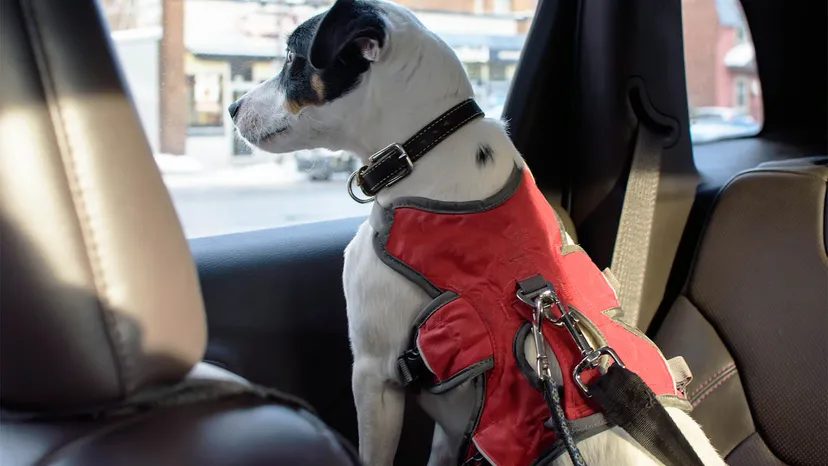
Padgett suggests starting with the attachment point. “Most dog seat belts tether the animal to the seat and attach to a safety harness,” he says. “A harness is preferred, rather than just a collar, as it contains multiple points of contact and won’t put too much stress on one body part, like the neck.”
He recommends a harness seat belt that attaches securely to the vehicle’s seat. But length matters. Phillips warns against the most common fault: tethers that are too long.
“One of the most common faults of dog seatbelts are tethers that are too long,” she says. “While this gives dogs more freedom to explore, it can completely negate the benefits of the seat belt by letting inertia send dogs flying.”
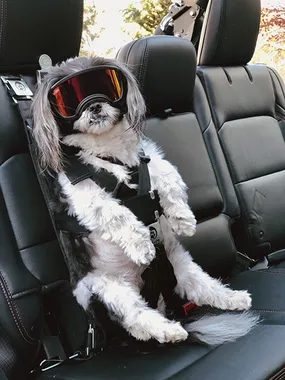
Size and temperament also dictate your choice. Schaul notes that medium and smaller dogs often fare better in dog car seats. Larger dogs need the stability of seat belts. Puppies that chew? A carrier is safer than a belt.
The problem is that pet stores don’t offer clear guidance. There are no formal standards for pet safety crash tests. Manufacturers can label products as “crash-tested” or “safety-approved” without any actual data to prove it.
The Center for Pet Safety Certification
Between 2013 and 2015, the Center for Pet Safety (CPS) stepped in. This nonprofit tested several pet harnesses, carriers, and crates. Subaru funded the research.
No dogs were harmed. CPS used three dummy dogs of varying sizes: a 25-pound terrier mix, a 45-pound border collie, and a 75-pound golden retriever. They modeled the tests after FMVSS 213, the federal standard used to verify child safety seats.
The results were rigorous. Only three harnesses achieved the final crash-test certifications. If a product doesn’t carry CPS approval, it’s likely just marketing. Check for the label. Look for the data. Your dog’s life depends on it.
The Legal Reality of Pet Restraints
Ignoring the gear is not an option if you value your freedom. Phillips points out that safety isn’t just a suggestion; it’s the law in specific jurisdictions. You cannot assume your current setup is compliant. Five U.S. states mandate the use of pet restraints: Connecticut, Maine, Minnesota, New Hampshire, and Rhode Island.
Washington D.C. has its own strictures under the “Distracted Driving Safety Act of 2004.” This act explicitly covers interactions with pets. Violating these statutes isn’t a harmless slap on the wrist. Fines apply. Jail time is a real possibility. Check your state’s statutes before you pack the car.
Sizing and Fit Matter More Than Brand
Brand loyalty is secondary to proper fit. Phillips warns that the primary failure point of any harness or restraint is incorrect sizing. A harness that is too big creates a hazard. It encourages dogs to wiggle free. A loose fit means zero protection in a crash.
Conversely, a harness that is too tight causes physical harm. Chafing and skin irritation are common complaints. This is especially true if your dog constantly tests the limits of the restraint. Look for brands that have pursued crash testing. You don’t need to stick to one specific CPS-approved list. Many reputable manufacturers use their own third-party testing. Real-world data backs these up. Stick with a brand that can prove its gear works.
Training for the Road
Buying the gear is only step one. Phillips suggests a phased introduction. Start indoors. Let your dog wear the harness while playing. The goal is positive association. Patience is required. Praise the behavior. Use treats to reinforce calmness.
Do not skip this step. If your dog is stressed in the house, they will be terrified in the car. Once the harness is just another part of their routine, you can move to the vehicle. Ensure they are calm and comfortable before you drive.
The Extremes of Pet Ownership
Pet owners will go to absurd lengths for their animals. This is well-documented. Some individuals purchase chastity belts for dogs. The intent is to prevent accidental pregnancies. The result is often more fascinating than it is practical. It highlights a broader trend of “extra” behavior among doting owners. It’s bizarre. It’s real. And it’s out there.