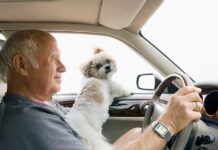
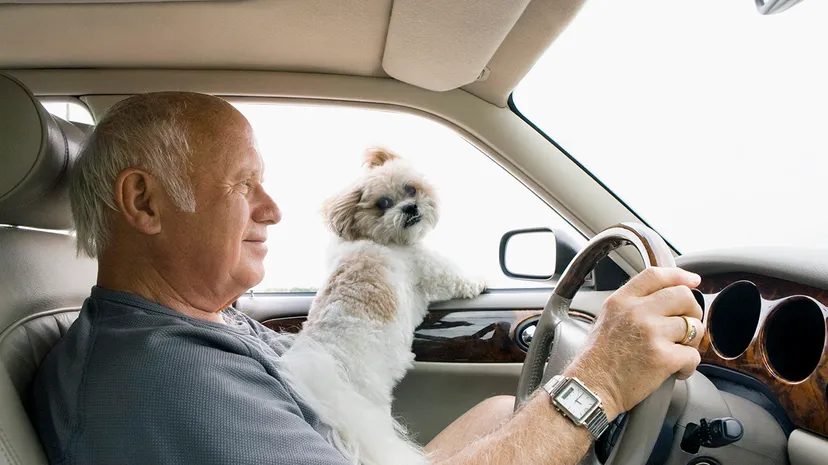
You’re cruising down the highway. Your dog, happy and wiggly, decides your lap is the best seat in the house. You don’t move him. It feels sweet. It feels safe. You might be breaking the law.
States are moving fast to criminalize this common behavior. In Michigan, a late 2017 bill proposed making it a civil infraction to drive with a dog in your lap. The penalty? A $100 fine. This goes beyond existing rules that only penalize distracted driving if you’re actually weaving or speeding. The new push treats the mere act of having a pet in your lap as the violation itself.
Rep. LaTanya Garrett introduced the bill. She’s a dog owner and former first responder. She knows how quickly a pet can get excited. If you hear sirens, or just feel a sudden jolt, your attention snaps to the animal. Garrett compares this distraction to texting or applying makeup. It’s not just a nuisance. It’s a hazard.
Why State Legislatures Are Acting
Michigan isn’t alone. While most states don’t have a specific “no dogs in laps” statute, several are tightening the net. The logic is simple. Unrestrained pets are unpredictable objects in a moving vehicle.
Here is where the laws currently stand regarding pet restraint:
- Hawaii, New Jersey, and Rhode Island have outright bans on pets riding in the driver’s lap.
- Connecticut, Maine, and Massachusetts use general distracted driving laws to cite drivers who interfere with vehicle operation.
- Connecticut, Massachusetts, Minnesota, and New Hampshire explicitly ban unrestrained animals in pickup truck beds.
- Massachusetts also allows charges for animal cruelty if the transport endangers the pet.
The gap between what is illegal and what is safe is wide. Only three states specifically ban pets in laps or mandate proper crating/harnessing. The rest leave it to the officer’s discretion to determine if your driving was “irresponsible.”
The Physics of a Crash
Statistics on accidents caused solely by pet distraction are thin. But the physics are undeniable. AAA Foundation for Traffic Safety identifies three distractions: eyes off the road, hands off the wheel, and mind off the task. A dog in your lap triggers all three.
A 2011 AAA/Kurgo survey found that 56% of drivers had their dog in the car at least once a month. More than half admitted the dog diverted their attention. Whether it was stopping them from climbing into the front or reaching back to pet them, the focus was off the road.
Consider the force involved in a collision. It isn’t just about the dog getting hurt. It’s about the dog becoming a weapon.
According to AAA data, an unrestrained 10-pound dog in a 30 mph crash exerts roughly 300 pounds of pressure. That’s the weight of a grand piano falling on you. An 80-pound dog at the same speed exerts 2,400 pounds of pressure. You cannot hold back 2,400 pounds with your arms. You can’t.
What Safety Experts Recommend
Legislation is one thing. Behavior change is another. Lindsey Wolko, founder of the Center for Pet Safety, argues that education beats legislation. She doesn’t oppose laws but believes they are a blunt tool. The goal should be awareness, not just avoiding a ticket.
“Education and awareness is a critical tool to help pet owners understand that certain behaviors are more risky than others,” Wolko says.
Melanie Monteiro, another expert in pet safety, points out the secondary dangers beyond distraction. An unrestrained dog can:
- Get wedged between your feet and the pedals, preventing braking or acceleration.
- Be crushed by the steering wheel during a collision or thrown through the windshield.
- Be killed by the force of an airbag deploying at approximately 200 mph.
- Panic after a crash, potentially attacking first responders or bolting into traffic.
The solution isn’t complicated. It’s standard procedure for aviation and racing. Use a crash-tested carrier, travel harness, or kennel. The Center for Pet Safety certifies specific products. Don’t guess. Research.
The Bottom Line for Drivers
Even if your state hasn’t passed a specific “lap dog” law, you aren’t immune. If an officer sees you swerving to pet your dog, you can be cited for careless or reckless driving. The distinction between “distracted” and “unrestrained” is often just semantics in a courtroom.
The risk isn’t just the fine. It’s the physics. A small dog becomes a heavy projectile. A large dog becomes a fatal obstacle.
You love your dog. You want them close. But keeping them in your lap is a gamble with odds you can’t see. The cost of a harness is negligible compared to the cost of a lawsuit or a funeral.
Where do you stand on this? Are you following the law, or are you just hoping the police aren’t watching? The laws are shifting. The science isn’t.