Це не мало сенсу.
Спочатку – ні. Потім після другого заходу на посадку теж.
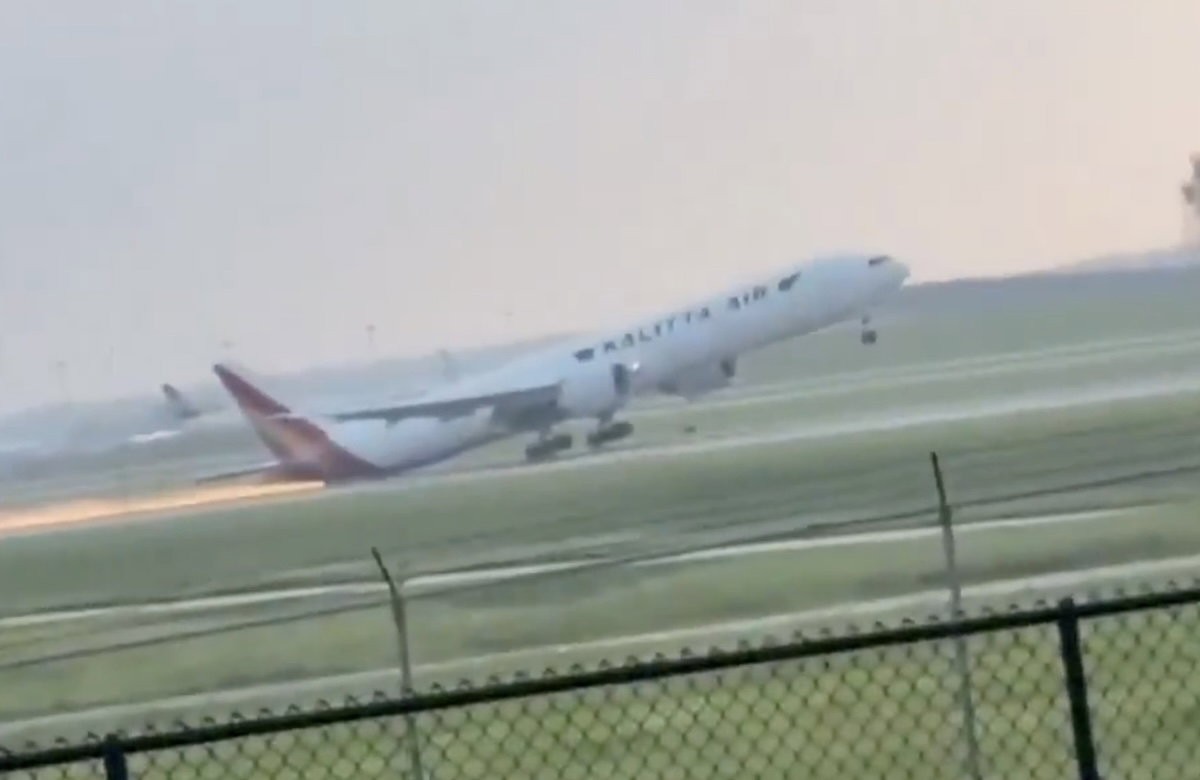
Вантажний літак Kalitta Air Boeing 77-300ER (реєстраційний номер N778CK) торкнувся злітно-посадкової смуги, підстрибнув і зачепив хвостовою частиною покриття. Після цього пілоти вирішили виконати коло. Потім вони спробували знову. І в результаті повністю втратили сигнал системи Instrument Landing System (ILS), що змусило їх виконати третій захід. На момент безпечної посадки пройшло 27 хвилин. Історія ця ставить усіх у глухий кут.
Перший заділ хвостом: іскри та замішання
Інцидент стався у неділю, 19 липня. Рейс K4262 прилетів із Брюсселя (Бельгія). Літаку 21 рік, це вантажний фреайтер. Kalitta Air перевозить вантажі, а чи не пасажирів. То справді був не вихідний політ заради задоволення, а робоче завдання.
Час був о 19:52 за місцевим часом. Літак вишикувався на злітно-посадкову смугу 36R. Умови? Відмінні. Слабкий вітер. Жодних штормів. Ніщо в небі не віщувало небезпеки.
То чому ж було виконано захід на посадку довкола (go-around)?
Пілоти оголосили про рішення. Це з аудіозапису. Але ось де починається дивина: вони зробили це після того, як колеса торкнулися землі. Це видно на відео. Шини стосуються тактилопокриття. Потім ніс різко піднімається нагору. І ось “бац” – удар хвостом.
Влетіли іскри. Безліч їх. Це був не легкий дотик. Кормова частина фюзеляжу зі значною силою вдарила про ЗПС. Була негайно оголошена надзвичайна подія. Диспетчери почули це. Літак почув це. Наземний персонал почув це.
Пілоти хотіли спробувати знову. Вони попросили виконати захід системи ILS (Instrument Landing System) на смугу 36C замість колишньої. Інша смуга. Інша процедура. Чому міняти плани серед кризи? Ймовірно тому, що 36R була закрита або визнана небезпечною після удару. Можливо.
Другий промах: не вдалося зловити сигнал
Вони увійшли до схеми заходу на посадку. Вони пролетіли маршрут. Але сигналу вони не захопили.
Ось це і є справжня загадка, що змушує чухати потилицю.
Boeing 777 – складний та технологічний літак. Пілоти навчені виконувати заходи з приладів буквально уві сні. Однак на цей раз вони не захопили локаліст. Диспетчер спостерігав як це відбувається. Він наказав їм виконати захід навколо. Трек польоту можна побачити на карті VASAviation. Він виглядав хаотично. Відхилення від курсу. Нестабільний захід.
Тож вони злетіли знову. Знову.
Ще одне коло. Ще один набір висоти. Ще один погляд на схему заходу. І нарешті о 20:19 вони сіли. Безпечно. На смугу 26С. Зверніть увагу на зміну напряму. Вони заходили на посадку із протилежного кінця аеропорту. Загальний час посадки – близько 27 хвилин з першого удару хвостом, що супроводжувався іскрами.
«Рейс Kalitta Air 264 [sic] здійснив безпечну посадку… після того, як хвіст Boeing 77-300EER зачепив ЗПС під час виконання заходу навколо… FAA проведе розслідування».
Це офіційна заява FAA. Зверніть увагу на розбіжність у номері рейсу: в операційних даних K4262, а звіті K4264? Або, можливо, друкарська помилка в прес-релізі. FAA вказує K4264. Журнал операцій – K4262. У розслідування важливі деталі.
Питання, на які поки що ніхто не може відповісти
Погода була нейтральною. Вітер слабкий. Видимість, мабуть, була гарною. Це була не посадка в сезон мусонів у Манілі. І не посадка при екстремальному бічному вітрі.
То що пішло не так?
Перше питання: чому вони виконали захід навколо після торкання лінії 36R? Смуга здавалася нестабільною? Чи було сміття? Чи це було рішення пілотів, засноване на неправильному куті заходу? Відео показує торкання коліс. Потім підйом. Потім удар.
Друге питання: чому удар хвостом? Пілоти надто різко чи надто пізно потягли ручку управління? Чи проблема з випуском шасі викликала носову установку, через яку хвіст волочився по землі?
Третє питання: чому пропущено сигнал ILS під час другої спроби? Це частина, що суперечить простій логіці. Ви маєте інструменти. Ви маєте навчання. Ви маєте чіткий сигнал. Проте літак ухилився. Диспетчер це помітив. Шлях був невірним. Чому?
Втома? Плутанина у зміні смуг? Недовіра у радіозв’язку? Ми не знаємо. Поки що ні.
FAA проводить розслідування. Це стандартна процедура. Але така послідовність – дотик, захід навколо, удар хвостом, другий захід, пропуск сигналу, третя посадка – не стандартна. Це — хаос. Це небезпечно. Це ідеальний шторм із малих помилок, що складаються у серйозну подію.
Чорні ящики розкриють відмову системи? Чи просто людський чинник? Вік повітряного судна (21 рік) може бути хибним слідом. Старі літаки перебувають у хорошому технічному стані. Проте історія технічного обслуговування стане частиною огляду.
Одне ясно: щось вийшло з ладу. Можливо, шина. Можливо, датчик. Можливо, збій у судженнях пілотів.
Дізнаємось, що скаже NTSB. А поки що залишаються лише спекуляції та іскри.