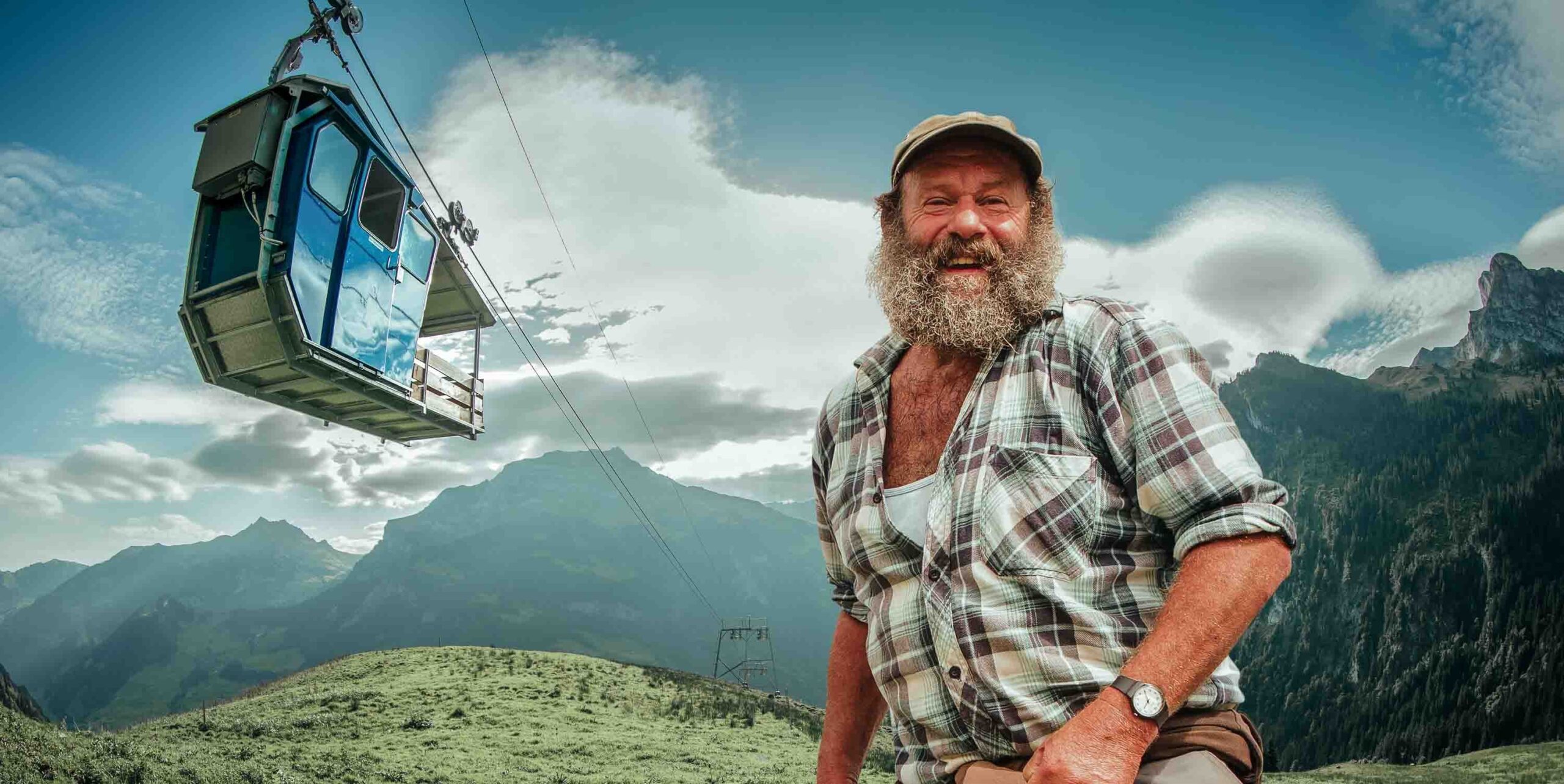
У мене підкосилися ноги. Той перший погляд на канатну дорогу не вселяв упевненості. Вона нагадувала сараю, прив’язану до троса: дерев’яні дошки, іржа, вигляд такого кустарного ремонту викликав сумніви. І ось я стою там, готовий довірити їй своє життя, поки воно сіпається до майже вертикального альпійського схилу.
Швейцарія зазвичай розпестила нас. Гладкі скляні кабіни, автоматичні двері, панорамні краєвиди. Чисто. Ефективно. Але ж це? Це було інакше. Сидіння були оббиті клаптями різномастного ковроліну. Боковини повністю відкриті гірському вітру. Я шукав чогось первозданного. Чимось справжнім.
Ми влізли всередину. Нікого більше не було. Я натиснув кнопку. Тиша. Потім тріск перешкод. У динаміках зашипів статичний шум. Я натиснув іншу кнопку. Ще один ривок. І раптом луг під нами відірвався від землі. Ми вилетіли над урвищем. Крони дерев зникли з поля зору. Саме так виглядає сафарі на фермерських витягах «Енгельберг Бюрербенлі».
Що таке витяг Бюрербенлі?
Для необізнаних Buiräbähnli — це фермерський вантажопасажирський витяг. Побудовані у післявоєнний період, вони не призначалися для туристів. Це були рятувальні та транспортні артерії. Підйомники використовувалися для доставки запасів по крутих схилах та спуску сиру та молока назад у села.
Більшість із них заіржавіли та законсервовані. Деякі були замінені на сучасну інфраструктуру. Але не все. У районі Енгельберга — всього за 19 миль на південь від Люцерна, у центральній Швейцарії, — вісім таких грубих на вигляд підйомників все ще мають ліцензію на перевезення платних пасажирів.
Чому вони вижили? Тому що фермерським громадам вони, як і раніше, потрібні. І тому, що парадоксальним чином, вони стали головним магнітом для відвідувачів, які бажають побачити «справжню» Швейцарію.
Витяги знаходяться у приватній власності. Вони утворюють якесь вільне 30-мильне пішохідне кільце високогірними долинами, що проходить біля підніжжя величних піків Шпаннорт і Тітліс. Перепустку можна купити онлайн або отримати у туристичному офісі Енгельберга. Зазвичай вони працюють з раннього ранку до вечора, підлаштовуючись під час, коли фермерам дійсно потрібно їх використовувати.
Розцінки вирізняються простотою: близько 5 швейцарських франків (6 доларів США) за поїздку. Тільки готівка. Або для більшого комфорту можна взяти проїзний на сафарі за 47 швейцарських франків (58 доларів США). Ви відірвете квиток на кожну подорож.
Вони виглядають ненадійно. Здаються небезпечними. Але вони ретельно обслуговуються щороку. Саме на цьому факті варто триматися.
Перше сходження і фермерські господарі
Ми пішли вгору від Енгельберга, проходячи через озеро Лутерзе, щоб сісти на перший витяг. Ми зійшли з гудінням у вухах на фермі Ругісбальм. Посередині схилу.
Там була місіс Тьонки. У квітчастій сукні, з фартухом, зі швидкою посмішкою. Вона прийняла наші квитки і провела нас у наступну кабіну. Вона була ще меншою. Фарба, колись червона, тепер потріскалася і вицвіла. Вона обслуговує цей двоетапний маршрут разом із своїм сином. Ви подаєте сигнал. Вони під’їжджають на своєму скрипучому апараті вам назустріч.
Знизу ми взяли інший підйомник до Фелля. Потім більша, сучасна кабіна підняла нас на Баннальпзі. Популярне місце для прогулянок. Але ми ігнорували асфальтовану стежку. Ми знайшли грубу стежку. Ми ссіли у наступний Buiräbähn, відкритий всім вітрам, вітер бив нам у обличчя.
Нагорі чекав Йозеф Дюрер. Пролякана сорочка. Підтяжки. Заспокійлива посмішка.
“Я живу біля цієї канатної станції вже 76 років”, – сказав Дюрер.
Він виріс на сімейній фермі на висоті 3940 футів. Школа була не просто пішим переходом. Це була подорож на підйомнику.
«Коли погода була поганою, ви йшли пішки. У гіршому випадку ви взагалі не йшли до школи», – пояснив він.
Продукти? Вони доставляються канатною дорогою.
“Я не знаю іншого способу жити”, – сказав він.
Тепер Дюрер здає свої землі на оренду. Він керує підйомником від Фелля до Шпіса — і володіє ним. Він також обслуговує верхню ділянку до Сінсгьоа. Кожна зупинка – це ферма. Крапка на карті. Без доріг. Лише вертикальний доступ.
“Це сімейний бізнес”, – сказав він. «Мої батьки керували ним. Я почав допомагати у другому класі. Моя дружина, два сини та мій брат живуть тут. Можливо, один із синів продовжить справу. Можливо».
Він показав нам кімнату керування. Моніторинг у прямому ефірі через камери. Ми помахали рукою. Він помахав у відповідь. Кабіна рушила.
Життя на краю Альп
Наші місця призначення на ніч Альп Оберфелд. Сімейна ферма Прості кімнати.
Денний маршрут був суворим. Крутий пагорб. Потім, несподівано, ділянка снігу та льоду. Червень, а ми вже обережно наступаємо на біле. Жінка пройшла повз нас. Доброзичливий кивок. Неймовірна легкість підйому вгору.
Ми прибули до двох будинків. Козячий сарай. Низький дерев’яний фермерський будинок.
Я зайшов усередину і виявив маленьку дитину, яка дивилася на мене. Я заблукав у вітальню. Не до гуртожитку. Козячий сарай був гостьовим будинком. Ми спали над тваринами.
Ми пробивалися через стійки із сільськогосподарським інвентарем. Сіновали зліва. Чисті спальні місця. Свіже фарбування. Затишно.
Нас зустріла Труді Кеслін. Та сама жінка, яку ми бачили на льоду. Тепер вона несла пакети із покупками — вгору. Пішки.
Її фермерський витяг занадто малий для людей. Щоранку він спускає козяче молоко на молочний завод Далленвіль. І піднімає запаси на висоту 6100 футів.
Сім’я Кеслін живе тут 100 днів на рік. З травня до вересня. Решту їх засипає сніг.
«Зима надто небезпечна. Лавини», – сказала Труді. «Літо клопітне. Ти туди-сюди ходиш пішки. Все транспортується канатною дорогою. Якщо щось забув… значить, забув».
Діти? Вони переходять снігові ділянки, щоб сісти на витяг до школи. Потім автобус.
“Їм подобається спускатися пішки влітку”, – сказала вона. «Вони знають ці шляхи як свої п’ять пальців. Міські діти знають червоні сигнали світлофора. Ці діти знають снігові плями».
Люди турбувалися, коли діти були малі. Одні у горах?
“Ми вішаємо їм на шию лямку для дитячого садка”, – сказала Труді. “Це показує всім, що вони на шляху до школи”.
Для нас це героїзм. Для них – буденне життя.
Спальний сніданок із сніданком – додатковий дохід. Спосіб показати старий альпійський спосіб життя.
“Ти встаєш, доїш корів або кіз, готуєш на газових плитах”, – сказала Труді. “Поповнюєш свої сили”.
Козячий сир. В’яле м’ясо. Домашній хліб. Проста вечеря.
Тієї ночі сусіди внизу не спали. Кози дзвеніли дзвіночками. Осли. Я був радий, що в мене були беруші.
Стежка Вальєнфад і маленька Патагонія
Наступного дня на нас чекав Вальєнфад. 11-кілометрова стежка. Від гірської станції Баннальп до viewpoints Валенегг на висоті 6400 футів.
Круто. У червні ще де-не-де лежить сніг. Але стежка доглянута. Види чудові. Ми не зустріли жодної людини. Лише стадо кіз.
Маршрут закінчився біля хатини Брунні. Зимової лижної хижі, що перетворилася на літню точку біля озера. Я швидко викупався. Потім спуск назад до Енгельберга.
Я приїхав заради витягів. Але у долині є й інше.
Я сів на місцевий автобус. Коло по долині. До канатної дороги Фюренальп. У долину Зуренен. Відому як «Маленька Патагонія».
Обриви, що йдуть вертикально вниз. Луги квітучі квіти. Річка Енгельбергера звивається вниз. Бірюзова вода від гірських мінералів.
Обід на верхній станції. У рюкзак. Місцевий сир альпійського типу. Домашня ковбаса. Теплий хліб. Охолоджене вино.
Протиріччя Тітліса
Зрештою, поїздка на крісельному витягу. TITLIS Rotair. Перша в світі панорамна крісельна дорога, що обертається. На гору Тітліс. 9908 футів.
Ціна? 102 швейцарські франки (126 доларів США). Ще 19 франків за оглядовий майданчик.
Оновлена оглядова вежа. Найвищий пішохідний міст у Європі. Міст, що гойдається над прірвою. Витяг над льодовиком. Сніговий парк. Крижана печера.
Шампанське бар. Магазин шоколаду. Висока кухня ресторан. Магазин Rolex.
Все це тут. Це також Швейцарія.
Я стояв там у шортах та флісовій кофті. В оточенні багатих туристів.
І я сумував за скрипом фермерського витягу «Енгельберг Бюрербенлі». За привітним, суворим фермером. По кивку. Стрибок в небо.
На моїй картонній перепустці все ще лежали квитки. Чи не відірвані.
Я вже почав планувати своє повернення.